



What's Happening?
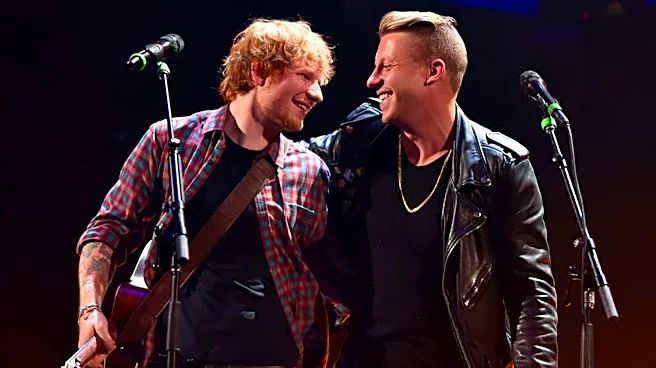
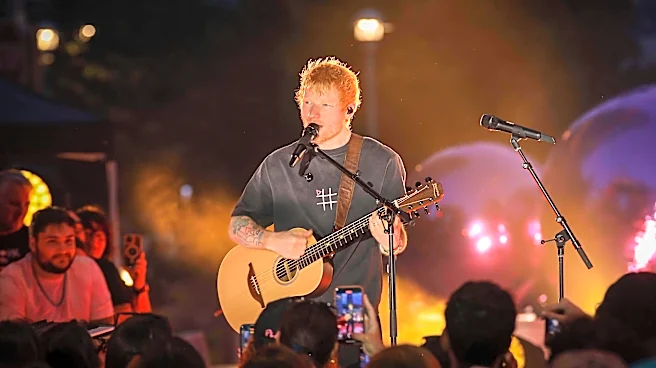
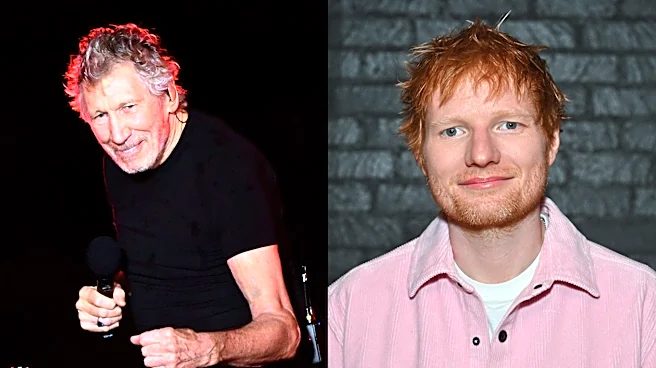
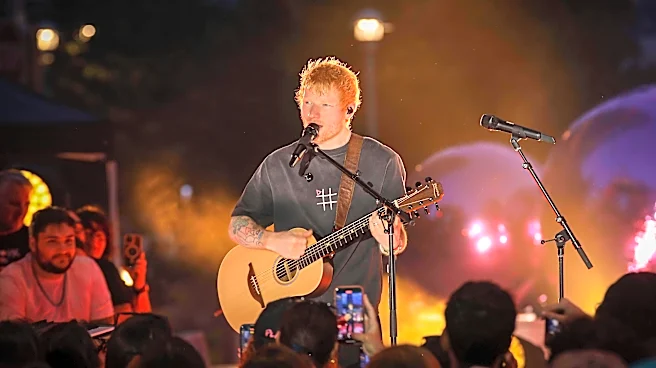
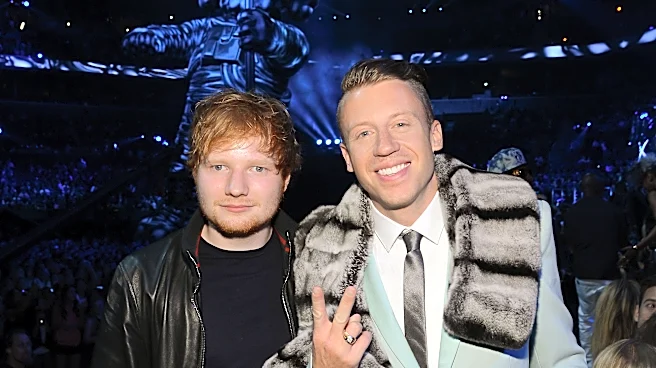
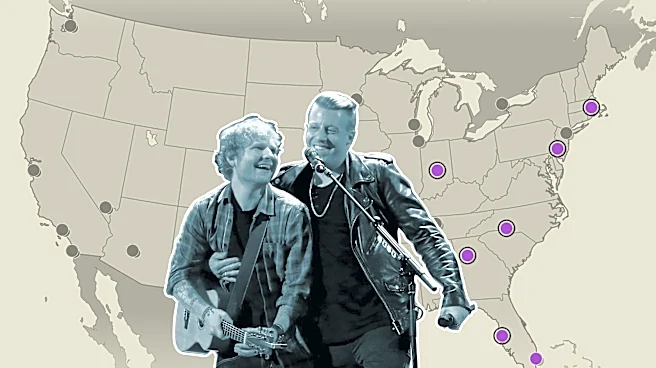
Ken Casey, frontman for the band Dropkick Murphys, has publicly criticized Ed Sheeran for not supporting Macklemore after Macklemore was removed from Sheeran's 'The Loop Tour.' Macklemore's removal reportedly followed his onstage comments in support of
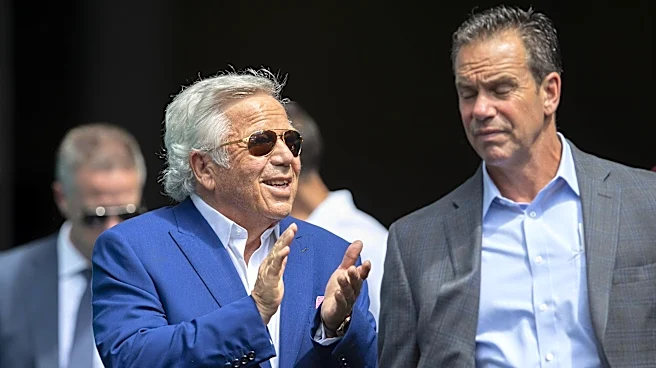
Palestinians and criticism of Israel's actions in Gaza. Casey, speaking on Boston Public Radio, stated that as a musician, he believes artists should stand by their touring partners. He expressed disappointment that Sheeran did not stand with Macklemore, attributing the decision to the promoter, Messina Touring Group, and alleged pressure from New England Patriots owner Robert Kraft. Casey emphasized the importance of artists upholding their beliefs, even if it means facing consequences like losing audience members or future performance opportunities.
Why It's Important?
This incident highlights the increasing intersection of music, politics, and social activism within the entertainment industry. Ken Casey's comments underscore a perceived ethical obligation among some artists to support their peers, especially when political stances lead to professional repercussions. The alleged involvement of Robert Kraft and the promoter in Macklemore's removal raises questions about artistic freedom, censorship, and the influence of external pressures on tour decisions. This situation could set a precedent for how artists navigate politically charged topics while on tour, potentially influencing future contractual agreements and the willingness of musicians to express their views publicly. It also reflects the broader societal debate surrounding the Israeli-Palestinian conflict and its impact on public figures and cultural events.
What's Next?
The controversy may continue to generate discussion within the music industry and among the public regarding artistic integrity and political expression. Other artists might weigh in, either supporting Casey's stance or defending Sheeran's position. Promoters and venues may face increased scrutiny regarding their policies on political speech during performances. Macklemore has already doubled down on his stance, pledging a $1 million donation to Palestinian support groups and challenging Kraft to match it, which could further escalate the public discourse. The incident could lead to more explicit clauses in future touring contracts regarding political statements, or conversely, inspire more artists to use their platforms for activism.
Beyond the Headlines
This event delves into the deeper implications of corporate and political influence on artistic expression. The alleged pressure from a prominent figure like Robert Kraft and the promoter's decision to remove Macklemore raise concerns about the commercialization of art and the potential for financial interests to stifle dissenting voices. It also touches upon the ethical responsibilities of artists to their audience and to their fellow performers. The incident could contribute to a broader conversation about the role of celebrities in political discourse and the boundaries of free speech in commercial entertainment spaces. Ultimately, it challenges the industry to reconcile its commercial imperatives with the artistic and social values that many musicians seek to embody.