




What's Happening?
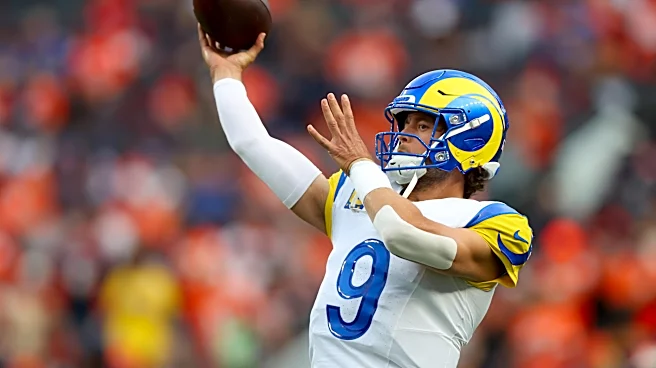
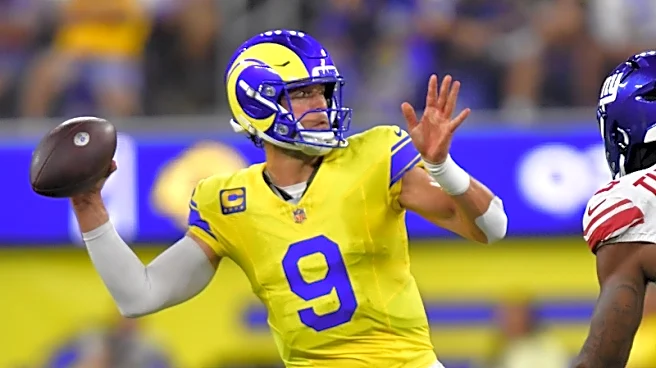
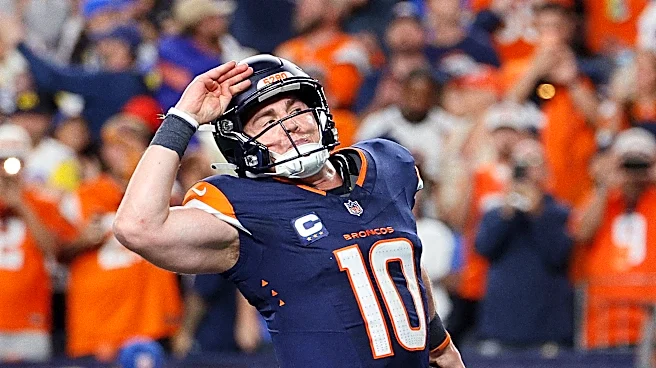
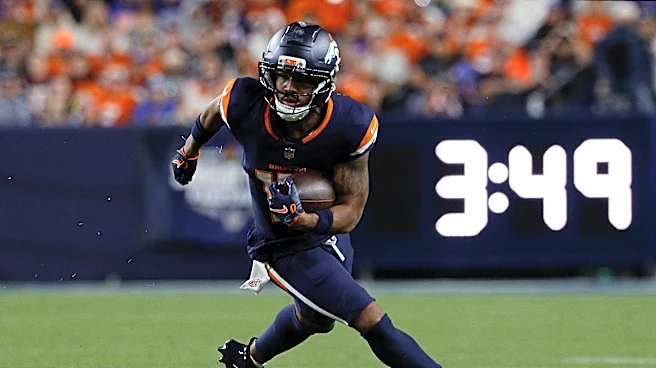
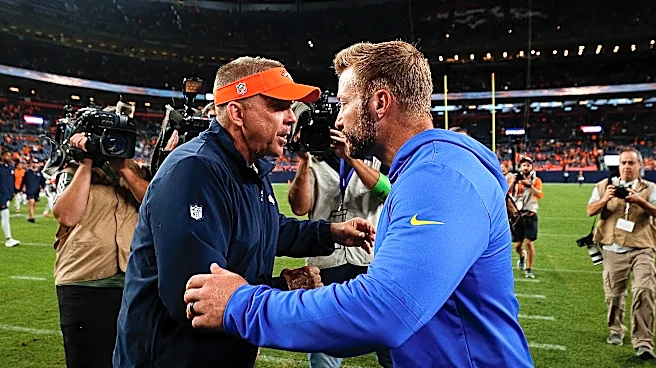
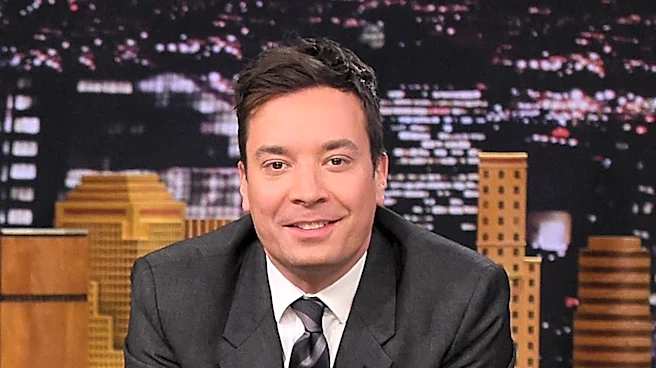
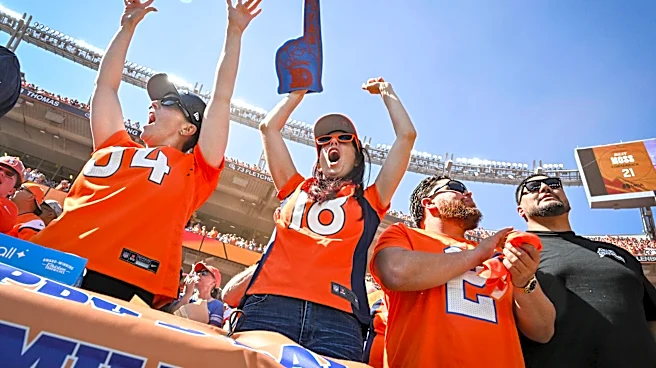
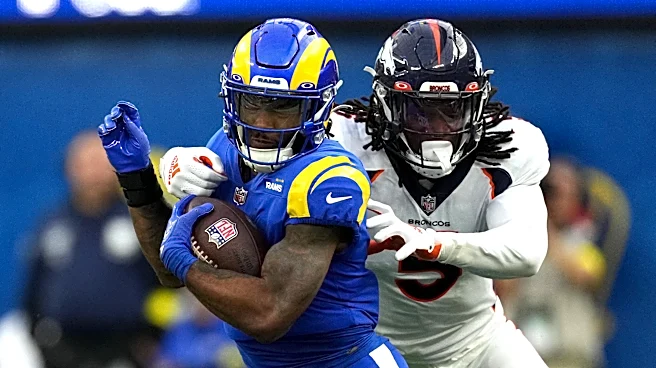
Jimmy Fallon's 'The Tonight Show' aired at 12:56 a.m. ET, its latest Sunday start ever, following a marathon Los Angeles Rams–Denver Broncos game. The NFL's Sunday Night Football broadcast ran 51 minutes past its scheduled end time, pushing back the entire
NBC late-night lineup. The game featured a frantic fourth quarter, multiple reviews, penalties, and a finish that extended deep into the night. This delay surpassed all ten of Fallon's previous post-Sunday Night Football episodes from 2019, 2024, and 2025. The episode, which featured Sylvester Stallone and Luke Bryan, was the first of four special Sunday editions scheduled for 'The Tonight Show' this NFL season. This incident marks the second consecutive night that live sports disrupted NBC's late-night schedule, as extended college football coverage also delayed 'Saturday Night Live' the previous night.
Why It's Important?
The consistent delays of late-night programming due to NFL overruns highlight the significant influence of live sports, particularly football, on television scheduling and audience viewership. While these delays can push shows to unusually late times, historically, NFL lead-ins have provided 'The Tonight Show' with some of its strongest audiences. This indicates a strategic trade-off for networks: sacrificing punctual scheduling for the potential of a larger, albeit later, audience drawn from highly-rated sports broadcasts. The impact on ratings for these delayed episodes remains to be seen, but the network's continued scheduling of post-football shows suggests a belief in the long-term benefits of this programming strategy. This trend also underscores the evolving landscape of television consumption, where live events command premium viewership, often at the expense of traditional broadcast schedules.
What's Next?
NBC has scheduled three more post-football 'Tonight Show' episodes for November 8, November 15, and January 10, indicating a continued strategy to leverage the NFL's audience despite potential delays. The network will likely monitor the ratings of these delayed broadcasts to assess the effectiveness of this approach. Other networks are also adjusting their schedules around live sports, with ABC's 'Monday Night Football' already set to push 'Jimmy Kimmel Live!' to a later start. This suggests that late-night shows will continue to navigate the challenges and opportunities presented by live sports programming, potentially leading to more flexible scheduling or alternative viewing options for audiences who prefer to watch at their usual times.
Beyond the Headlines
The increasing frequency of late-night show delays due to sports overruns points to a broader shift in television programming priorities. As traditional linear television faces competition from streaming services and on-demand content, live sports remain one of the few programming types that consistently draw large, immediate audiences. This makes sports a valuable asset for networks, even if it means disrupting established schedules for other popular shows. The reliance on sports as a lead-in also reflects the fragmentation of television viewership, where networks are increasingly seeking to consolidate audiences around major live events. This trend could lead to further integration of sports into prime-time and late-night scheduling, potentially reshaping the viewing habits of a significant portion of the television audience.