






What's Happening?
The Central Bank of Azerbaijan (CBA) has increased its GDP growth forecast for 2026 to 1.3%, a significant rise from its previous July estimate of 0.5%. This revision follows a 1.5% growth in the first nine months of the year. CBA Governor Taleh Kazimov
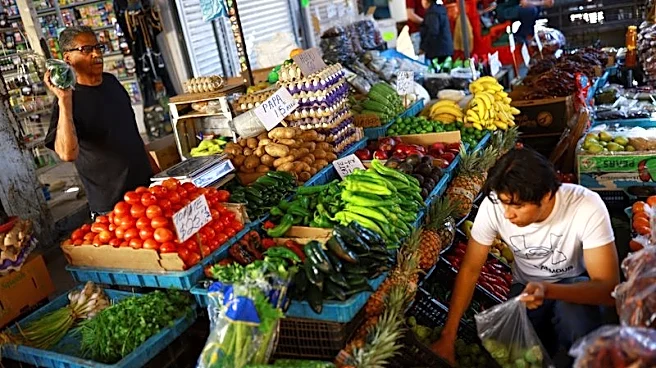
announced the updated forecast, noting that the upgrade is primarily driven by the non-oil economy, which expanded by 2.6% from January to September, fueled by tourism, trade, and telecommunications. The CBA anticipates non-oil GDP to grow by 2.8% this year and 4.3% in 2027. Conversely, the oil and gas sector, a major contributor to export earnings and the national budget, continues to decline, contracting by 0.6% in the first eight months. The Finance Ministry's 2027 budget projects a further 1.8% decline in this sector next year. Despite the CBA's optimistic revision, its 2026 forecast remains more cautious than those from the International Monetary Fund (IMF), which expects 1.7% growth, and ING, which forecasts 1.5%.
Why It's Important?
This adjustment in Azerbaijan's economic outlook highlights the country's strategic shift towards diversifying its economy away from its traditional reliance on oil and gas. The robust growth in the non-oil sector, particularly in tourism, trade, and telecommunications, indicates a successful implementation of economic diversification policies. This is crucial for long-term economic stability, as it reduces vulnerability to volatile global oil prices. The continued decline in the oil and gas sector underscores the urgency of these diversification efforts. For international investors and businesses, the growing non-oil economy presents new opportunities in emerging sectors. The discrepancy between the CBA's forecast and those of international bodies like the IMF and ING suggests varying levels of optimism regarding the pace and extent of this economic transformation, which could influence foreign investment decisions and credit ratings. The strong increase in strategic foreign currency reserves, reaching $89.4 billion, also signals a healthy financial position, providing a buffer against external shocks.
What's Next?
The Central Bank of Azerbaijan will continue to monitor economic indicators, with its next rate decision scheduled for December 23. The bank's current refinancing rate stands at 6.5%, with inflation at 5.5% in September, within its target range. Future monetary policy decisions will likely be influenced by the performance of the non-oil economy and global commodity prices. The government's target of 2.7% GDP growth for 2027, which requires a substantial 4.4% growth in the non-oil economy, indicates a continued focus on fostering non-oil sectors. Businesses and investors will be watching for further policy initiatives aimed at supporting these growth areas. The ongoing decline in oil and gas output will necessitate sustained efforts to boost other sectors to meet overall economic growth targets and maintain fiscal stability. The divergence in forecasts among various institutions suggests that the economic trajectory of Azerbaijan will be a key area of focus for analysts and policymakers.