



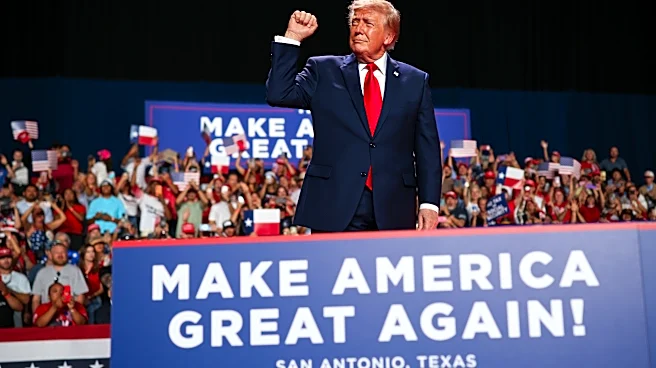
Ask a Republican about the midterms these days and you’re likely to get an answer that falls somewhere in the five stages of grief. There’s anger, of course — most of it at the deeply unpopular sitting president — but also denial, bargaining, depression,
and more than a little acceptance. The GOP has taken losses before, and if Donald Trump’s two reigns of tyranny are any indication, they’re pretty good at bouncing back.
They may have to do it again. With the party’s poll numbers looking grim in states where Republicans typically coast, GOP insiders say they’re bracing themselves for a big loss in the House of Representatives — even as they’re still hoping to hold the Senate after the last votes get counted in early November. That could be a tall order: an NPR/Marist poll in late September showed that across the country, voters would rather elect a Democrat to Congress than a Republican by a margin of 12 percent.
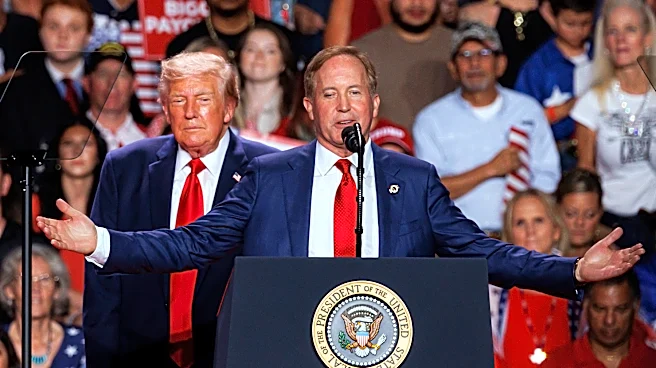
“Republicans are fucked,” one pissed-off conservative strategist and activist tells me, asking not to be named as they still work with Republican candidates. “Everyone sees Trump’s corruption. We’re going to lose Texas to a horrible candidate simply because it’s a referendum on Trump corruption and Paxton is just as corrupt as Trump.”
The Texas Senate race, where former seminarian James Talarico is poised to deliver Democrats their first statewide seat in decades, is basically ground zero for the GOP’s midterms debacle. It’s also where some of the more hopeful voices in MAGA-land think they can draw a line in the sand.
“The hammer that’s going to drop on Talarico over the next month is going to be brutal,” says a long-time conservative fundraiser and consultant, who also asked to not be named. The difference, they say, is cold hard cash: dark money, coming in from one of the new right’s most consistent donors. “I think that Musk will spend the money,” the fundraiser says. “At a certain point, if you put $200 million in, what’s another $50 million?”
We’re already seeing that play out: The Washington Post reports that Republican groups have outspent Democrats on advertising by well over $300 million dollars, a massive gap to overcome. Musk has spent over $36 million himself in this election, funneled through his America PAC, with much of that sum going to attack ads on Democrats, and it’s clear the GOP thinks that more cash is on the way.
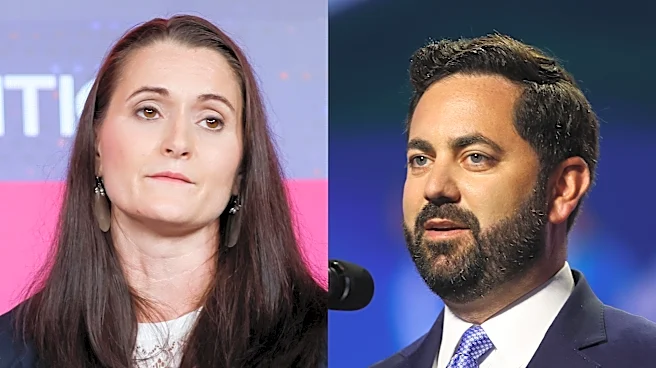
Democrats are aware of this risk. In late September, a Democratic consultant told me there was a “sense of nervousness” around the party, particularly given the two sides’ fundraising gap. Republican dark money is a major advantage in the late days of the race, and while the fundraiser notes it probably can’t bail out Republican candidates like Michael Whatley, who is way behind former Governor Roy Cooper in North Carolina’s Senate race, it could make a huge difference on tight races, like Abdul El-Sayed versus Mike Rogers in Michigan.
Republican strategists also think they have an advantage where Democrats have nominated candidates who are “far outside the mainstream,” according to Marc Short, a Republican consultant and former chief of staff to Vice President Mike Pence. But with an unpopular sitting president and majorities in the House and Senate, Short says it gets harder for the GOP to make their opponent’s policies and personality the focus of a race. Dark money is good for attack ads, but those don’t land as well when the GOP is constantly trying to defend their recent record of economic turmoil.
“You look at other ruby red states that are in play, including Iowa and Kansas and Nebraska — the common denominator there is that trade policy has created such an obstacle for our farming communities,” Short says.
This has forced many Republican candidates into a delicate dance: separate themselves from the president while still currying his favor. Senator Susan Collins has done this repeatedly in her tenure as a consistently red senator in a mostly-blue state, most recently during her debate with opponent Troy Jackson. (“I’m not exactly his favorite senator,” Collins said, at one point.) In Florida, as well, Republican Rep. Maria Elvira Salazar ran ads in September publicly criticizing Trump’s immigration policies in the midst of a tight race with a Democratic challenger. Mike Rogers in Michigan has also tried to distance himself from Trump’s tariff agenda.
And yet, the sheer power of Trump’s personal favor with likely Republican voters can’t be denied.
“Trump is the most popular brand that we’ve had in the Republican party in years,” the party fundraiser says. “Running away from Trump is a bad idea. I don’t think that his agenda is any less popular.”
Still, even the most optimistic GOP strategists think that the House is going to turn very, very blue. And with Trump’s second term almost halfway over, it means one thing: the GOP is headed for a major schism.
“I think there will be a reckoning in our party after this midterm cycle,” Short says. “I think you’ll see a renewed belief in fiscal conservatism — but it’s going to take the results of a midterm election to rediscover that.”
That’s the polite way of saying it. Inside the GOP, there are factions that are far more fed up with what Trump has done to the party.
“Trump has had the GOP by the balls for the past 11, 12, 13 years,” the conservative activist says. “Everybody’s sick of it. Watch after the midterms. His whole entire admin is going to flee like rats fleeing a sinking ship.”
But while the Trump administration may abandon ship in a lame duck period, Short says the rest of the GOP will eventually find their feet again: “There’s nothing that unites us like having the Democrats in control. If it’s Jeffries and Schumer leading a legislative agenda, a lot of those factions will come together.”
I ask the fed-up conservative activist if there is any silver lining to a Democratic blowout signalling the end of the Trump era. “I’m heartened by the fact that it ends in a month,” they say.
Click here to read the full article.