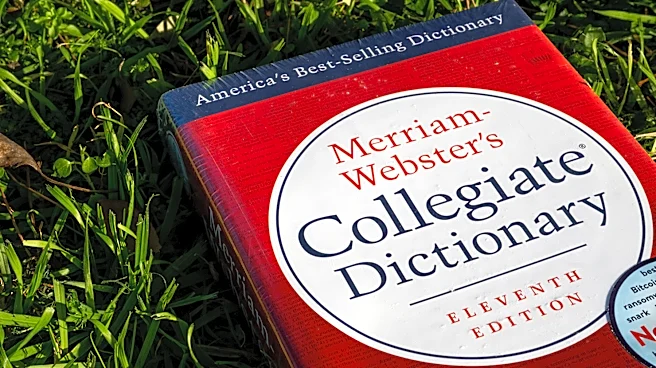





Has the internet made keeping up with the ever-evolving glossary of new phrases feel borderline impossible? Don’t worry, Merriam-Webster is here to help.
The famed dictionary added 1,400 new words to its dictionary on Wednesday, many focused on internet-first
phases and trends. “The new entries reflect words and meanings that have demonstrated widespread use over time, offering a window into the world today,” Merriam-Webster said in a statement, calling the adds a “glow-up” to the dictionary’s historic lexicon.
The new batch of words focus on the worlds of food, social media culture, technology, fashion, and community. These include everything from “shapewear,” “looksmaxxing,” “meme coin,” “parasocial,” “promposal,” “vibe coding,” “cuffing season,” “Sunday scaries,” “crashout,” and “California sober.” Other additions are “Rickroll,” “compute,” “yacht rock,” “whack-a-mole,” and “uncanny valley.”
Merriam-Webster has a long established history of updating its dictionary to include modern phrases and terms introduced and used in pop culture and digital spaces. According to their public guidelines, dictionary editors pick the new additions by using three criteria: frequent use, widespread use, and meaningful use.
With the new words including major additions from the technology and communication worlds, Merriam-Webster might be providing some clues to its word of the year. The frontrunners for the annual tradition haven’t been announced yet, but the winners in years past were “slop,” “polarization,” and “authentic.”
“New words like hashtag and selfie get a lot of attention, but many of the new words we add are new meanings of words that are already staples in our language: think of the recent meanings of mouse and cookie that have nothing to do with rodents or baked goods,” the company says on its website. “The Internet-specific senses of lurk and browse built upon the existing meanings of those terms. A verb that we use every day, access, was first entered in the Collegiate Dictionary in 1973, and a specific reference to computers was added in 1993. These words may not make headlines, but they’re just as important as words that are newly coined.”
Click here to read the full article.