







One video led to another until eventually my TikTok feed was full of teenagers trying to get taller. They were calling it “heightmaxxing,” a subset of the much-dissected world of “looksmaxxing,” where young men trade strategies for improving their appearance
in hopes of warding off a fate of despair and loneliness. For these young men, the logic is mercilessly efficient: Everything in life is better if you’re tall.
The videos arrived with the narrative progression of a course syllabus. First came explainers on “heightism,” or discrimination based on someone’s height. Dating was a frequent point of frustration, with being tall treated as a prerequisite for being considered at all.
Then, slowly but surely, strategies on what you can do about it.
Eventually, I was watching teenagers discuss something called erda. They posted updates on how much they’d grown and compared notes on side effects. Some showed tape measures against marks on a wall; others labeled videos by how many days they’d been taking it. Erda, it turns out, was short for erdafitinib, a cancer drug that the boys on my feed believed could make them taller, pointing to reports of unexpected growth in children being treated for cancer. They were willing to endure debilitating symptoms to find out.
About half an hour into my conversation with Zak, a 17-year-old TikToker in New York, he tells me he had been preparing for the possibility of a hospital stay. He’d been taking erda on and off since he was 15, and after bouts of joint pain and nosebleeds, he expected that something might eventually go wrong. “I was literally saving money every single day. I was putting money aside from my work and everything just for a medical bill from erda.” He says he bought the drug from overseas online vendors, initially paying $300 for a month’s supply.
Zak says height became particularly important to him as he spent more time on social media. He remembers videos of women discussing how tall a man needed to be for them to consider dating them. At school, he says he was made fun of for being shorter than girls in his class. “I don’t like other people towering over me, and I don’t like having to look up to people,” he says. “I don’t know how to put it, but it feels like I’m not in control.”
Erdafitinib, sold under the brand name Balversa, was first approved in 2019 to treat certain advanced bladder cancers in adults. Doctors have also used it off-label in clinical trials of children with rare cancers of the central nervous system. The drug’s known side effects are nothing short of gnarly: its prescribing information lists diarrhea, pain in the limbs, nausea, and nails separating from their nail beds, as well as excess phosphate in the blood, which can cause mineral deposits in soft tissues.
In a statement, a spokesperson for Johnson & Johnson, which markets Balversa, expressed concern about online content appearing to show young people using prescription drugs for unapproved purposes or without medical supervision. “It has not been approved to increase height, and its safety and effectiveness have not been established for that purpose or for use in any children or adolescents,” they said, adding that the company urges patients to consult qualified health professionals about treatment and to only use medicines from verified sources under medical supervision.
Zak reports nosebleeds, severely dry skin, and pain that made ordinary movements difficult. “Stretching my arm felt like my wrist was going to tear off,” he says. “Waking up, it felt like my spine was bent. I had to spend one hour of just stretching so my spine feels better.” Even then, he says, the pain persisted.
When we talk, he’s stopped taking the drug, though he’s ultimately pleased with the results and is already thinking about starting again. By his own measurements, he says he grew several inches between roughly ages 15 and 17, while taking erda on and off. He says his height had previously plateaued.
A Few More Inches
Adalbert Raimann, a pediatric endocrinologist at the Medical University of Vienna in Austria, is an author of an erdafitinib study often cited by heightmaxxers. Published online in July 2024 in the peer-reviewed journal Hormone Research in Paediatrics, it described unexpected growth in two children with central nervous system tumors.
Raimann explains that, during puberty, growth takes place in cartilage near the ends of bones, known as growth plates. Those plates fuse once we reach our full height, around early adulthood. Erdafitinib blocks proteins called fibroblast growth factor receptors. One of them, FGFR3, normally helps limit bone growth; blocking it can allow growth to speed up while the plates are still active.
Over video chat, Raimann stresses that why those children were receiving the drug matters. Doctors were trying to keep children with rare, life-threatening cancers alive after other treatments had failed. That meant using a drug not approved for children and tolerating serious side effects.
“And those receptors we’re targeting with erda, they’re present in basically every cell,” he says. “So we have no idea, not in adults and especially not in kids in this developing system, what we are doing in five to 10 years.”
After those growth plates have fully closed, Raimann says, there’s no way to naturally grow taller. It’s why some adults in the heightmaxxing world turn to dangerous and excruciating leg-lengthening surgeries, which involve cutting the leg bones and gradually pulling the sections apart so new bone grows in the gaps. It’s also why the demographic hungry for experimental treatments skews so young. The teenagers I spoke with felt like it was potentially their last chance to intervene.
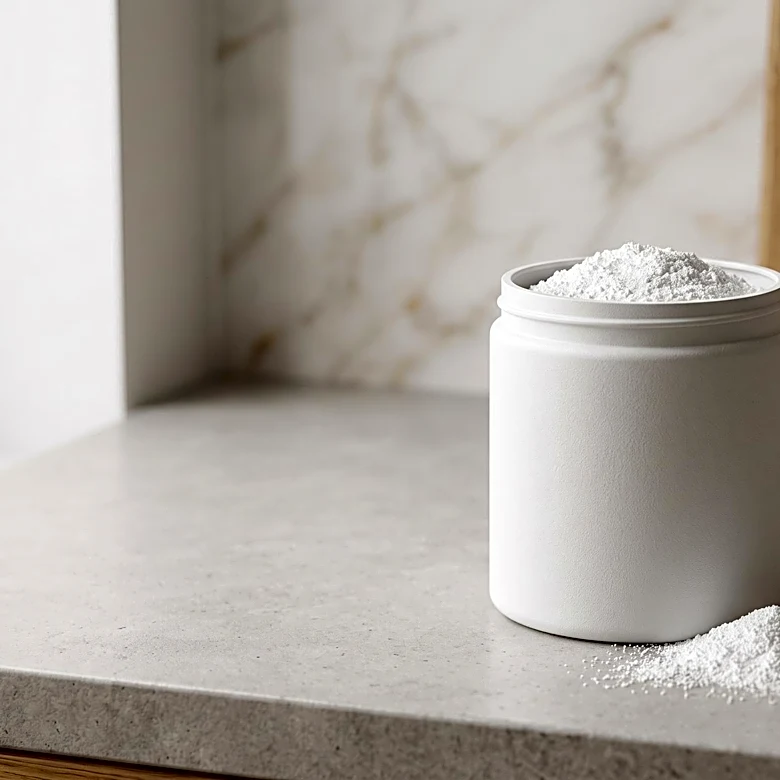
For James, a 17-year-old on the West Coast who asks that I use only his first name, an X-ray helped set off his search for something that could make him taller. During our Zoom call, he holds up a translucent plastic container where he keeps the powder he identifies as erda. Then he brings his hand toward the webcam, curling his fingers to show me his fingernails. They’re yellowish and oozing pus. He says they’ve been falling off. “Bro, it’s bad.”
“I just thought I was just going to be a late bloomer because my uncles and dad, they grew very late,” he says. “So I got a bone-scan X-ray and yo, the doctor said I have a bone age of 18. I can maybe grow another millimeter. And I was five foot five, so it was pretty bad. So then I just knew that there had to be something that could make me taller.”
He says he began taking erda in late August and grew roughly two and a half to three inches in two months, while also using other drugs. “I grew more in two months than I did in one year,” he says.
Erda wasn’t the first drug James had considered. Doctors already prescribe growth hormone to help some children gain height, supplying a hormone the body naturally produces. Andrew Dauber, a pediatric endocrinologist at Children’s National Hospital in Washington, D.C., says there’s a distinction between treating a hormone deficiency and intervening because a child is just short.
“There are children who are deficient in growth hormone, who have severe growth issues, who really medically need growth hormone as indicated. And then there’s this gray zone of using growth hormone for short stature,” he says. The FDA also approves it for some children whose short stature has no identified cause, a category called idiopathic short stature. Dauber describes the threshold as “a height below minus 2.25 standard deviations.” This translates to an adult male height of five feet three and an adult female of four feet 11.
Though guidelines are set by the FDA, doctors have the option of prescribing growth hormone off-label for individuals who they think could benefit from it. The decision involves an expensive treatment with risks, Dauber says, and doctors disagree about when it is warranted.
“I’ve spoken to a lot of pediatric endocrinologists and some say, ‘Listen, I know they’re going to get it. They’re either going to get it off the internet or they’re going to go see a doctor who doesn’t know as much about it, and I feel like I should just give it to them and at least monitor them for safety and do it in a safer way,’” he says. “And then there are many endocrinologists who feel like this is not really a disease or not really a medical problem.”
Dauber says he has now received his first patient inquiry about erda. He will not prescribe it for growth. “That’s way too dangerous. We only know about it at the chemotherapeutic doses,” he says, referring to the amounts used to treat cancer.
Whatever It Takes
James says that when he was younger, his parents refused to let him take growth hormone. After an endocrinologist told him he was nearly done growing at five foot five, he says, their guilt over that decision made them more permissive about his experiments with erda and other drugs. “They kind of let me do everything,” he says.
Zak says his parents “don’t approve of anything I’m doing.”
Both say that nothing would stop them from trying anything they can to get taller. “There’s this life that I have in mind, and I just want it so badly that I’m not going to let some risk stop me from getting the life I want,” James says. “I don’t know. I just want it so badly.”
There’s been a marked turn toward DIY healthcare in recent years, as alternative medicine and biohacking protocols gain mainstream popularity. People on social media increasingly promote injectable peptides and other invasive methods for optimizing one’s health and looks. For Zak, the adverse reactions have become part of that pursuit. “If I get into side effects, nobody would want to touch this compound,” he says. “But to me, I get obsessed over this stuff, and I still think it was worth it.”
James calls his bedroom a lab. He says he sources the drugs through black-market online suppliers. In addition to erda and human growth hormone, he says he’s experimented with tamoxifen and letrozole, two drugs used to treat breast cancer, and abaloparatide, a drug for osteoporosis. He also uses experimental compounds called SAG 21K and KY19382, which researchers have studied in mice for their effects on bone repair or growth.
He says he went to the hospital with a stomach bleed during his first month of taking erda, though he isn’t sure which exact compound caused it. He has since switched to online school because he says the pain and vomiting made attending in person too difficult. “At school, I threw up blood one time,” he says. “And it hurt so bad to move. I can only go out once a week. I just go out on Fridays and just rest the whole day because everything I’m doing, it makes me so tired and hungry that I literally just have to lay down.” He says his bones feel like they’re stretching apart. “So it’s hard to do anything.”
‘Never Enough’
The anxiety around male height isn’t exclusively coming from the teens themselves. Both Raimann and Dauber say they regularly see parents looking for ways to help their child reach a particular height, especially the parents of young boys. “I had a mother say in front of her child, her teenage son, ‘If he ends up five-seven, his life is over,’” Dauber recalls. “My eyes just shot open, and I’m like, ‘Well, think about the psychological effect that that has on your teenage child to say such a thing.’”
“I think there’s an enormous social pressure, especially on young males to become taller,” Raimann says. He says some boys perceive the risk of remaining short as greater than the risk of taking experimental drugs.
Zak explains why he feels he has to keep improving. “I’m trying to maximize every aspect of my body. No matter what I do, I still feel like it’s not enough,” he says. And when it comes to girls, he says, “They constantly want something better.”
Across social media, short men lament poor treatment romantically, pointing to research on the advantages taller men enjoy both professionally and in dating. On Reddit, communities like r/short and r/shortguys draw tens of thousands of members sharing their experiences. One user, who says he is a 21-year-old in Spain, tells me in a DM that reassuring stories about other short men did little to change his outlook.
“People know how a short person is treated in this world; the problem is they try to turn a blind eye. They play dumb, saying things like: ‘Well, but I know someone who…’ — purely anecdotal experiences that honestly don’t reflect the reality for the majority.”
For all of the recent talk of short kings in pop culture, the men I spoke with describe familiar stigmas around male height.
Jason Nagata, a pediatrician specializing in adolescent and young adult medicine who treats patients with eating disorders, recently heard through consultations about a patient asking to use erda to try to get taller. Nagata says the repetition of certain types of content can distort a young person’s sense of how common these practices are.
“I do think that social media and online communities normalize behaviors that might otherwise seem extreme,” Nagata says. “So if you’re constantly seeing peers or influencers discussing hormones, drugs, steroids, or surgery as sort of ordinary optimization tools, then it makes it seem like everyone’s doing that.” A young man who engages with this content gets more of it in his feed, he says. “So I think you can have a misperception of what’s normal.”
Nagata says that one way to help dissuade this kind of behavior is to hear kids out. “When talking with teens about height or other appearance concerns, I recommend starting with open-ended, nonjudgmental conversations,” he adds. “Parents can lead with curiosity and try to understand what their child is concerned about, what they hope to achieve, and what they have heard or seen online. Once you understand where they’re coming from, you’re in a better position to provide helpful, evidence-based guidance.”
Zak says he first started looking into steroids and looksmaxxing drugs when he was 12. He remembers a teacher catching him researching performance-enhancing drugs on his school Chromebook. “My friend has a video of my teacher yelling at me,” he says.
The pandemic put his interest in pharmacology into overdrive, as he was able to spend hours online doing research. “I have photos of my screen time. It’s literally 17 hours of YouTube videos on this stuff,” he says of the period. “I was obsessed. I forgot to eat my meals.” He tells me he even performed nipple-reduction surgery on himself after using YouTube to watch surgical procedures.
Asked why he shares his experiments online, Zak says, “I just want to show other people how it’s so possible to literally do anything.” He describes commenters under his erda posts announcing that their own orders will arrive in a few weeks and asking whether the side effects are as bad as they sound. He says he does not sell erdafitinib or give out his source. He also thinks the size of an online audience can give a misleading impression of how many people are actually taking it.
“You would think that there’s a lot of people, but that’s just because having a platform helps you reach so many people.”
A TikTok U.S. spokesperson says the platform prohibits content promoting erda or showing its use, as part of its rules against selling or facilitating access to regulated or high-risk goods. The spokesperson says TikTok may limit search results for unapproved or potentially unsafe products and direct users to authoritative health resources, and that the company continually refines those measures.
Many of the accounts I’d initially seen have since been banned. Right after our interview, Zak sent me an email letting me know his account had been banned, pointing me to his new backup username.
‘Perfect Everything’
Beyond social platforms, the search for drugs leads to gray-market vendors. Zak tells me he lost money twice trying to buy another compound using Bitcoin. One of his suppliers, he says, worked at a biotech lab.
“I went on a Chinese dating app in a certain city in China that’s known for its biotech labs and things like that,” he says. The woman he met there sent him research chemicals and could even supply custom compounds, he says.
Tim Mackey, whose company S3 Research monitors online drug markets, had his analysts look into erdafitinib after I contacted him. They found discussions on Telegram and other platforms about sourcing and taking the drug. Some people appeared to be buying raw ingredients rather than a finished medicine. Mackey says buyers cannot assume they are getting what is advertised.
“Cancer drugs tend to be in a very controlled supply chain,” he says. What buyers find online could be legitimate medicine diverted from that chain, raw pharmaceutical ingredients not intended for human use, or counterfeit products.
Dauber cautions that the published reports of children growing on erda also describe abnormal bone growth and development. Even so, the warnings haven’t deterred Zak or James. Both say they’re treated better by their peers now that they’re taller. Zak says critics in his comments tell him that he’s trying to die early by taking experimental compounds, but he insists the opposite. He wants to live his life fully and believes the drugs can help him do that.
James tells me he is scared of dying and worries about cancer each time he takes a new untested substance. He also says another hospital stay wouldn’t persuade him to stop; he wants to keep going until he reaches a height he is happy with. Somewhere around six foot four. I ask what he imagines life would feel like at that height.
“I don’t know. I feel like I wouldn’t have to worry about anything really, because my entire life, everything that’s made me sad and depressed and just not doing OK, it all stems from just my looks and being insecure, all of that,” he says. “So if I fix everything, almost all my problems would go away. When you’re six-four and you look perfect, your perfect face, perfect everything.”
Click here to read the full article.