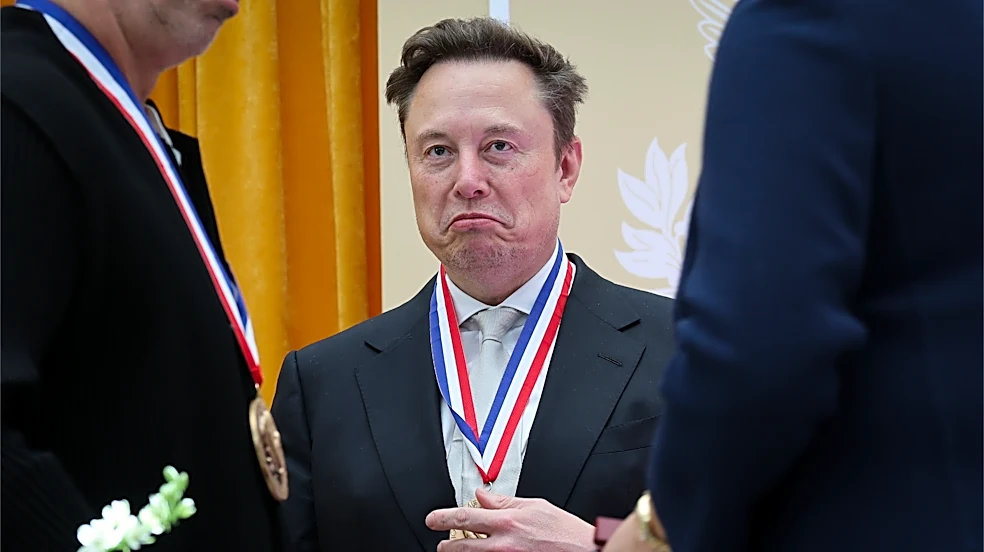





If you absolutely must hand it to Elon Musk on anything, he’s got a carnival barker’s ability to capture attention, generate headlines, and sell people what they want to believe. The latest example, following an event at SpaceX’s rocket development testing
facility in McGregor, Texas, involves the supposed actualization of yet another sci-fi trope: the flying car.
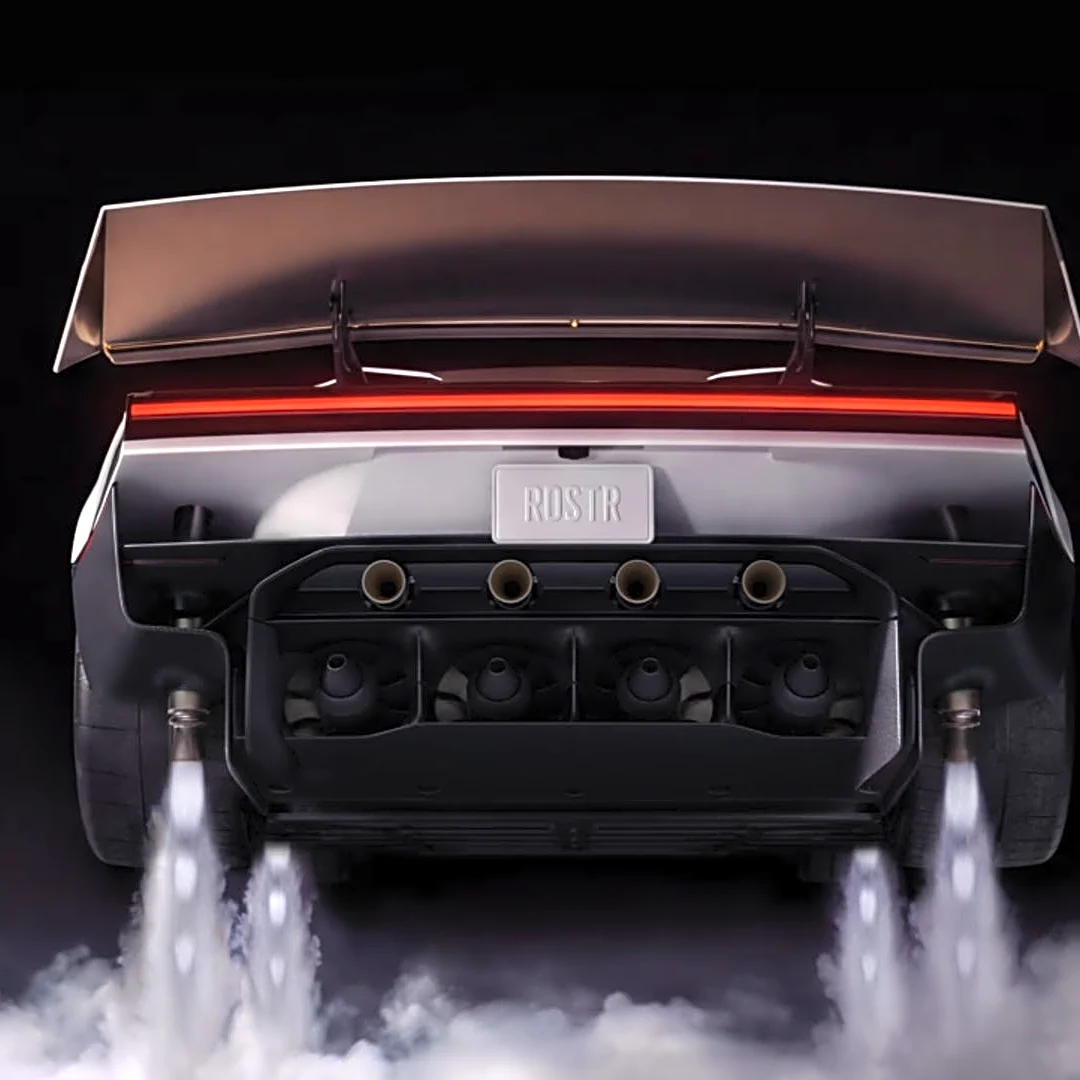
On Thursday (Oct. 15), Tesla showed off an early version of its Roadster 2, the long-awaited second generation of the automaker’s 2011 sports car. Per Car and Driver, Musk boasted that the Roadster 2 would be able to go from zero to 60 miles-per-hour in less than a second; reach top speeds of over 230 mph (but with a goal of cracking half the speed of sound at 383 mph); and was built with a fan system underneath the car that can allegedly help suction it to the ground at low speeds for better traction.
But the fan system featured even more prominently in the marquee event of the night: It allowed one version of the Roadster 2 to stick to a giant half-arch ramp, briefly driving upside down before launching off and doing a barrel roll. At this point, after righting itself mid-air, a bunch of thrusters were deployed to help the car not exactly fly, but descend to the ground with some control.
Another stunt showed the thrusters (supplied by Musk’s rocket company, SpaceX) lifting the car from a normal driving position and flinging it over a bunch of lined up automobiles. The thrusters again helped the car descend and drive away.
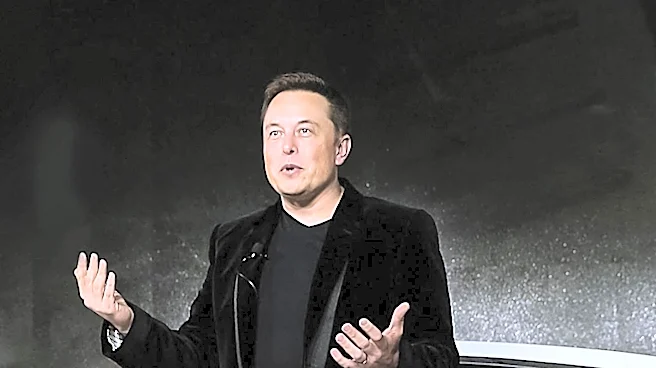
“It can basically fly like a rocket,” Musk said at the presentation. “It can do, like, crazy gymnastics. Whatever you want.” He added, “This is not necessarily a safety-optimized car, but it takes the fun meter to 11 out of 10.” (It should be noted that the Roadster 2 demos were done remotely with nobody actually in the car.)
The “flying” version of the Roadster 2 is one of three versions that Tesla is prepping, and which are set to go into production in 2028. It’s also, unsurprisingly, the only version of the Roadster 2 you can’t reserve. If you really want, you can give Tesla $50,000 now to reserve the standard, road-ready edition of the Roadster 2, or fork over $250,000 for a version with rear thrusters. Access to the flying car, meanwhile, will solely be invite only.
And TBD on whether you’ll actually be able to drive it. Musk himself acknowledged he wasn’t sure if the flying car was “necessarily legal in all jurisdictions.” And a former Federal Aviation Administration official told Wired that any flying vehicle over 250 pounds would need approval from the agency, plus people would likely need a recreational aviation license to operate it.
Also, there remains the distinct possibility that the Roadster 2 flying car stunt was, well, just that. Tesla has a history of fudging demonstrations, whether it was allegedly remote-controlling its supposedly autonomous Optimus robots in 2024, or exaggerating the abilities of Tesla’s self-driving technology in a 2016 video.
Musk was directly involved in the latter incident, emailing his team at the time, “Since this is a demo, it is fine to hardcode some of it, since we will backfill with production code later in an OTA update. I will be telling the world that this is what the car *will* be able to do, not that it can do this upon receipt.” (In the years since, Tesla has faced so manylawsuits related to crashes tied to its self-driving tech, there’s a whole lengthy “Regulatory and legal actions” section on the Tesla Autopilot Wikipedia page.)
It’s also probably worth mentioning, too, the timing of this unveiling. Search “Elon Musk” now and you’re more likely to get a whole bunch of stuff about a “flying car” than anything tied to Alex Gibney’s damning new four-hour documentary, Musk, which hit theaters last week.
Click here to read the full article.