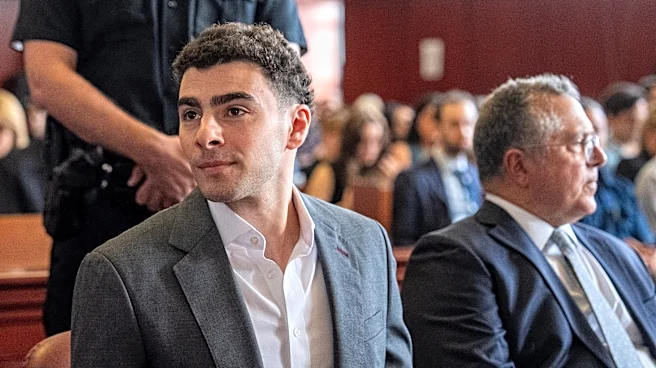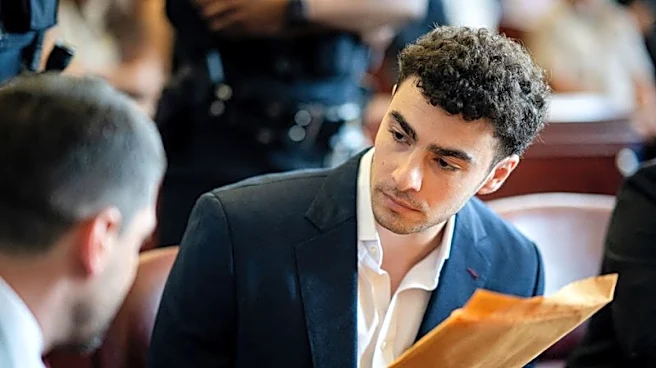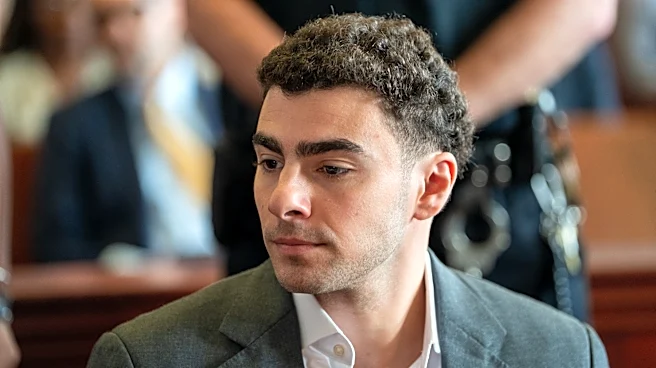

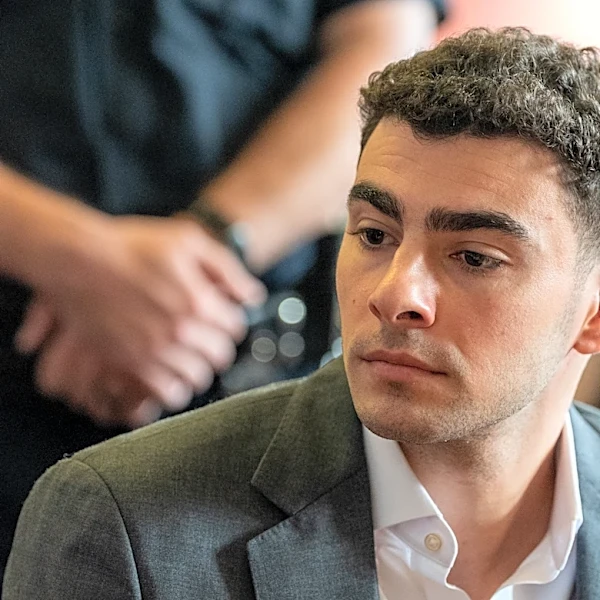





Luigi Mangione is expected to plead guilty in federal court in New York City on Friday, on charges of stalking UnitedHealthcare CEO Brian Thompson, according to The New York Times. Because of double jeopardy laws, which can prevent a person from being
tried for the same crime twice, this could have significant impacts on his upcoming state murder trial, which is expected to begin on Sept. 8.
Thompson was killed on Dec. 4, 2024 in midtown Manhattan, and five days later, Mangione was arrestedas the prime suspect in his death. In New York state court he faces murder and weapons charges. His federal court date is currently set for January 2027. As of today, Mangione, 28, has pleaded not guilty to all state and federal charges against him.
Mangione faces two stalking charges in his federal case, with a maximum penalty of life in prison without the possibility of parole. He had previously also faced a charge of murder through the use of a firearm, which carried a possible death penalty sentence, but that charge and an additional firearms charge was dropped in January.
If Mangione does make a plea deal in his federal case, that doesn’t mean he will be able to negotiate what his sentencing will look like. “The [federal] prosecutors will recommend a certain sentence within the guidelines, and then the defense says we agree to that, but ultimately it’s going to be up to the judge,” says attorney Catherine Christian. Though she has not worked on this case, Christian was a prosecutor in the Manhattan District Attorney’s office and is now a criminal defense lawyer. She explains that in federal court, defendants don’t necessarily know what the sentencing will be when a plea deal happens, because that is ultimately determined by the judge in the case, which for Mangione is Judge Margaret Garnett.
Christian explains that Mangione might strike a plea deal with federal prosecutors versus state because his federal charges are more severe and don’t have the option for parole. “It makes [more] sense to talk to the federal prosecutors, because they have the real hammer over Mr. Mangione with life without parole.” Meanwhile, his state murder charge can lead to a sentence of 25 years to life. Plus, because of New York’s strict double jeopardy protections, his team could potentially argue that his New York state charges be dismissed entirely.
Christian says the double jeopardy argument could be made stronger if, in a plea change, Mangione were to state he intended to and did kill Thompson.
“Those are the elements of murder in the second degree,” says Christina, “If I were the defense, I would argue it’s the same transaction, and factually, he’s pled to the same thing he’s being charged in state, therefore, the indictment should be dismissed.”
She says this was an argument former Trump campaign manager Paul Manafort’s defense successfully made in 2019.
It will be up to New York Supreme Court State Judge Gregory Carro to decide whether to dismiss his New York state indictment, assuming Mangione’s team argues double jeopardy in court. (The state prosecution will also be given a chance to respond before the judge decides.) If the case does end up going to state trial, Mangione’s defense team could later appeal on the grounds of double jeopardy.
The double jeopardy clause of the Fifth Amendment is meant to protect a person from being prosecuted twice for the same offense. However, the “separate sovereigns doctrine” allows a federal and state court to prosecute the same defendant for the same act, if the act breaks both federal and state laws. Plus, if the crimes are considered “substantially different” and are distinguishable from one another, even if they come from the same act, they can still both be prosecuted. In this case, Mangione’s state charges are murder and firearms offenses and his federal charges involve “interstate stalking” which led to conduct that “caused the death” of Thompson.
Christian points to the fact Carro has already dismissed the terrorism charges against Mangione, and allowed some evidence to be suppressed. “A well-written double jeopardy brief may convince him,” she says. “Or he might say, ‘Let’s go to trial. If you’re convicted, let the appellate court decide this.’”
In the past, there has been a lot of conflict about whether Mangione’s New York state or federal trial would go first. (Mangione also faces forgery and firearms charges in Pennsylvania, where he was arrested at an Altoona McDonald’s on Dec. 9, 2024.)
Mangione’s lead defense attorney Karen Friedman Agnifilo has called Mangione’s situation “untenable” and said he’s in a “tug of war between two different prosecution offices.”
Assistant District Attorney Joel Seidemann has said that Thompson’s family has asked federal prosecutors to let the state case take priority. In February, Carro said it would not be fair for the federal trial to go first because state agencies “did most of the work.”
In Mangione’s June hearing in state court, Carro unsealed a notice that Mangione’s legal team had filed saying they might use a psychiatric defense in his state trial, on the basis of “extreme emotional disturbance” at the time of the Thompson shooting. However, Mangione’s team suddenly withdrew the EED notice the following day.
In July, when there were initial rumors of plea talks between Mangione’s team and federal prosecutors, Seidemann wrote a letter to Carro saying that a guilty plea in federal court could undermine the state’s murder trial, and revealing that he’s told federal prosecutors and Mangione’s legal team that he’d like that to be taken into account.
“Obviously, any guilty pleas in these matters must account for the seriousness of defendant’s offenses,” wrote Seidemann. “The loss of an innocent life, the impact of those crimes on the victim’s family, and the other state interests that are implicated, including the sanctity of life principle that underpins the state homicide charges.”
As of now, however, Mangione has pleaded not guilty to all charges. On Tuesday, Carro announced there will be an anonymous jury in Mangione’s state murder trial. He added that he expects additional motions for the case to be filed in the coming weeks.
Click here to read the full article.