

Glen Hansard stepped away from the mic, stepped to the lip of the stage, and shouted the words “I got a home on high.” Coming out of Ireland’s busking tradition, Hansard had been singing this way his entire
life. So when he was faced with some seeming sound issues mid-way through a spellbinding Carnegie Hall performance in March 2019, where he was appearing at a tribute to his hero, Van Morrison, Hansard ripped the cord from his guitar, moved closer to the crowd, and reduced the historic 2,800-person theater to yet another cramped Dublin pub or street corner.
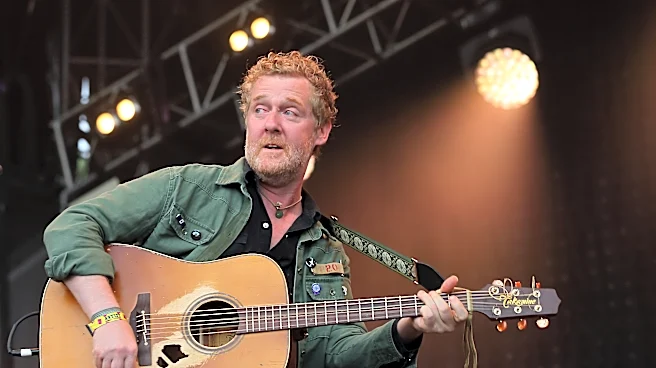
Hansard was performing Morrison’s “Astral Weeks” — his musical North Star — and delivering the type of electrifying solo-acoustic performance for which he was best known and beloved. He strummed his guitar so fast you could hardly see his right hand moving, he screamed and shouted Morrison’s divine ode to the slipstream, turning the meandering song, somehow, into a sing-along with the audience. He preached and prophesized, offering life lessons in the midst of his call-and-response instructions. “When you sing from the heart,” Hansard told the crowd mid-song, almost as an aside, “you’re never out of tune.”
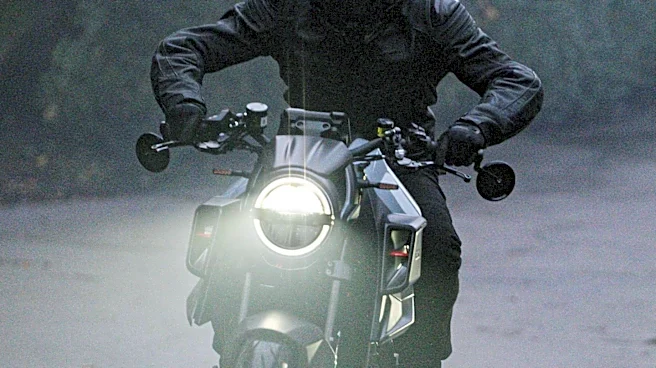
Hansard, the Irish singer-songwriter whose shocking death at 56 from a motorcycle accident earlier this morning is still being processed by fans, friends, and family, was best known as the heartfelt busker-turned-balladeer exemplified that night at Carnegie Hall. But his music was often far darker and more musically unsettled than anyone might’ve assumed if they knew him (much to his chagrin) either as the fresh-faced bassist Outspan Foster in 1991’s The Commitments or, more commonly, the down-and-out version of himself he played in Once, the 2007 film that became a runaway hit, a Broadway musical, and, ultimately, the project with which he was most closely associated.
Hansard was much more than that. He was a rock star, synthesizer and serenader, a busker and bard, a jazzman and a mystic, a hushed folk whisperer and showbiz soul belter, both a restless innovator bristling against the expectations placed upon him and a crowd-pleasing storyteller whose non-musical narratives could be almost as compelling as the greatest songs he wrote. (Drop everything and listen to his 10-minute story of the night he met Morrison if you haven’t heard it.) The songs Hansard wrote were tales of madness and mercy, just as often full of unresolved tension and simmering dissonance as of cathartic release. He was both a post-Dylan singer-songwriter strumming originals that articulated his understanding of the world and a profound, old-fashioned interpreter of others’ material, someone who often showed more of himself in his performances of another’s songs more than his own: See his spellbinding 2012 performance of Bruce Springsteen’s “Drive All Night,” which is less a cover and more a musical travelogue of Hansard’s entire musical life.
Shortly after witnessing Hansard completely steal the show at Carnegie Hall with his Van Morrison busking display in the spring of 2019, I interviewed him for Rolling Stone about his upcoming solo record. When I asked where he was calling me from, his storyteller skills snapped into focus.
“I’m in a beautiful garden where everything is bursting with light,” he said. “I’ve just been checking out my motorcycle and it’s been running beautifully, and it’s a perfect spring day in Ireland, which is a rare, rare thing. I’m over the moon to be here.”
But the tone Hansard struck in our conversation was not one purely of contentment. He seemed almost frustrated — by how the world viewed him as that guy from Once, by how he viewed himself, at times, as that guy from Once. After making the film, Hansard formalized a real-life musical relationship with his co-star and collaborator, Markéta Irglová, and they toured the world together as the Swell Season, but when we spoke they hadn’t performed together in some time.
He told me that his previous solo album, 2018’s Between Two Shores, was the first-ever record he’d ever felt like he’d somewhat phoned in. He explained that he’d become determined to do the opposite for his next record. That new album, 2019’s This Wild Willing, was, Hansard told me, a much truer expression of where he felt his music, art, and life had taken him in middle age. He said that he’d been thinking a lot, while making the record, about the joking nickname that musician Nico Muhly once teasingly gave him: Earnest Strum. He wanted to make the anti-Earnest Strum album.
“I’m kind of bored with the music I make,” he said. “I had to let go of who Glen Hansard is, of who Earnest Strum is. I had to let go of the concept of being a folk singer.”
Hansard pointed to the opening song of that record: “I’ll Be You, Be Me,” a stormy track with drum loops and a Queen/Bowie sample that features three minutes of Hansard whispering before it breaks down entirely into a wash of noise guitar and vocal chants.
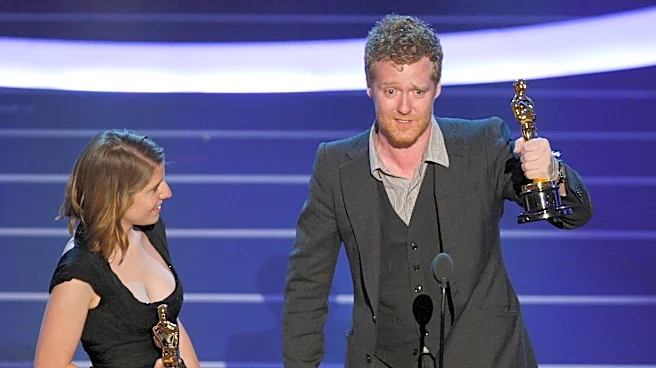
“The guy who wrote ‘Falling Slowly,’” said Hansard, referring to his Oscar-winning Once ballad, “and the guy who wrote ‘I’ll Be You, Be Me,’ is the same guy.”
The truth is, Hansard was all of those things. As lead singer of the influential Irish rock band the Frames, as one half of the Swell Season, and as a solo artist, Hansard was one of the most beloved singer-songwriters of his generation. He channeled his many musical heroes into his songwriting and intimate performance style that always harkened back to his roots as someone who sang for random passers-by on the street.
What did it mean for the Van Morrison-loving, street-busking guy from Once to let go of the idea of being a folk singer? “Songform has changed,” he said back in 2019. “This whole ‘verse/chorus,’ it’s out the window, it’s gone, it’s pointless. So in a funny kind of way I’m struggling and battling with the music I’m making because it’s that same traditional format of my heroes, the Leonard Cohens and Joni Mitchells.”
It was a tension he seemed to contend with for the rest of his career, including on his most recent solo album, 2022’s adventurous All That Was East Is West Of Me Now. “I’m stepping lightly/I’m learning to dance,” Hansard, indeed at his most Cohen-esque, sang on one song. “I’ve got 52 milk-white roses for the angels of happenstance.” Even when he finally reunited, last year, with Irglová for the first Swell Season album in 16 years, the album’s title — Forward — seemed to speak to some reluctance about the risk of nostalgia from such a reunion.
Trying to listen to Hansard’s music through the prism of his shocking death is a fool’s errand; Hansard was too interested and invested in the spiritual, emotional, and political force of life and vitality to have much interest in writing about, or even contemplating, mortality in his own work. He was, like his mystic hero, Morrison, continually interested in exploring, interrogating, celebrating, and lamenting the confounding heartbreak and ever-present joyful mystery of simply waking up each morning. You can hear it in the claustrophobic heartbreak of 2009’s “High Horses,” one of his most devastating songs with Irglová, a song that nails the utter nightmare that life becomes when you’re unable to reach someone you were once close to. You can hear it in 2015’s “Her Mercy,” an open-hearted soul song — one that sounds like it’d always existed — that finds him locating the divine in the everyday. You can hear him sum up the madness and majesty of life itself in the Frames’ “Revelate” from 1995:
“Sometimes” Hansard cries out, “it’s all too much to take.”
Hansard’s music was about embracing wonder alongside restlessness, about letting in the light alongside the dark, about trying to sort out the beauty and pain that comes with it all being too much to take. And no one seemed to enjoy the job more than him.
“I’m at an age where you either put your foot on the gas, or you take your foot off the gas,” Hansard said just a few months ago. “And I very much need to put my foot on the gas. I want to work. I want to be in the world. I want to be making music.”
Click here to read the full article.