






Which comes first? The manuscript, the book deal, or the massive social media following to drive sales?
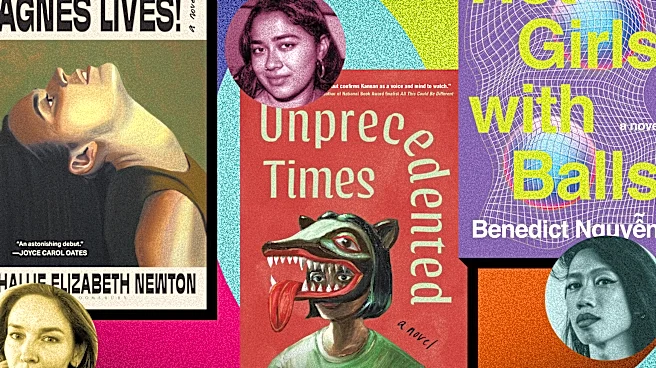
Malavika Kannan, 25, just published her first adult novel, Unprecedented Times, which follows Rishi, a college freshman determined to leave her youth
activism behind for a tangible experience of sex, parties, and a liberal-arts education. When this mission is cut short by the Covid-19 pandemic, Rishi and her friends must reckon with how the personalities they created online clash with adult realities.
“A lot of Rishi’s sense of self is cultivated on the internet,” Kannan says. “Throughout the book, the gag is that she sometimes has an over-inflated sense of her own control and agency in the world, just because she has language for it.”
The internet is its own character in Kannan’s book. But she notes that the months leading up to publication made her starkly aware of how publishing’s relationship with social media creates an underlying strain for authors. And she’s not alone. The all-encompassing nature of social media has irrevocably changed consumer behavior — including how people buy books. The direct link between social media awareness and book sales has also created a difficult landscape for authors, one where social media has slowly shifted from a helpful tool to a requirement. Publishing isn’t the only industry where social media success can change a person’s trajectory. But as publishing demands and author hopes collide, some writers are using the pressure to perform online to embrace their digital selves — and use that as inspiration to make something new in the process.
“It’s just the soup that we’re swimming in,” Kannan says. “As much as I like to imagine literature as a refuge from the internet, the two are super intertwined.”
Although there are plenty of books that take off without the author already having a following, sales show a link between some of the biggest new titles and social media content. Publishers Weekly reported that 59 million print-book sales in 2024 were directly linked to content on BookTok, and print sales followed similar stable patterns in 2025. A handful of videos about a book could transform it into an overnight bestseller. So it’s no surprise that this environment is informing some of the most ambitious works of the year.
Hallie Elizabeth Newton, 42, has been active on Instagram since 2013. “It has an alluring way of curating exactly what you already know,” she says. “And in that way it can be very comforting. Not necessarily healthy, but definitely comforting.” That fondness is clear in her debut novel, Agnes Lives!The book, published in June, follows thirtysomething New Yorker Agnes as she spends an increasingly chaotic 24 hours trying to find a friend to murder her.
The tome is a more experimental offering than traditional fiction, and relies heavily on the conflicting narration from commenters and Agnes’ internal dialogue. But it also directly reflects Newton’s own feelings around social media and public personas. “There’s this gap between Agnes’ reality and what she’s putting [online]. We’re seeing what it does to image and what it does to our sense of self and identity,” Newton says.
Newton faced a similar confrontation once the book had a release date. She wanted to promote it, but doing so meant making her Instagram account public, a change that initially frightened her. “I don’t think I’m pressured to be on social media so much as that I put pressure on myself to promote my book. If people pasted flyers or placed ads in magazines, I’m sure I’d feel pressure to do that,” Newton says.
With three published books under her belt, Iman Hariri-Kia, 31, has built a reputation for translating modern career anxieties into cult contemporary love stories. But the inspiration for her upcoming romance,Once in a Timeline, came directly from her own experiences online. While riding the New York subway, Hariri-Kia’s car stopped underground. For about 20 minutes, the only thing that would load on her phone was one influencer’s day-in-the-life video. “It almost felt like there had been a hole in the space-time continuum, and the only thing that existed was me and this creator,” she says. “I could not open my Notes app fast enough.”
The novel is about a lifestyle influencer who’s forced to relive her own day-in-the-life vlog in an infinite time loop. While the book tackles questions of personal empowerment, identity, and online perception, Hariri-Kia’s thoughts about digital success prop up the story’s central themes. There’s one question at its heart: Is working hard “to appease an omniscient audience worth the sacrifice to your sanity?”
It’s a dilemma Hariri-Kia herself has had to come to terms with in her own life. “Before I published my debut novel, I had so many voices in my head telling me that if my first book wasn’t a New York Times bestseller, and all these random markers, then I had failed. And then I reached all of those tentpoles, and nothing changed,” she says. “Now, I’ve realized that thinking of success in that way is extremely counterproductive, because ultimately you’ll have so many voices in your head they’ll start to drown out your own.”
But sometimes the pervasive nature of social media can hold its own kind of inspiration. Benedict Nguyễn’s 2026 novel, Hot Girls With Balls, takes the toxic aspects of internet fandom and drops them into a fictional, high-stakes landscape of professional volleyball. The stars of the novel are Six and Green, two Asian American trans women, social media stars of the men’s volleyball world and an online power couple. When the murder of three Asian trans women becomes national news, brand management clashes with personal convictions.
Nguyễn’s novel explores “public expressions of grief and rage online,” and the debate around the place of trans athletes in sports — all while satirizing the complicated maze between personal identity and public political stances. But the book’s strongest feature is Nguyễn’s decision to remove almost all distinction between in-person and online experiences.
“The democratization of public speech through social media allows anonymous users to have a disproportionate sway,” says Nguyễn, 33.
The tensions between authors and the digital world seem here to stay. And authors are using social media to build community without allowing its pressures to prevent them from writing books.
“A lot of young artists are in this shitty position: ‘Please stream my songs so my cat doesn’t die, or please buy my book,’” Kannan says. “There’s a lot of people competing for people’s attention online. I just realized at some point that the internet is a place that I could exist, but it’s not my stage, it’s not my medium. It’s not where I actually want to put my energy.”
Click here to read the full article.