

For over a decade, director Dawn Porter has made documentaries about racial inequality and the U.S. justice system, from covering public defenders in Southern states and the closures of abortion clinics to creating films about the Supreme Court and the late
civil rights icon John Lewis. Her newest documentary, When A Witness Recants, falls squarely in this world, detailing the story of a 1983 Baltimore shooting that ended with three innocent teenagers — Alfred Chestnut, Ransom Watkins, and Andrew Stewart — convicted of murder. There’s only one difference — Porter refuses to watch this film.
“I go through this cycle of getting really angry and sad and angry again,” Porter tells Rolling Stone. “Now that I know [these men], it’s even worse because they are three of the most honorable, kind, fun people. I just can’t take it. I get overcome with the injustice of it.”
The case at the center of When A Witness Recants began on Nov. 18, 1983, when 14-year-old Harlem Park Junior High School student DeWitt Duckett was shot in the hallways of his West Baltimore school. The two friends who Duckett was walking with, Ron Bishop and Eddie Capers, told authorities that a young man they vaguely recognized approached them in a deserted hallway and pulled a gun. He wanted Duckett’s jacket, a navy-blue satin Georgetown jacket that was popular at the time. They gave him the coat and ran, but he shot Duckett in the neck, and Duckett eventually succumbed to his injuries. The community was in an uproar, and police answered their rage quickly with three suspects: Chestnut, Watkins, and Stewart.
Led by Baltimore Police Department detective Donald Kincaid, the investigation was wrapped quickly. Chestnut, Watkins, and Stewart — each 16 years old at the time of the arrests — were convicted of murder on May 24, 1984 and sentenced to life in prison. Throughout the process, from their first interviews to their testimonies to police to their moment they were led out of the courtroom into their new incarcerated lives, all three maintained that they had not killed Duckett. It took eight days for them to be arrested. It took 36 years to prove their innocence.
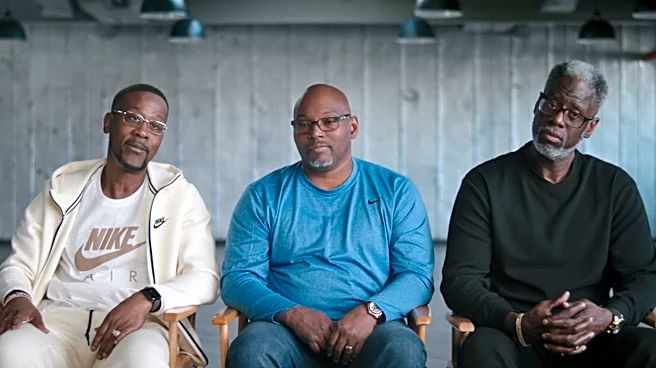
“[There’s] mixed emotions,” Stewart says on a joint Zoom call with Rolling Stone, Watkins and Chestnut nodding next to him on screen. “On the one hand, we’re so happy to have been blessed by God to be in the position we’re in. But while you’re receiving that blessing, you’re looking at the things that were taken away from you. The more light that’s shined on this the better. Because we’re just three dudes. How many other people [are] in our same situation?”
A Systemic Failing
Based on Jennifer Gonnerman’s 2021 New Yorker article, “When A Witness Recants,” the new HBO documentary uses archival news footage, first-person interviews, and animations to chart Stewart, Watkins, and Chestnut’s experience, from that fateful November day to their years in prison, to the records request that secured them their freedom. When the men were exonerated in 2019, they say they were bombarded with requests to turn their story into films and documentaries. But it took a visit from Porter and the Pulitzer Prize-nominated journalist Ta-Nehisi Coates (whose wife Kenyatta Matthews executive produced the film) to convince them it was the right time. Coates, who grew up in Baltimore and is featured in the documentary, says that at their first meeting he was struck by the pain and hurt Stewart, Watkins, and Chestnut were still holding.
“It was very important to convince them that we understood their pain, that they could trust us, and that we felt the story on a deep level,” Coates tells Rolling Stone. “Their [arrests] were a systemic failing at a point when our communities were at their most vulnerable. It’s despicable.”
The documentary’s biggest revelations are how easy it was for police to accept false testimony and pressure witnesses in order to get the case resolved as quickly as possible. When Bishop was originally questioned by authorities, he told them the killer was acting alone. But in the film, he and Capers say that Detective Kincaid pressured them to implicate Stewart, Watkins, and Chestnut in interviews without a parent or adult present, eventually threatened to blame the shooting on them if they didn’t testify that they saw the three boys. (Kincaid declined to participate in the documentary). This was a pattern that Stewart, Watkins, and Chestnut all remember, including that they were interviewed without parents and pressured to confess or turn in accomplices.
“I lived right across the street from the Western District Police Station, so they ain’t had to go far to come get me. They just walked across the street and took me out of my bed,” Chestnut recalls. “The next day was Thanksgiving, so the first thing they asked all three of us was, ‘Do you want your mother to bring you a Thanksgiving plate?’ That was the worst [memory] for me.”
The families of all three couldn’t afford both bail and legal representation, so Stewart, Watkins, and Chestnut remained in jail until their May 28, 1984 conviction. None of them took the stand during their trial, but their attorney Barry Diamond says in the documentary that the judge, Robert Bell, allowed the prosecution to suppress necessary evidence. In addition to the witnesses’ false testimony, prosecutors said that Duckett’s navy blue jacket was found in Chestnut’s house. A jacket was found — the popular “Georgetown” emblazoned on the back — but Chestnut’s mother provided a dated receipt proving she had purchased it. Jurors never heard this information. Several witnesses also came to police during the investigation, saying that another teenager in the neighborhood had been overheard confessing to the shooting. They were dismissed and Stewart, Watkins, and Chestnut were tried as adults, convicted, and sentenced to life in prison. Throughout their incarceration, the men say one of the most difficult aspects was that because they maintained their innocence, they did not qualify for parole. And when they were offered deals if they implicated one another, they stood firm.
When asked if they were ever tempted to turn on each other, Stewart, Watkins, and Chestnut answer in stark unison: “No.”
“We grew up in the dirt together. We played together. We fought together,” Stewart says. “You couldn’t separate us because of a parole hearing or what police said. I told my mother I might die in prison because I’m never going to that parole board and telling them Alfred or Ransom committed a crime I know they didn’t commit.”
The hardest part of their story for Stewart, Watkins, and Chestnut to reckon with is how it ended. Throughout his time in prison, Chestnut began sending letters to the police department, requesting access to all the files and interviews surrounding their case. Each time he was denied. When he sent a letter to then-State’s Attorney Marilyn Mosby asking for help, she referred the case to Lauren Lipscomb, the lead prosecutor of Baltimore’s new Conviction Integrity Unit. They immediately found documentation that prosecutors had withheld key information in the case, and Stewart, Watkins, and Chestnut were eventually exonerated. But what Chestnut has to reckon with is that if had given up, if he had stopped pushing, none of them would have been released.
“We’d still be in there fighting to get out,” Chestnut says. “I just knew that our case was probably sitting on a shelf in boxes. That stuff could have drove me crazy, too. But I knew that it was going to happen sooner or later.”
“It’s heartbreaking, because you realize that to some people, you don’t mean nothing. You don’t mean shit to the world,” Stewart says. “What could have been Alfred’s life? What was Ransom’s goals, aspirations? What was [mine]? Nobody sat down and said, ‘Wait a minute, this don’t feel right.’”
A New Start
In 2020, Stewart, Watkins, and Chestnut filed a lawsuit against the Baltimore Police Department, including Kincaid, alleging the organization withheld evidence and pressured witnesses in order to force convictions. They settled for a historic $48 million. But Stewart, Watkins, and Chestnut say it’s important for viewers to understand that their stories didn’t end when they exited the courtroom free men. They had to learn to live in a world they didn’t recognize, say goodbye to family members buried while they were behind bars, and try to regain some semblance of a life.
Porter understands that the difficult and emotional material of When a Witness Recants might seem like a hard sell, especially when the director who made the documentary won’t watch it. But she tells Rolling Stone that she wants the documentary to help people understand just how easy it is for carceral injustice to become the status quo.
“When you talk about the power of the state, it’s hard to see it, and this was such a clear example of what that incredible power can do,” she says. “Unfortunately, [Kincaid’s] role in this is all too familiar. But it wasn’t just him. The prosecutor didn’t have to suppress those documents. The judge didn’t have to seal those records without looking at them. I’ve done a number of films about wrongful incarcerations, and it’s hard to illustrate how people are victimized. But here it’s clear as day what happened.”
Chestnut, Watkins, and Stewart are all still trying to heal from their time in prison, a monumental task that they’ve each taken their own approach on. But they’re aligned on one thing — they don’t consider themselves special. And they tell Rolling Stone they want their story to inspire other exonerations they know are out there.
“We babies in this world. We’re taking our time trying to adjust,” Chestnut admits. “I’m thankful each and every day for all three of us. And I hope people [are] mindful and [know] anybody could be in this same situation. Life is precious. Freedom is precious. Don’t take it for granted.”
Click here to read the full article.