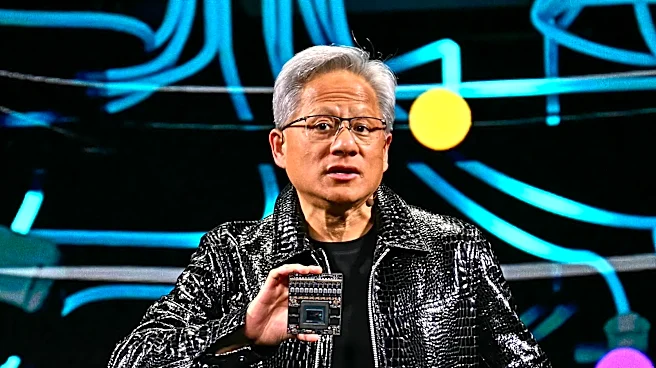



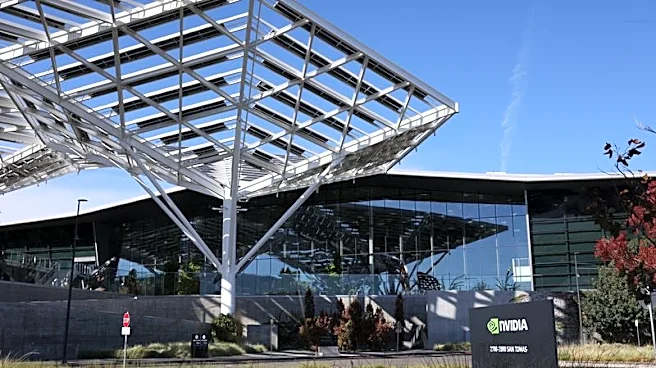
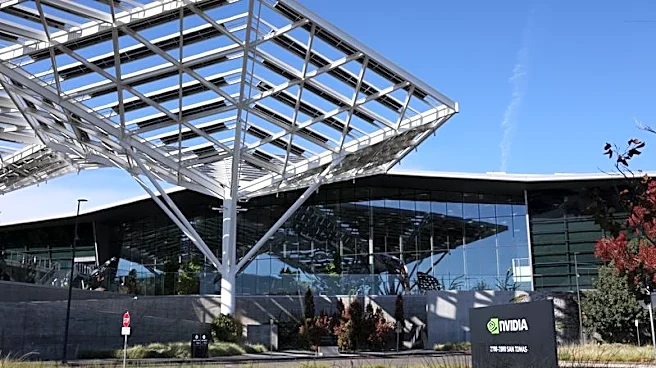
You could start casting the movie right now: Jensen Huang, the Taiwanese-American CEO of Nvidia, the most important tech company in the world, is sucked into an illicit affair with a Chinese spy. The most valuable tech in the world — Huang’s super-powered
computer chips — are smuggled into China or installed into data centers connected to America’s greatest rival. Above it all, the possibility of a super-intelligent AI, a true artificial mind, looms — and its creator will be positioned to rule the world.
At least, that’s the simple version of the story. But the real picture of the great geopolitical AI race is both more complex and more unbelievable than the tale of spies and smuggling that’s playing out in the press right now. China wants the U.S.’s chips — that much is clear. But why? And what can our only real rival power actually do with them? To answer this, Rolling Stone spoke with two experts in the Chinese tech sector, who pulled back the curtain on what the superpower actually wants when it comes to AI — and why it’s willing to use sex, smuggling and lies to get there.
Broadly speaking, there are two ways to think about AI, says Kyle Chan, an expert on Chinese technology development at the Brookings Institution.
The first is as a straight race to one goal: creating a truly intelligent AI that surpasses human intelligence in all general tasks and can improve itself autonomously. In the industry, this is known as AGI, or Artificial General Intelligence. This point of view holds that the first country or company to achieve true AGI will have an earth-shattering advantage over any competition in economics, war, medicine, and technology. Basically, it sets the world of AI up as a winner-take-all race. Many U.S. officials — including, at times, Trump himself — have made this argument, alongside many of the private sector CEOs actually working on the technology.
“If you start with that assumption, then the effort to slow down China is nearly existential,” Chan says.
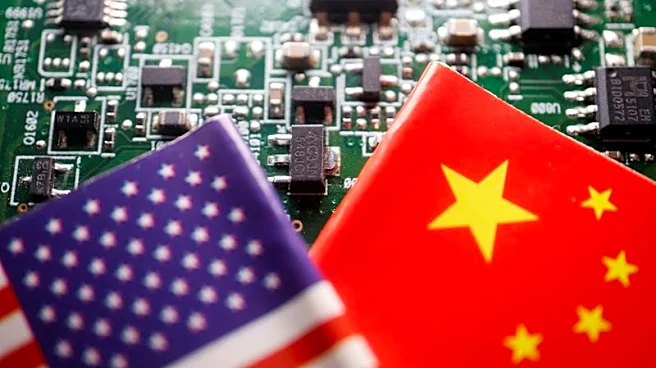
The biggest advantage the U.S. has is Nvidia’s chips. The most powerful computer chips in the world are made by one facility in Taiwan, using incredibly complex and rare machines manufactured by one company in the Netherlands. It is a process so detailed and scientifically complex that it might as well be magic. Other companies can make chips, of course, but none of them can make chips as well as the single manufacturing company in Taiwan that Nvidia and most of the U.S. tech giants use. AI companies need these chips, and these chips alone, to run the most advanced AI models — which is why the U.S. has done a lot to limit China’s access to them, setting export controls on who Nvidia can sell their chips to and which countries they can be shipped into.
Because of this constraint, the Chinese don’t really see AI the same way as most of the U.S. industry does.
Instead of an existential threat, Chan says, the second way to look at AI is a very powerful technology that will not necessarily lead to some massive strategic advantage for the first team past the AGI post. That makes the AI race a longer-term game, decided more by which power can holistically incorporate the advances of super-computing into its society and economy, which China has largely focused on doing
“What we’re kind of seeing unfold in the future is two different markets,” said Kenton Thibaut, a China expert at the Atlantic Council’s Digital Forensic Research Lab. The U.S. is focused on “frontier” systems — the absolute cutting-edge AI, powered by their chip advantage — while China is supplying “near frontier” technology that hits different parts of the market for AI technology. In China, Thibaut said, AI is viewed as a “general purpose” technology that should be harnessed for practical use as quickly as possible, rather than a more conceptual race to the furthest frontier.
“All of the [Chinese] policies and major policy pronouncements and planning around AI have to do with ‘How do we make this useful in society?’” Thibaut said. “I haven’t seen anything like that in the US.”
“[China’s] version of winning is being able to benefit the most from AI,” Chan says. “Integrate it in their economy, automate their factories, speed up drug discovery, et cetera. [They want it to] help them win across all these other domains, rather than this singular focus on achieving AGI.”
It’s a philosophical difference that is fueled by the physical constraints that the Chinese tech sector faces. The U.S. has access to more computing power than any other nation, allowing them to push the envelope. Companies like Anthropic have asked the U.S. government to regulate them more, fearful that their AI models will run out of control. In China, these discussions are scarce, Thibaut says, because the hardware they’re working with basically makes them moot — and the Chinese government is predisposed to prevent any societal disruptions. Instead, Chinese AI firms are usually focused on doing more with less — creating working, practical products and applications of AI that get the most out of whatever computing power they can harness.
And in some cases, that’s where the spies come in. The Nvidia honeypot scandal was largely controversial because it included a woman who ran a Singaporean front company that set up data centers in Southeast Asia stocked with Taiwan-made super-chips, and then leased the use of those chips to Chinese companies. Chan refers to this loophole, and the broader Chinese project of getting their hands on American tech, as a “bridge” to the country’s real goal: separating themselves from the Western “tech stack,” while still retaining competitive computing power. Eventually, Chan says, China wants to have its own version of the super-manufacturers in Taiwan, its own version of the very best chips — but until then, it has to use more subtle methods to get what it wants.
“If they want to keep pace today, they do still need access to Nvidia chips now,” Chan says.
Some parts of the U.S. government may be helping them achieve that. Commerce Secretary Howard Lutnik had been very lax with Nvidia and Huang personally, allowing the company to continue selling to companies that the U.S. knew were linked with China. While Trump has said he views AI as a winner-take-all race, Reuters reported that his administration also signed off on the sale of 900,000 AI chips to Chinese companies in one six-month period, and his own AI Czar David Sacks has explicitly advocated for selling more chips directly to China.
China, then, has allies to go along with its spies — and it seems that one way or another, it’s getting all the chips it needs.
Click here to read the full article.