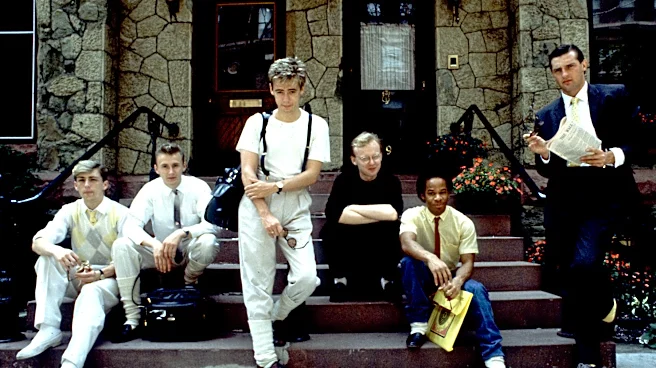








Haircut 100 might be the most Eighties band of the Eighties. A gang of cheeky English boys, barely out of their teens, with preppy ties and sweater vests. They sparkled with wit and charm, riding the New Wave hit parade with MTV classics like “Love Plus
One .” They had a scream-worthy teen idol in singer Nick Heyward, direct from the London suburbs. In 1982, Rolling Stone called them “the freshest new sound in pop.”
They also had one of history’s most brilliantly ridiculous band names. As Heyward says now, laughing, “I remember thinking, ‘Well, if we don’t do anything, at least we’ve got a good name.’”
But thanks to Heyward, they had the smartest gimmick of all: songs, which is why Haircut 100 were never forgotten. “Love Plus One” is over-the-top romance, all boyish yearning over the splashiest bongos, marimbas, jazzy horns, cha-cha guitar. They stuck around long enough to make one perfect album, their 1982 debut, Pelican West, with dance-floor hits like “Favourite Shirts (Boy Meets Girl)” and “Fantastic Day.” They had style, humor, and their own infectious sound, a frothy mix of pop, funk, salsa, bossa nova — the kind of band that dares to call a song “Lemon Firebrigade.”
And then what happened? It was the Eighties, remember? Everything went wrong. Haircut 100 crashed and burned. But that’s why they sum up a great era in pop history — they never did anything to tarnish the legacy of their one brief, shining moment. The boys all moved on with their lives; unlike most bands from their era, they never cashed in for Eighties nostalgia tours. They eventually did a few sporadic one-off reunion gigs over the years, most memorably on a 2004 episode of the VH1 show Bands Reunited. But as far as the world was concerned, the book was closed on Haircut 100.
Nick Heyward still has the boyish grin at 65, and the same exuberant charm. He’s got a lot to be excited about, because Haircut 100 are finally grooving again, for the first time in more than four decades. For Eighties pop connoisseurs, it’s a dream come true — this is the comeback we all thought we’d never get to see. Even better, there’s an excellent new album, Boxing the Compass.
“There have been so many opportunities to get back together,” Heyward says. “We could get back together, but we couldn’t stay together. But we’re staying together this time. There’s no splitting up now, because we’re too old to split up.”
Against all odds, Haircut 100 hit the road in 2024 for their first tour in 42 years. They were a smash at the Glastonbury Festival that summer. But they meant business — as they warned, “We’re coming for your hips.” Their first American shows since 1982 were a joy to experience — they sounded utterly revitalized. Their New York headlining gig last September was a multigenerational dance fest, with a contingent of hard-partying young hipsters. (The fan in front of me was a dead ringer for Sombr.) They’re returning to the U.S. this summer, touring with Squeeze and Adam Ant.
“We were always known for our energy, weren’t we?” bassist Les Nemes says. “We’ve still got it mentally, we’ve still got it physically. So if people come for a quiet sit-down and scratch their chin and go, ‘All right, what’s this lot up to?’ — we’re just going to get you on your feet.”
Haircut 100 also sound reinvigorated on Boxing the Compass — the real follow-up to Pelican West, 44 years later. (Fans don’t really count the 1984 flop Paint and Paint, which was Haircut 100 in name only, churned out without Heyward.) For the first time in their career, they have real management, the team behind Wet Leg and Manic Street Preachers.
They also played live on the BBC and did a bang-up coverof Harry Styles’ “As It Was” — a perfect fit for them, cleverly linking two different generations of English glam-pop boys. “We were more power pop in the early days,” guitarist Graham Jones says. “So the Harry Styles cover was perfect. It’s like, ‘Oh, it’s back to our roots.’”
Pelican West holds up superbly these days, which is why it remains a classic. Heyward was a songwriter from the David Bowie/Marc Bolan school, with his own daffy sense of wordplay. (Their biggest hit had the hook “Where do we go from here? Is it down to the lake, I fear?”) They took their album title from an unglamorous spot in London, the West Pelican Wharf, but flipped the words so it evoked a tropical summer-romance vibe. Decked out in their cravats and wooly jumpers, wearing the floppy fishing hats that the British call “sou’westers,” they looked like lunatic 1920s schoolboys having a bash at pop stardom.
They started as just three teenage friends in the London suburb of Beckenham. Heyward, Nemes, and Jones began playing together in 1977, blown away by the punk-rock explosion. “We were best mates,” Nemes says. “We lived together in one room in London — almost like the Monkees and all those TV shows where they lived together and played in a band. Nick and I worked in art studios, and Graham worked for a photographic printer, so we were always very good at advertising and promoting the band.”
London was an inspiring place, especially at night. “We were going out to all these Eighties clubs,” Jones recalls. “We were in the London club scene surrounded by all our contemporaries. In London, we had Spandau Ballet. In Birmingham, there was Duran Duran. Sheffield, it was ABC and Heaven 17. But in London there was a whole scene going on with the New Romantics and early funk bands, and there was a real buzz happening in the Eighties. We were lucky to be part of that underground club scene.”
And then there’s the band name. “The most stupid thing we could think of,” Nemes says proudly. They were kicking around other names: Moving England, Blatant Beavers, Napkin Man, Quick Cereals. But this one was a provocative pop statement. As Heyward says, “It was like an octopus growing a new tentacle.” The name came during a crisis — first their drummer quit, then all three boys got dumped by their girlfriends. “So we were single and drummerless,” Heyward says. “And it really gave us a kick up the ass. The name change was a bit like when you get to the end of your relationship — you get your hair cut, don’t you? Especially females. You meet them and they’ve got this great hair, and you think, ‘Why didn’t you have that hair while you were with me?’ But she says, ‘I got this hair so I could cut you out of my life to move on.’”
But they could tell it was the right name because their friends hated it. “Haircut 100, we tried it out on our mates. Most of them went, ‘What? Why?’ And we got so many ‘whys’ that it just stuck. It seemed baffling to people. But that’s what made it a good name — it had a bit of ‘why?’”
As you can hear in their music, they had eclectic tastes — Nemes was into experimental art rock, Jones into punk, Heyward into indie janglers like the Feelies or Jonathan Richman and the Modern Lovers. “We grew up with our brothers’ or sisters’ record collections,” Heyward recalls. “So at first it was glam. Then punk hit like a meteor, so that was our big influence. But alongside it, you always had Stevie Wonder, and you always had the Stones. Punk was happening, but you’d listen to Earth, Wind, and Fire and you’d think, ‘Wow, to sound like that, that’s not possible.’ Even in our wildest dreams. That sounds like it’s made from wizards from outer space. How on earth would you even begin to write a song like ‘September’?”
But they found their groove when they hooked up with American drummer Blair Cunningham, a Memphis session player from a musical family of 10 brothers, all drummers. His brother Carl was in the Stax soul legends the Bar-Kays. (Like the rest of the band, he was tragically killed in the same plane crash as Otis Redding.) “We were doing, God, two albums a week in Memphis,” Cunningham says, “and all the bands coming through, you never know what style they want, so you just learn very, very quickly.” He transformed Haircut 100, bringing the funk. “His authenticity changed everything,” Heyward says. “As soon as Blair sat down behind the drums, suddenly we’ve gone beyond punk, we’ve gone beyond New Wave, we’ve gone beyond everything.”
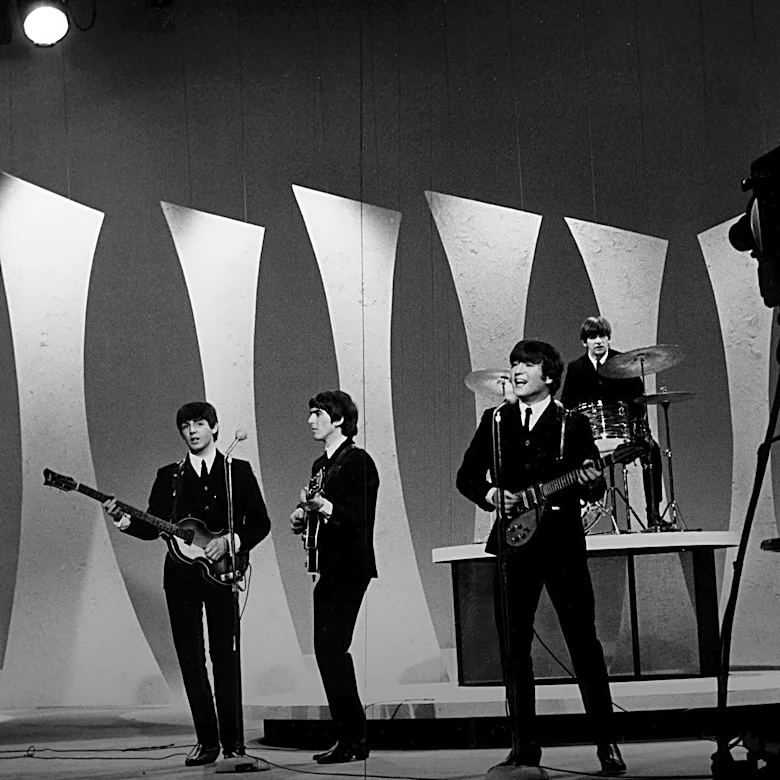
They didn’t stay in the underground club scene long. “Favourite Shirts (Boy Meets Girl)” came out in October 1981 and made them overnight sensations. (Sample lyric: “Your favorite shirt is on the bed/Do a somersault on your head.”) “Love Plus One” was even bigger. Suddenly, they were international pop stars, living the dream, getting chased down the street by girls, the whole bit. Heyward says, “I kept imagining this is what the Beatles must have felt like.”
They even conquered the U.S., in the early days of MTV. “I think we did resonate with America because of the love we had for American culture,” Heyward says. “Through the Seventies, I just remember looking at myself in the mirror and going, ‘OK, there’s this, and then there’s Shaft. Shaft looks really cool, one for the ladies, and I do not. I look like a boy or something. What am I to do?’ So America just looked like it had everything.”
The peak came in May 1982, with a huge show at the Roxy in L.A. It was Heyward’s 21st birthday. “Clive Davis came to the gig — the head of our label,” he recalls. “He could make or break careers. He was there with Simon Potts, who was kind of the U.K. Clive Davis.”
It was a coronation moment. “Clive presented me with a great big birthday cake, in the shape of a comb. It was like ‘OK, you’re 21 today. You’re a man now.’ It was overwhelming, but that was the perfect time. It’s like when you’re surfing and you’re in the wave, right in the middle of it, the blissful moment inside a wave when everything goes silent. You’re in the perfect wave. That’s what it felt like. ‘Can I just keep this moment?’ The wave’s coming over. I’m going through the wave and I see the light at the end of the wave. But I’m just in the moment, and it’ll probably never be this perfect again. It will crash. It will devour this moment.”
Unfortunately, the wave did crash. “We were really good musicians, terrible businessmen,” Heyward says. “Our manager left and then we had a coachload of people — we didn’t even know who they were.” Without a manager, the band split into rival factions under the pressure. Heyward broke down and was hospitalized, decades before the music industry began taking mental health seriously. Haircut 100 fell apart. “It was only a year,” he muses. “It was like a flower that blooms for a year and then dies. With the mayfly, it’s one day. We were like a one-year mayfly.”
Heyward started his solo career with the 1984 North of a Miracle, with the lounge-ready hit ballad “Whistle Down the Wind.” His 1993 U.K. hit “Kite” crossed over to U.S. modern-rock radio; he got folkier on his 1998 gem The Apple Bed, but reached his solo peak on the great 2017 song cycle Woodland Echoes. “I aspire to artists like Jonathan Richman, who do one thing really well, and stick to it,” he says. “I’d like to do that, but I can’t. I get distracted.”
The whole band kept kicking around. “We’ve all been in our various different directions over the past years,” Jones says. “In the middle time, Les was off doing some various stuff with Rick Astley and a bit of acting work, and I was off with a band called Boy Wonder.” As Nemes recalls, “For me, the Rick Astley tours were all the good parts of being in a band, without all the really boring parts. You basically were just told to be onstage at what time, and then Rick would have to do all the pop-star stuff.” But they all craved the magic they had as Haircut 100. “I did sessions, but I wasn’t very good at coming up with ideas for other people. In Haircut, I felt very, very comfortable.”
But not even a hardcore fan could have predicted they’d return with an album as confident as Boxing the Compass, with bangers like “Dynamite,” “Vanishing Point,” and “The Unloving Plum.” “Hopefully many more,” Heyward says. They’re already excited for the next one. As Nemes says, “I think, in the nicest possible way, I think it’s time that Haircut grew up a little bit. So I’m really looking forward to the next album, and hopefully making it a little bit more experimental.” But instead of mourning all the years they spent not doing this, they’re just glad it finally fell into place. “It all just came to us,” Nemes admits. “It was almost as though the universe said, ‘I’m going to organize everything. All you have to do is keep turning up.’”
“We are really curious and enthusiastic together,” Heyward says. “I mean, when we were watching the Beatles documentary Get Back [in 2021], we were all unemployed. It was like suddenly, ‘What are we gonna do?’ So we’re all watching Get Back thinking, ‘Wow.’ Seeing them play with songs like food, or like a killer whale plays with a seal — just playing together. Anybody in a band was probably just going, ‘We do that! That’s what we do too! That’s how you find the happy place in the song.’ I found it so emotional to watch. Unconsciously, I just thought, ‘If there is another opportunity for our band, I really hope we stay together next time.’”
Yet the music they made all those decades ago has never faded away — more people keep discovering “Love Plus One” as time goes by. “That’s the wonder of music, isn’t it?” Heyward says. “It’s a forever flower, isn’t it? When I discovered the Beatles, they’d been split up 10 years, but that’s how powerful the music is. I mean, it might have been a year that we were in bloom, but the flower is still there. You’ve planted those seeds, you’ve made that flower, and then people can appreciate it forever.”
Click here to read the full article.