





When I first met Rahm Emanuel, almost 25 years ago, he had a pretty solid reputation, in some quarters, as an arrogant prick. Rahm — even then, he needed only one name, like Cher or Snoop — was recognized by his fellow Democrats as a brilliant political
tactician, which is how he had risen to become one of Bill Clinton’s chief enforcers in the White House. But he was also known to be self-certain, occasionally thuggish, and unusually crass. (For many years, there seemed to be a rule in journalism that one couldn’t write about Emanuel without prudishly noting his aggressive use of “fuck” in every other sentence.) When Emanuel put his own name on a ballot for the first time and won a Congressional seat in 2002, even his friends wondered how he was going to tolerate 434 other people who thought they also knew something about how to win.
It’s strange, then, to look around now and realize that Emanuel may be the closest thing to a wizened elder statesman the Democratic Party can offer. He has served as a top Democrat in the House, White House chief of staff, mayor of the country’s third-largest city, and ambassador to Japan. He likes to say he has never lost an election as either a candidate or as an adviser (although he did pass on a reelection bid in Chicago, after clashing so fiercely with union and Black leaders that it seemed unlikely to succeed). Now, closing in on 67, Emanuel is considering another campaign — this time for president. Yes, he is a Washington insider and determined pragmatist, contemptuous of the Democratic Socialists who are ascendant in the party. He knows you think he’s out of step with the times and quite possibly delusional. Guess what? He really doesn’t give a shit.
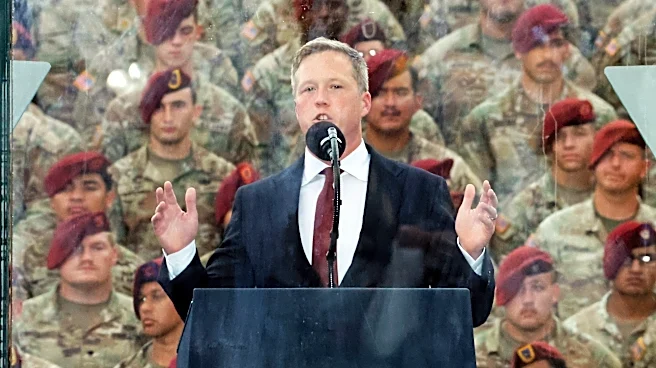
Nor should his potential candidacy be easily dismissed. He’s already proposed more than a dozen policies that would likely resonate with moderate Democrats and independents — stepped-up standards for public schools, taxes on online gambling and prediction markets, more police and tougher border enforcement, mandatory national service. He has inserted himself forcefully into the party’s debate over Israel, a country to which he has deep personal ties. (His father took up arms with the original Zionists in what was then Palestine.) In July, Emanuel delivered a confrontational policy speech in Tel Aviv, bluntly warning Israeli leaders that they had turned their country into an international pariah and were risking a rupture with American voters.
Maybe Emanuel doesn’t have the kind of Instagram celebrity you need to become a hot candidate in the modern party. But while other non-Socialist contenders look for ways to paper over ideological differences and appeal to as many voters as possible, he is the only guy out there who seems determined to articulate a concrete, combative alternative to fashionable leftism. (Among my favorite Rahm lines, about wokeness in primary education: “One child is discussing their pronoun, and the rest of the class doesn’t know what a pronoun is.”) Even if he didn’t win a single delegate, he would force other Democratic candidates to take up clear sides in the party’s ideological debate.
I sat with Emanuel during the second week of August at his Chicago office, which — perhaps fittingly for a retro candidate — sits above a high-end shopping mall on Chicago’s Magnificent Mile. From the conference room window, looking toward Lake Michigan, you can catch a sliver of what Midwesterners think of as the beach. Rahm these days seems oddly relaxed and upbeat; it’s as if the guy who famously said that a good political crisis should never go to waste actually sees some potential in the nation’s existential meltdown. We talked about Israel and American Jews, the Democratic Party, hard career choices, and life in a bizarrely high-achieving family. (Younger brother Zeke is one of the country’s leading health care experts, and older brother Ari is among the most powerful moguls in Hollywood.) Below is an edited transcript of our conversation.
Let’s talk about Israel. It was a pretty ballsy move to go to Israel and give that speech to their leadership. What was the reaction on the ground?
It was very interesting to see how it was covered in Israel versus covered here. In Israel, they didn’t see it as a political thing through the prism of the Democratic Party. They saw it through the prism of “Here’s an alliance in trouble.” They saw it as I tried to deliver it. Here, it had to go through the prism of politics in America, or the Democratic Party. Maybe that’s somewhat natural, and somewhat because of who I am. The second thing is, Yair Lapid (the Israeli opposition leader) just gave a speech at the Atlantic Council, and his basic thing was “We have to deal with our isolation.” Now, he didn’t use the word “pariah,” which was what I said. I said, “You’ve turned your technological prowess into being a territorial pariah.” But he acknowledged that that was the principal strategic challenge.
So you feel more out of the mainstream public opinion here than you do in Israel?
I’m just telling you. I’m answering your question.
OK.
Final two points here. In 2009, as chief of staff, I told the prime minister, “What you are doing on housing in the West Bank will isolate and perpetually lead to conflict with Israel.” Now, if there was a prediction I wanted to be wrong on, it was that. Now, every other American politician all of a sudden, now they’re finding their footing and their voice? Not impressed. That was 18 years ago.
My final point is, America has fought two wars in the region. I’m not interested in a third war. So if this is a principal ally, which it is, we got to get this right. Because I’m not looking to do a third war that costs thousands of lives, countless dollars. Three times is not a charm here.
It’s kind of retro, to go give a big policy speech at all.
Well, I’m older.
You have a belief in the power of oratory that might be outdated.
Well, maybe others think you can do Mideast peace that way. Which is what I tried to get to, not just a criticism, but “Here’s a set of three ideas, specific.” There are four, actually. You can’t do that on TikTok. And if you think the Middle East can be solved by just simply throwing a term out, then, great. I think it’s a little more complicated. And maybe that is old school, but a challenge like that requires being fully articulate of a position that you can debate.
Now, as I said to everybody, “You have this status quo. I think it’s a mess. You don’t like my idea? Show me yours.” I believe in the battle of ideas. “You know that, given I’m 16 policy proposals in. So tell me what yours are. OK, you don’t like mine? You think there’s a problem here on the 23-state solution? You don’t like the IMEC (India-Middle East-Europe Economic Corridor) economic piece? You have an obligation not to critique. You have an obligation to offer. And it has to be a little more varied than TikTok. OK?”
You’ve been asked if Israel is committing a genocide, and you kind of uncharacteristically declined to commit yourself one way or the other.
Look, Professor Lemkin (coiner of the term “genocide”) writes a serious proposal in 1942. Our Supreme Court justice, Jackson, uses it at Nuremberg. It has a legal meaning, an international legal meaning that is a benchmark that everybody will apply. I’m not a lawyer. It has an international moral and historic analogy. I understand the politics of accusing a country that comes from the ashes, from Auschwitz, Dachau, Treblinka, Buchenwald, et cetera. But if you accuse that country, then why are you, the questioner, silent about Sudan [and] what is happening right now? Why are you, the questioner, silent about Putin, who says, “Ukraine’s not a real country”? Why are you silent on Ethiopia? Why are you silent on Armenia or Cambodia? So actually, your silence tells me more than my answer, OK? I happen to think, personally, in Sudan right now, Black lives matter. Your refusal to ask the question tells me you don’t think much of it. And so I’m not going to participate in a game of “gotcha” for sport. When you have a term that is morally, legally, historically laden with value, I’m not going to diminish it the way your question diminishes it.
Does Netanyahu have to go for the current trajectory to change?
Obviously, yes. That’s the short answer. The longer answer is yes because he will continue to put his personal and electoral and political interests, and his legal interests, ahead of the national-security interests of the country. Whether that’s political or legal. And you can see, and I am not alone. Many critics in Israel, in both the security establishment and the political establishment, have lodged that critique and observation.
Netanyahu once famously called you a “self-loathing Jew.” I have to tell you, I detest that term.
The “self-loathing” or the “Jew”?
All of it together. Because I’ve always heard it as basically “If you disagree with me, you must be ashamed of who you are.” It doesn’t meet you on the merits. It’s a way of dismissing the actual dissent that is inherently Jewish.
Well, it’s ironic. What’s incredibly rich about the Jewish tradition is debate. So actually, disagreeing was being very Jewish, not self-loathing Jewish. The only person that can say either I’m not a good Jew, or I’m self-loathing, is my rabbi. I’m self-loathing on my own. It has nothing to do with my Judaism.
Naturally.
So there’s a funny anecdote. I don’t remember if it’s months later, but at some point later, I’m still chief of staff. The president’s trying to have a conversation with Bibi about getting the peace process going. And Bibi keeps berating me. “Rahm is poisoning our relationship. Rahm hates me. Da-da-da-da-da.” Every time Bibi’s talking, it’s all about me. So the president says, “Look, Rahm doesn’t hate you. But since I know him, and he’s a friend, calling him a self-loathing Jew probably wasn’t the smartest idea.”
So anyway, look: The origin of that was because I disagreed with the housing policies he was pursuing on the West Bank. I firmly believe what I said, which is that what you’re doing is undermining the ability to get security for the state of Israel. It’s essential for the alliance, but also essential for the soul of Israel. This is corrupting Israel’s democratic Jewish soul. But the Palestinian leadership has failed miserably. Miserably. And they failed because every time — whether it’s Oslo, 2000 at Camp David, or Olmert’s proposal in ’07 — when you say no, OK, but you have to offer something. You don’t say no and then respond with terrorism. That’s not what a partner in peace does. Imagine, today, if the Palestinian leadership in any one of those proposals had said yes. They’d be so much better off. The Palestinian leadership failed the Palestinian people. That gets lost in the TikTok class of politics.
I want to talk about something related to all of this that I honestly find difficult and confusing.
Are you self-loathing?
Well, yeah, of course. But I mean where American Jews are on this right now. Because it’s a difficult moment for a lot of my friends and my family. On one hand, they largely disagree with the policy, disapprove of Netanyahu. But they don’t want to hear criticism of Israel, and they’re very inclined to hear criticism of Israel as antisemitism. How do you differentiate between the two?
I mean, if you’re asking me as a therapist, on the sofa.
Or a rabbi.
To me, it makes actually a lot of sense, in this way. The American Jewish community’s position, as it relates to this government in Israel, is actually pretty clear. They’re not supportive. There are elements in support, but I’m talking about three-quarters to almost 80 percent saying, “This is not the Israel we signed up for.” But they don’t take criticism from others for a reason. And the reason actually makes sense. Because also, simultaneously happening, American Jews are two percent of America, yet clearly three-quarters to [60] percent of all religious hate crimes. That’s what the FBI says. And it’s the fastest-growing hate crime in America, violence against Jews, or other types of things. You’ve heard the joke, but it’s serious: Paranoid people have enemies too. OK?
There is a legitimate fear that Israel criticism masks something else. Especially when you have rising violence. I saw this about London, not America — that today at Jewish schools, schools that are religious based, they spend more time on safety than they do instruction. OK, I’m sorry. You’re allowed to be paranoid. It’s not an irrational reaction.
The other day, a group of New York rabbis went to see Mayor Mamdani. They said he should cool his rhetoric. They worry about violence. You’ve been in his shoes. Are they right?
Yes, but that’s true for everybody. Every year, when I was mayor, and I also did this when I was ambassador, I did a Ramadan dinner. And I said then, “I don’t want this lost on anybody: the importance of the first Jewish mayor, having a Ramadan dinner, in this room. The battles above us were the battles we fought over values and principles and ideals of this country. And we haven’t fully healed. So I hope that as we work today, in celebrating your Ramadan, which is also important, that it’s not lost on our city and our residents that we’re all responsible for the healing that will go on, that we have a responsibility to do.”
In your own little variation, you conduct a foreign policy. And I think that Mayor Mamdani is a sensitive man, a smart man. I think he heard them. You have an obligation to make sure that residents of your city feel safe, and that the voice of the mayor carries weight.
Let’s talk about the party a bit.
Now, we’ll rumble. Let’s rumble.
All right. Serious question.
I assume all of these are serious.
No, some I’m just goofing around with. Why is the DSA, which is its own party with its own platform — why is it even allowed to be part of the Democratic Party and run in primaries? You didn’t allow communists in the 1950s.
Brother! Let me jump in. This has been my point. I said this yesterday. Two weekends ago, the DSA had a convention in this city. I said, “Great. I’ll see you in November.” No, I mean this seriously. You’re confident that the country wants open borders, defunding the police, letting prisoners out, and getting rid of Thanksgiving? Great. OK. Go out there. You had a convention. Now, in Congress, there’s a progressive caucus. There’s a new Democrat Third Way caucus. There’s Blue Dogs. I was a member of the Serbian Caucus, because of the population of my congressional district. OK. This wasn’t a caucus? This is a party? OK, great.
So go have your own party.
No, it’s not “Go have your own party.” It’s “I’ll see you in the general election.” You’re so confident people want your ideas. Go. Put them on in November. Let’s rumble. We’ll have a good debate about ideas, and we’ll see what percentage of the vote you get. In the last three presidential elections, seven states, 500,000 voters spread across those seven states, have decided the president of the United States. I’m not going to be frivolous about this. You have a president who got three Supreme Court justices. Elections have consequences. You’re a Democratic Socialist, you want to make proposals. I’ll see you in November on the ballot. And if you think everybody wants to come rallying around your ideas, great. Put them on the ballot in November. But don’t come into our party, where your ideas of defunding the police are not our party’s ideas. Your ideas of letting prisoners out of jail and getting rid of prisons is not our party’s idea. Opening the borders to everybody and anybody who wants to cross is not our ideas. And you have a series of other policy ideas that won’t shake out. I’m 100 percent on this.
So I’m with you, and I think the national party should get serious about this. But I also think, and this is not what you’re asking, I think the media has missed that there’s a rising Black vote. If you look across the South — Louisiana, Georgia, et cetera — the Black vote is outperforming. And I think the court’s decision on the Voting Rights Act and the redistricting has done stuff that you’re going to see play out, not just in primaries, but in the general.
Yes, you can talk about the rising left. I happen to think there’s a rising pragmatic vote that’s not being listened to. Twice, in Michigan and Wisconsin, you’ve missed it. Don’t chase the noise, chase the vote. And minimum of 50 percent of the electorate is pragmatic.
It almost feels like there’s a coalition between pragmatic and Black voters in some of these races where they are rejecting the DSA in tandem. That’s kind of what happened in Wisconsin.
It’s interesting. I happen to believe the project of the party over the next 20 years is to reconnect us with those who go paycheck to paycheck. Forget the label “working class versus middle class.” There’s a lion’s share of Americans that feel like there’s no cushion anymore, there’s no suspension, and they’re going paycheck to paycheck, and worse than that, they’re taking money out of their 401(k) to make the paycheck work and they know it’s wrong, but they can’t get around it. In every election, primary election, the DSA or the very left does disastrous with that crowd. Only in America, I believe, do you have to be wealthy enough to support socialism. I mean, look at the results. The only place that’s flourishing is among college-educated, principally white voters who have the comfort and the luxury to dabble in a politics that is, in my view, reckless. Or as I like to say, the Lululemon Yeti-cup class of the Democratic Party that subscribes to Vanity Fair. I’m not interested in them. Everybody says, “Oh, let’s meet voters where they are.” Well, they’re meeting you. They’re telling you something. They’re giving you the one-finger wave.
I happen to have both Lululemon and Yeti in my house.
Well, we’re here to hug it out for you.
So you don’t think AOC could win the presidency? I kind of do.
The presidency?
Yeah.
OK. That’s hypothetical. We’ll see. Although I’ll say that, at least in 2028, the nomination will be worth having. Because I think the country is done with this MAGA crowd.
For sure.
Our challenge isn’t that they’re done with the MAGA crowd, but the challenge for us is to build a permanent governing coalition. Now, there’s a legitimate debate, and I mean this. I disagree with the other side, but it’s a legitimate debate. They’re saying we need to articulate a set of policies to get people that don’t vote to vote. My view is, look, we’re at 32 percent. Fifty percent of the country self-identified as independents. If you go through the battleground states and districts, our job is to find common ground and alliance constantly between independents and Democrats. That’s how Bill Clinton built not only an election in ’92, but a reelection in ’96. That’s how Barack Obama won in ’08 and built a coalition in 2012. It’s how Nancy Pelosi became the speaker, and I also then remind everybody, we had (Joe) Manchin from West Virginia and (Ben) Nelson out of Nebraska, two red states, but both Democratic senators. One helped pass the Inflation Reduction Act, the other the Affordable Care Act.
You’re living in a politics right now where independent is the largest party in America. It’s half of America, and their comment is “Both of you suck,” and it’s the reason you got a guy in Nebraska who’s not a Democrat. There’s a reason you got a guy in Montana who is not a Democrat, who is running as the kind of alternative, and so that should tell you something. Now, Bernie and AOC will tell you, “No, our job is to persuade people who don’t vote to vote.” My job is we got a bunch of people who do vote and we need to make them find common cause with us, and that’s how you move a red district, a red state, and a red map to Democratic.
And if you don’t believe me now, that’s OK, because those seven swing states in four years, based on population, will become 10. It’s just a fact. In 2032, that electoral map will require 10 states, not seven. Now a decade ago, it was three. It used to be the blue wall: Pennsylvania, Michigan, and Wisconsin. That became Pennsylvania, Michigan, Wisconsin, plus North Carolina, Georgia, Arizona, and Nevada. In four years after 2028, by 2032, it will be 10 states. But what do I know?
Which holiday do you hate the most?
Well, I got to just say this. The reason I like Thanksgiving is that the whole family gets together to fight. I love that. If you didn’t have Thanksgiving, what would be the purpose of having a family? You have to fight. If you got rid of Thanksgiving, when do you hate your family?
This argument that the real rising tide of American politics is independence and pragmatist — it seems like nobody wants to have that fight in the Democratic Party. Why take it on now?
Matt, you’ve known me now, what, somewhere between 23 to 27 years. I prefer to win. You want to raise the minimum wage? You got to have the gavel. There’s no courage points going from blue to midnight blue. Nothing. I’m not impressed. Now, you go from red to blue, you get the gavel. Without power, you got no policies. It’s just debating societies.
Now, look, I’m not looking to have a fight, but I don’t lose. So don’t give me your lip about what it means to be a progressive because the first eight letters of progressive is progress, not perfection. But I’m going to say, I don’t give a crap. If you don’t want what I’m selling, that ain’t any sweat off my back. I’ve been inside with Bill Clinton’s ’92 campaign, ’96, Nancy Pelosi, Barack Obama, Barack Obama again, and my name’s been on the ballot six times. Haven’t lost once. You don’t want to do it now? Do you want to try this theory out when there’s 10 states we have to win, to win the presidency? Because I don’t know if you know this, but the Supreme Court’s going to have some openings. AI and the concentration of wealth among the tech titans is not shrinking. So there’s only one way to do this. It’s called power. You either get the microphone or you get the gavel, and I want both.
You’ve had so many jobs, I don’t even think we know what to call you anymore.
You should hear what (my wife) Amy calls me. I do respond to shithead.
What was the hardest job you’ve had? I think I know, but I want to know what you’ll say.
What do you think?
I thought it was being mayor.
No.
Chief of staff?
The best job in the sense of reward is also the worst job: mayor. The mayor has high highs. When we announced that we’re going to be the first city to have free community college. Twenty thousand kids and their families therefore were able to achieve a dream without having to either get a second mortgage or a second job. There’s nothing like that. And when we created universal kindergarten for every four year old kid and pre-K, that didn’t exist, and parents knew they could stay at work and not rush home at 12 o’clock trying to figure out how to juggle pickup.
You get called at 2 a.m. and you’re by the side of a police officer or a family with a son or a daughter shot? It’s the worst of the worst. So it’s everything. The most difficult, just pure difficult if that’s the measure, is without a doubt the chief of staff, which is why the average tenure of a chief of staff is 18 months. I mean, I did 20 months, a little more. But you know that painting, The Scream? [Mimes the Munch painting.] I had a joke: “Thank God it’s Friday, two more work days till Monday.” And then I used to say that the White House was family friendly — to the first family. It’s a very tough, tough, tough job. When you walk into the chief of staff office, on the one end is the fireplace.
Right, I remember.
And there’s a couch and two chairs there, and then there’s the conference table here, the desk here, and then the door to the outside gazebo, and I used to call it the family room, the dining room, and the den. I said, “Between the fireplace and that door, there’s nothing but fucking hell.” They used to start a fire for me in the winter months when I got in at six, stuff like that, but it’s just brutal. On the other hand, there’s a lot of highs. But it’s not your highs. It’s his.
I feel like that’s the first time you’ve said “fuck” in, like, an hour. You used to be known as the f-bomb guy, and it’s like everybody else stole your act.
Here’s the thing. If you go through all of our public statements, floor of Congress, Sunday shows, never will you see it. I do say it in private, I’m not denying that. But I never say it in public, out of respect for the public space. I think all these other people are phonies.
All these jobs you’ve taken or run for, is there a regret in there somewhere?
On the decisions I made?
Yeah, is there a job you wish you hadn’t left or hadn’t taken or hadn’t tried for?
Oh, I think I’ve had a blessed life.
I always thought all things that you might’ve wanted to stay in Congress and be the speaker.
Oh.
That seemed like a tough choice to go into the White House.
Well, it was a tough choice. Not from a professional standpoint. Let me back up. I grew up to believe that when the president asked you something, the answer is either “yes” or “yes, sir.” You just got to figure out which one you’re going to give. I didn’t want to do it for a couple of reasons, and not just professional. That is true that I wanted to be the first Jewish speaker. It turned out OK.
It did.
But also, look, I mean, I get elected. I think Zach’s five or six. Ilana is four or five, and Leah’s two or three. And we had just finished rehabbing the house, and our balance between work and family is perfect. I had my work in Congress, the district. Each year, my vote total had gone up. The congressional district, we had the combination to the lock. I worked at it probably more than you needed to work at it, and I was already fourth in leadership by my second term, and I was on a trajectory, and everything that Amy and I were trying — it just required changing not only my professional trajectory, but now Amy and the kids and I were going to live six months apart. We had to make changes to our life.
Now again, as I said, the kids have turned out fine. I mean, two of them are in the armed forces in reserve status. One advises the Pentagon on resilience and national security. Everybody’s in good shape, but it was a disruption to a rhythm and to something Amy and I worked hard from the first time I got elected to balance. And it required serving the country and the president at his request, which I did, but I had already been there. I was on my own course at that point.
Right. You were a principal yourself by then.
Yeah, I was already fourth in leadership with nothing but runway. So the plan, the cards got reshuffled, but I don’t look back at it and regret it, because it turned out better than OK.
What kind of father are you, exactly? I imagine you could be tough.
My dad as a pediatrician always used to say he never met a child that was spoiled because they were told they were loved too many times, and I have lived by that dictum. Every day, either by text or a phone call, everybody knows they’re loved. Amy and I together, we set high expectations, but you give kids a sense of confidence by telling them they’re loved unambiguously. You can be disappointed. It doesn’t mean you don’t love them, and they know that, and I expect them to not to do what they’re doing and go through the motions, but to do the best. I was raised with that.
I take an individual trip with Ilana. We’re going to go to Yellowstone together. Leah and I go to concerts. Mumford & Sons was playing at Soldier Field, she loves it, and I love Mumford & Sons. Marcus Mumford and I have gotten close.
That’s cool.
So at 10:30, they were supposed to play, there’s thunderstorms. At 10:30, I said, “Look, man, I used to be able to do this. I’m going home.” Anyway, so my kids could judge that, but look, this is true. You have kids, right?
Yeah, two.
This is hit-and-miss. It’s trial and error. Nobody knows what the hell they’re doing. The only thing they have is the roadmap their parents gave and we swore growing up we were never going to do, and then we end up repeating everything, and you do your own twist. Amy had a good point that we’ve adopted. You’re not allowed to walk into the house on the phone. Whatever the conversation is, finish it, and so when you’re there, you’re present when they walk in.
What your parents did must have worked, because you and your brothers are some kind of crazy, high-power trio.
Yeah, well I appreciate what you said, which is “parents.” A lot of people say the mother. And we don’t talk about it as a country. We definitely don’t talk about it as a party. It is the most important thing, which is parenting, and my heroes are the single mothers that are making it work. I mean, there’s this great book in case you really are interested. It’s called Two Parent Premium. How much kids coming out of two parents really, I mean they start on the 50, not their own 10.
There are things you can do for kindergarten, pre-K, other things you can do to help balance work with family. It’s one of the things I launched with the University of Chicago, Becoming a Man, a mentoring program. Largest one in the country here. Becoming a Man went from a hundred kids as a pilot to 7,500. It was the inspiration for Obama’s “My Brother’s Keeper.” And I’m a big, big believer in the role that fathers play, one in their son’s lives, but also very importantly, in their daughter’s lives.
I’m about to take my daughter off to college, which is freaking me out.
OK. I’m going to give you the Rahm Emanuel lecture. I’m serious about this.
OK.
You can’t tell your child, “You can’t do X, Y, and Z,” because they’re immediately going to go do X, Y, and Z, and if you say that, it’s not realistic. On the other hand, you can’t be permissive. So this has worked, or at least as far as I know, it’s worked. I take each of the kids on the final walk when mom’s unpacking and crying. “I don’t know everything you did when you lived in the house. I don’t. But whatever you do for the first six months of college, that’s the limit. Don’t do more. Figure out freedom, and when you figured it out after six months, if you really need to do X, I’m not going to argue with you, but I’m asking for the first six months, don’t do anything more than what you did when you lived at the house.”
I’m a little afraid of how that may go.
What you don’t know is scaring the crap out of you.
What I know scares the crap out of me.
I’m the original father of don’t ask, don’t tell. If it ain’t the police station, the emergency room, or the principal’s office, I don’t need to know.
Do your brothers want you to run?
I think they want what’s best for me, and if they think that this is what’s best for me, then yeah. I mean, I’m operating under the assumption they won’t support another candidate.
Your brother Ari has a big ownership stake in this martial-arts thing that staged a match at the White House with Trump. Did you talk about it?
Whatever I talked about privately with him, he knows.
He knows how you feel.
Yeah, that’s it, but look, if they think this is what I’ve got to do for my career, I’ll do it, and they’ll support it in the same way that if they want to do X or Y, I’ll support it. That’s not debated.
Give me a percentage likelihood you’re going to run for president.
Let me do it another way. If I do it, I’m going to just announce it. I’m not going to do one of these exploratories. You need to be honest with people or don’t. I mean, Amy jokes all the time. She says, “In every interview, you say, ‘I’m going to have a final family discussion.’” She goes, “I’m here!” Waving me down. “I’m here!” So look, when people were talking to me about this when I first came back from Japan, I thought it was ridiculous. I had done everything I wanted to do, and then as I circled it around the country, I thought that things that are ailing the country, troubling the country, I at least had a scratch of an idea of what it takes to start to answer that.
And I think I’m liberated in a way that you can tell is different than how you’ve known me. I’m in a very different place, and I think that is where the campaign will be. What the country needs is a leveling. We’ve been living on fumes and lying to each other or deceiving each other for too long, and it’s costing us now. So I would be honest. I’m more yes than no. I haven’t made a full decision because I want to make sure that we get through this successfully, meaning winning the midterms, and then I’m going to make a final decision.
What if all the polls tell you it’s not your moment, you can’t win? You do it anyway?
Well, first of all, Bill Clinton was at two percent. Barack Obama was 55 points behind Hillary. This is not a prediction-market type of decision. If you were listening to the prediction market, it’s all stupidity. I would just go short on the prediction market. If I’ve got something to say and I think I know how to say it, and that others aren’t saying it, like going to Tel Aviv to tell truth to power, going to Mississippi to tell our party and the country there’s an answer to this problem and what we did in the past screwed it up, I’ll do it. The one thing that I won’t do is look back and say I would’ve, could’ve, should’ve. That I will not do.
Click here to read the full article.