






Gregg Allman may have been born in Nashville, but it was Macon, Georgia, that played a pivotal role in shaping both him and the Allman Brothers Band. He wrote “Midnight Rider” there, breaking into Capricorn Studio in the middle of the night to record
the demo. The group took photos for their 1969 debut album in Rose Hill Cemetery. And they performed in venues across the town, including the intimate juke joint Grant’s Lounge and the cavernous Macon Coliseum.
Nearly all of those Allman Brothers landmarks remain today, along with historic sites for Macon luminaries like Little Richard, Otis Redding, and James Brown. Even the cafe where the Allmans regularly ate — H&H Soul Food Restaurant — continues to churn out biscuits and fried catfish.
Rolling Stone visited Macon, just 80 minutes south of Atlanta, for a very special screening of the documentary Gregg Allman: The Music of My Soul earlier this summer at the city’s Grand Opera House. The doc, made in association with Rolling Stone Films, is available to watch digitally starting July 21.
For fans of American music, the town is a haven. Here’s some of Macon’s must-see spots.
The Allman Brothers Band Museum at the Big House
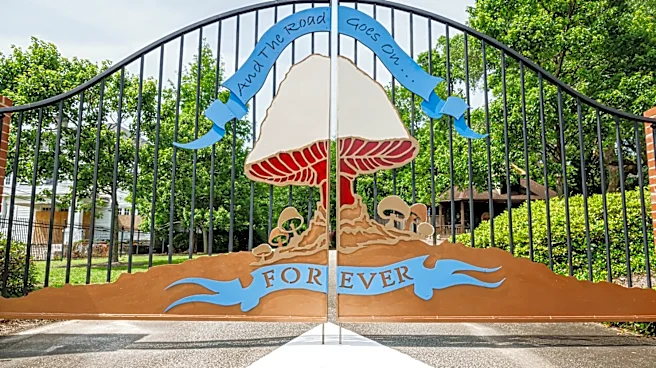
Known as “The Big House,” this Tudor-style house located at 2321 Vineville Avenue was the primary residence for many of the Allman Brothers Band and their associates from 1970 to 1973. Duane kept a bedroom upstairs, Dickey Betts wrote “Ramblin’ Man” in the kitchen, and the band jammed on the main floor. Overseen by executive director Richard Brent, the Big House is living, breathing rock & roll history.
Grant’s Lounge
Everyone from the Allmans and the Marshall Tucker Band to Tom Petty and Eric Clapton have played this musical utopia on Poplar Street downtown. Opened in 1971 by Ed Grant Sr., it’s notable for its welcoming vibes, wall of fame photos, and a stage that regularly features the Macon Music Revue, a red-hot live act that preserves the city’s rich musical history.
Otis Redding Museum
Don’t come to the “(Sittin’ On) The Dock of the Bay” singer’s museum expecting to film and photograph all the exhibits for your social media: That’s a no-no to Zelma Redding, the soul singer’s widow who has a parking space out front that reads “Reserved for the Queen.” She wants music fans to experience the museum’s artifacts in person. And they are many: from rare photos and a bandstand to fuel receipts for the plane that would eventually claim one of music’s greatest voices when it crashed in 1967.
Little Richard House and Resource Center
Walk on the very same wooden floors as young Richard Penniman did in this tiny but culturally powerful home in the Pleasant Hill section of Macon. While there are mementos from Little Richard’s career — including the religious books he’d hand out to fans later in life, along with a signed photo — the building is not just a museum. It’s a community gathering spot for one of Macon’s most historic Black neighborhoods.
Capricorn Studios
Regarded as the studio that birthed Southern rock, Capricorn is both a museum and a working studio: Marcus King cut his latest album Darling Blue there, and Chuck Leavell, who’s played with the Allmans and the Rolling Stones, regularly drops in to record. Most artists come for Studio A, a room that feels as if it’s encased in 1970s amber. Along with the Allman Brothers Band’s Brothers and Sisters, albums by Charlie Daniels Band, Lynyrd Skynyrd, Blackberry Smoke, and Brent Cobb — plus Gregg’s1973 solo debut, Laid Back — were all recorded at Capricorn.
Rose Hill Cemetery
This historic cemetery at the edge of town represents both the beginning and, to some degree, the end of the Allman Brothers Band. The photo on the back of their 1969 self-titled debut was taken at Rose Hill, and it serves as the resting place for four members of the group: Duane Allman, Berry Oakley, Butch Trucks, and Gregg Allman are all buried next to one another. Ask for a map at the gate to find the graves and pay your respects.
Click here to read the full article.