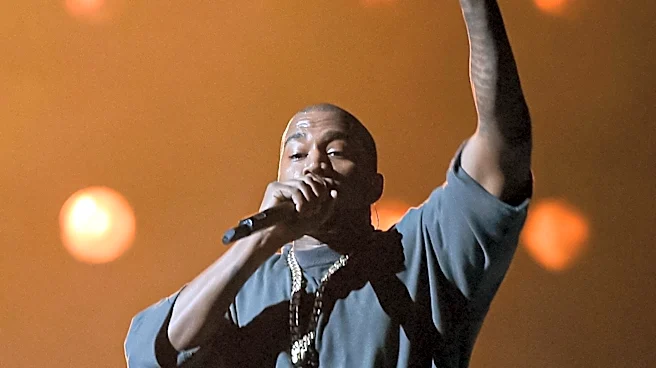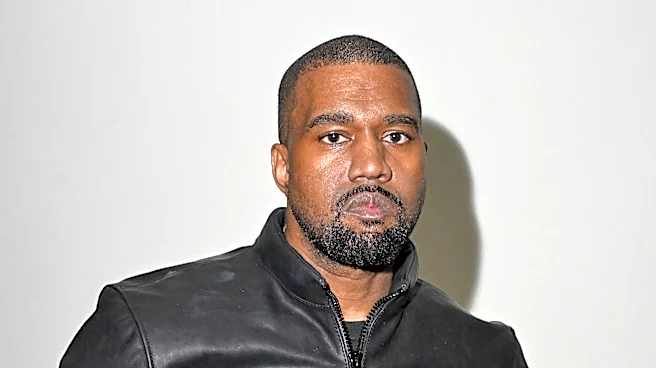


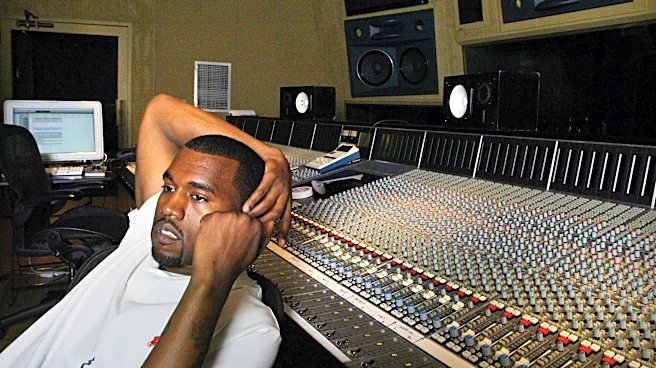
A federal judge agreed Thursday to dismiss a copyright infringement lawsuit against Kanye West after the musician reached a settlement with Alice Merton, the German singer-songwriter who accused West of using a sample of her song “Blindside” without permission
on his track “Gun to My Head.”
Merton filed the underlying copyright infringement claim last year
, saying she would never grant permission to the artist now known as Ye due to his history of “antisemitic, racist remarks.”In her lawsuit, Merton described herself as a direct descendant of holocaust survivors who refused to clear the sample because she was “unwilling to compromise her personal beliefs.” Merton said she was “understandably shocked and humiliated” when several websites reported in December 2023 that she appeared to be a willing collaborator on Ye’s song, which featured Kid Cudi and Ty Dolla $ign.
Terms of the new settlement were not disclosed in the order dismissing the action signed by U.S. District Court Judge Fernando L. Aenlle-Rocha and obtained by Rolling Stone. In a Nov. 6 court filing, lawyers for both sides said they had agreed to resolve the dispute and expected to seek dismissal of the lawsuit once the settlement terms had been fulfilled. Attempts to reach the lawyers were not immediately successful Friday.
Ye first teased “Gun to My Head” at an early Vultures listening event in December 2023. The song garnered particular attention because it marked Ye and Cudi’s first collaboration in several years.
According to the lawsuit, “Gun to My Head” sampled a segment of “Blindside” that “spans most of the entire song’s baseline melody.” It also featured a vocal recording of the opening lyric line from Merton’s song, “I sat down with a gun to my head,” which became “the dominant lyric line” in Ye’s song, the complaint said.
Merton said Ye had not contacted her to clear the sample before the listening event, and the song did not appear on the first Vultures album released Feb. 8, 2024. But on Feb. 15, 2024, Ye’s clearance company allegedly reached out to clear the sample, and a few weeks later, Merton denied the request, saying Ye’s “values are contrary to our values,” the lawsuit said.
When Vultures 2 arrived in August 2024, “Gun to My Head” was not included on the official track list, but it was briefly released on a digital deluxe version of the album. Ye also played it at other listening parties, and it ended up in bootlegged versions available on YouTube, the lawsuit said.
When the song did not make the Vultures 2 cut, Ye’s fans allegedly “blamed Merton for not authorizing” the sample and even sent her “death threats,” he complaint alleged. She said Ye “did nothing to stop the abuse, allowing his fans to intimidate and harass [her].”
The lawsuit was not the first to accuse Ye of using copyrighted music without permission at a listening event. In May, a jury found that he had infringed on the copyright of an unreleased demo by sampling it in an early version of his Grammy-winning song “Hurricane,” which he played for 40,000 fans at a sold-out Donda listening event in 2021.
During the six-day trial, lawyers for the plaintiffs — four musicians who composed the one-minute instrumental “MSD PT2” — argued that their clients were entitled to a share of the estimated $5.6 million Ye earned from ticket and merchandise sales at the July 2021 event at Mercedes-Benz Stadium in Atlanta, as well as a deal with Apple Music to stream the show.
The jury found Ye personally liable for $176,153 and his company Yeezy LLC liable for an additional $176,153. Two other companies, Yeezy Supply and Mascotte Holdings, were found liable for $41,625 and $44,627, respectively, bringing the total award to $438,558.
A spokesman for Ye called the verdict a “failed shakedown,” saying the plaintiffs had demanded $30 million to settle before trial.
Click here to read the full article.