




On the morning of Saturday, March 9, 2024, John “Swampy” Barnett was late.
A one-time quality engineer for airplane designer and manufacturer Boeing, Barnett was a whistleblower and had filed a lawsuit accusing his former company of retaliation and a hostile
work environment. The Louisiana native was staying in Charleston, South Carolina, where he and his attorneys were in the midst of a deposition with Boeing lawyers. The day before, Barnett had answered questions for a full seven hours and had asked for a break. He agreed to return the next morning. But when his attorneys Rob Turkewitz and Brian Knowles called his hotel, staff found Barnett deceased in his truck with a gunshot wound to the head — sparking months of speculation on the nature of his death. (His death would later be ruled a suicide.)
Barnett was a key contributor to the 2022 Netflix documentary Downfall: The Case Against Boeing, which investigated the crashes of Lion Air Flight 610 and Ethiopian Airlines Flight 302, both Boeing 737 Max planes. The documentary detailed how Boeing’s desire to compete in the market with Airbus incentivized upper management to push production faster without adequate quality control.
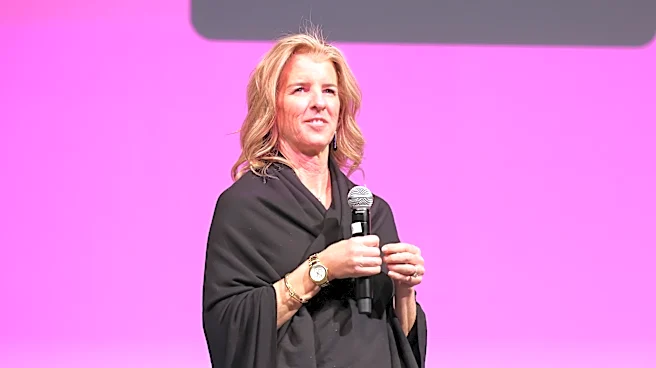
Now, director Rory Kennedy is digging even deeper into the story. Released Tuesday on Netflix,Freefall: A Reckoning for Boeing explores the company’s public promises following the two fatal crashes and interviews a group of whistleblowers who all claim that behind closed doors, Boeing remained focused on profit over safety. The documentary also includes never-before-seen interviews recorded during Barnett’s depositions.
No one from Boeing participated in the documentary, but the company said in a statement to filmmakers that it maintains that their standards have risen following lawsuits, whistleblower reports, and several highly publicized congressional hearings. “The allegations in this film have been widely reported over the years,” the statement reads. “Some remain unfounded claims to this day while others are issues that Boeing thoroughly addressed to continues to improve upon.” They also noted that they introduced a new Values and Behaviors program.
Kennedytold People that she was inspired to make the documentary after Barnett’s death and a recent spate of public Boeing incidents, including the Alaska Airlines Flight 1282 in Jan. 2024, where an incorrectly secured door plug blew off a Boeing 737 MAX 9. (No one was killed, but several passengers were injured.) In the wake of his death, numerous additional whistleblowers stepped forward.
“Around that time, my friend John Barnett, who had been a whistleblower and who I had interviewed for Downfall, had died while testifying about what he had seen with Boeing. That was really the thing that compelled me more than anything to make this film,” she said. “I saw so many whistleblowers and others who had sacrificed so much, who really faced extreme retribution for their bravery and courage, and I felt very compelled to tell their stories.”
Here are four things we learned from Freefall: A Reckoning For Boeing.
Employees trace Boeing’s decline to Jim McNerney becoming CEO in 2005
At the start of the 2000s, Boeing Company was one of the most respected leaders in aerospace manufacturing. Employees in the documentary note that the company was beloved by employees for the unprecedented power they gave quality control managers, allowing them to halt production if mistakes were made or problems were found.
“[The] Boeing Company was unique in that if there was ever a dispute, the quality department made the final decision as to whether or not to sign off on the work,” Merle Meyers, a former Boeing quality manager, says in the documentary.
But in 2005, Boeing hired CEO Jim McNerney, which employees believe started the company’s most criticized practices. McNerney had previously spent 19 years at General Electric as the protege of famed CEO and profits man Jack Welch. When McNerney arrived at Boeing, he focused on increasing the company’s share price and immediately instituted cost-cutting efforts. McNerney, who left Boeing in 2015, did not participate in the documentary.
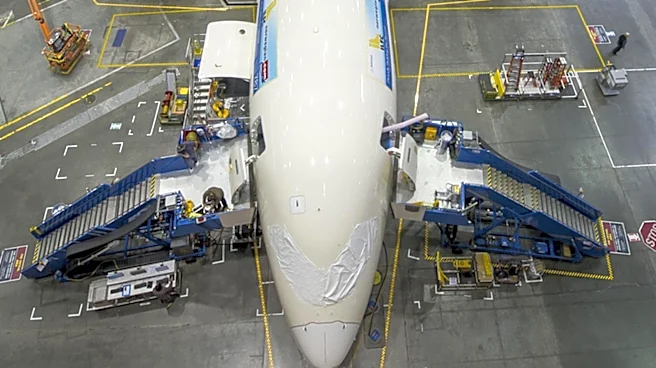
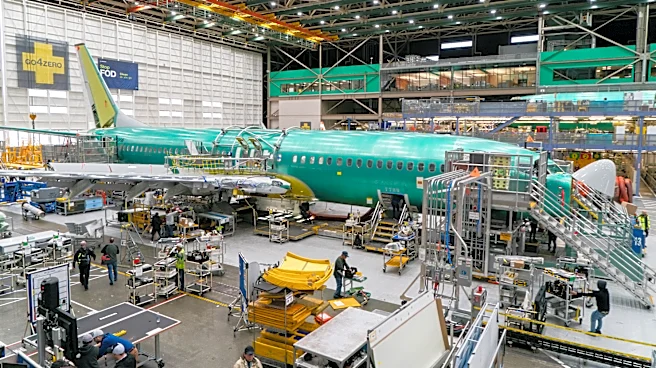
Under the new direction, many of the major aspects of the company’s commercial airplane builds — like product manufacturing — were outsourced to other countries. When the parts were shipped to Boeing’s American facility to be assembled, they didn’t always fit together. Worse, sometimes they were often corroded, broken, or not built to code, employees said.
“You automatically knew that was going to have a direct effect on safety and quality,” Sam Mohawk, a Boeing quality investigator, says in the film. “We just have to accept what is given to us and put it on the airplane.”
The cost-cutting measures ended up delaying production, raising costs regardless. Employees said in the documentary that the issues they raised were brushed aside. When McNerney stepped down in 2015 — taking home a total of $244 million dollars and millions of dollars in a retirement package, they note in the film — longtime employees were hopeful that the previous safety standards would return. They didn’t.
In undercover videos, multiple Boeing employees said they wouldn’t fly on the company’s new planes
After Boeing’s original plan to outsource production of their new fleet of 787 Dreamliner planes failed, the company decided to ramp up production and manufacturing at a new facility in Charleston, far from the established International Association of Machinists and Aerospace Workers union in the Pacific Northwest. The company hired people fresh out of college, many with no aerospace or production experience, and mistakes started immediately.
In an undercover video included in the documentary, multiple unnamed Boeing employees at the plant were caught on camera saying they would never fly on the company’s 787 planes. “I wouldn’t fly on one of these planes,” said one unidentified worker. “Because I see the quality of the fucking shit going down around here.” “Shit, do you know what be going on on a 787?” said another. When asked if he or his family would ever fly on the planes, yet another answered quickly and decisively. “No.”
Employees accuse Boeing of using discarded and damaged parts to finish their airplanes
Meyers, the former quality manager, became concerned when he found that parts quality managers had previously labeled too damaged to use were put back into production, and ended up in several Dreamliner planes. These were products that didn’t fit quality control and had been labeled with the word “scrap.”
Boeing launched an internal investigation, Meyers explains in the doc, but found no wrongdoing. “Not one manager was fired, or went to jail, or got time off,” he says. “It’s like it was just part of the business.”
The fleet, he says, is comprised of 1,200 planes in 85 countries serving 1 billion people. “The [parts] were basically rotted,” Meyers adds in the documentary. “We’ll never know the scope of how many of these parts made it to airplanes.”
Attorneys for John Barnett do not believe the whistleblower’s death was foul play, but they still blame Boeing for his death.
According to interview recordings and depositions played in the documentary, Barnett became increasingly concerned that a decline in leadership and quality control would directly impact the safety of the 787 Dreamliners.
In one interview, he claims he inspected a Dreamliner and found metal slivers, remnants of bolts that had been screwed in, which hadn’t been cleaned up. “Over time, this metal sliver’s gonna vibrate down in there and it’s gonna short wires out,” Barnett says. “Just a little short will bring down a whole plane.” When Barnett reported the issue, he says in the doc, he was told to ignore it and then moved to a different department.
“Is it gonna take an airplane to go down before some people say, ‘Wow, guess we should have listened?’” he says.
According to Barnett’s lawyers, his time as a whistleblower, and being involved in active lawsuits, took a mental and emotional toll on the former Boeing employee. During his March 2024 deposition, Barnett asked if he could continue his interview later in the month, a request that was denied. According to his mother, he called her and said he was dreaming about going home and taking a break.
The autopsy and investigation into Barnett’s death ruled it a suicide. Police said there were no fingerprints on his vehicle or the weapon except his own, the coroner ruled that the angle of the gunshot matched a “self-inflicted” wound, and investigators found a suicide note next to him.
His attorneys show the notebook in the documentary and the note that reads, “I can’t do it any longer. Enough. Fuck Boeing. I pray the motherfuckers that destroyed my life pay.”
“Boeing may not have pulled the trigger, but Boeing was responsible for John’s death,” Turkewitz, one of his lawyers, says in the film.
In August 2025, Boeing settled Barnett’s lawsuit for an undisclosed amount. That November, the Department of Justice dropped their criminal investigation, and ordered the company to pay $1.1 billion. The wrongful death lawsuit against the company is still pending. Every whistleblower who spoke in the documentary said Barnett’s courage inspired them to continue to hold Boeing accountable for better safety practices.
Click here to read the full article.