
This week in 1991, 35 years ago, was one of those moments that changed music history. On September 24, four classic albums dropped on the same day: Nirvana’s Nevermind, the Red Hot Chili Peppers’ Blood Sugar Sex Magik, A Tribe Called Quest’s The Low End
Theory, and the Pixies’ Trompe Le Monde. All four were instant sensations, to the shock of the industry, transforming how everything would sound for the next decade. The revolution happened fast — August of 1991 was one era, but then by October it was a whole new ballgame.
If you’re looking for symbolic reasons why music was overdue for a revolution, look no further than the year’s biggest pop group, C&C Music Factory. Just a few weeks earlier, on August 23, the Factory (as nobody ever called them) were doing a live show in Tucson, as part of the Club MTV Tour. Other acts on the bill: Color Me Badd, Gerardo of “Rico Suave” fame, Bell Biv DeVoe. But the C&C rapper Freedom Williams passed out cold onstage, falling flat on his face, with the whole crowd watching. The official explanation was the usual “dehydration” and “exhaustion.” (Maybe he also made the mistake of trusting a big butt and a smile?)
Funny thing, though — while Freedom Williams lay there unconscious, his voice kept booming over the speakers. Whoops! It was every lip-synching hustler’s worst nightmare. But it was also a tombstone for a whole era of pop glitz. The music factory that made Eighties radio such a kick — with all its hype, tinsel, hairspray, and shameless artifice — was finally out of gas. It was official: not even the dude from C&C Music Factory could stay awake through his own hits. As Freedom himself would say, it was just one of those Things That Make You Go Hmmmmm.
Suddenly, for fans, this was all no longer good enough. The audience response was loud and clear: Here we are now. Entertain us.
Change was in the air. And that’s why the world was so ready for these albums as soon as they dropped, wrapping yellow tape around everything safe and predictable and boring. None of these rebels were supposed to hit big — if you were betting on albums that came out on September 24, the smart money was on Bryan Adams, who released Waking Up The Neighbors, featuring the summer’s biggest hit, “(Everything I Do) I Do It For You.” A perfectly nice little Bryan A record, if you’re keeping score. But not exactly the kind of thing that fires up the pheromones 35 years (or even weeks) down the line.
The fall of 1991 was a fantastic moment for music, because change was happening so fast, week to week. The SoundScan era was just starting, forcing the charts to reflect what people were actually buying, so you had country and rap and metal albums debuting in the Top Ten for the first time. (Hell, even Rush debuted at Number Three that September, with Roll the Bones.) Perry Farrell began the Lollapalooza Tour that summer, proving there was a hungry young audience of alternateen kids fiending for upstarts like Nine Inch Nails, Rage Against The Machine, and Perry’s band Jane’s Addiction.
September 1991 also had one of the best MTV Video Music Awards in history, the year R.E.M. won everything for “Losing My Religion,” a passing of the generational torch. Prince rocked his assless chaps in his live “Gett Off.” But the show got stolen by the surprise opener: Pee Wee Herman, just a few weeks after getting busted in a porn theater. Pee Wee kicked off the show by asking, “Heard any good jokes lately?” After a thunderously affectionate standing ovation, he replied, “So funny I forgot to laugh!”
Nirvana hit this moment like manna falling in the desert — these three Seattle brats were everything the new Nineties kids were craving. “Smells Like Teen Spirit” blew up on the radio and MTV, with Kurt Cobain’s passionate yowls and that stupid-and-contagious air-guitar riff. And because of SoundScan, nobody could ignore how many mallrats were out there buying it. (Like, in stores. For actual money.) Suddenly 1991 was the grunge era, led by three hits that came out within a few weeks of each other: Pearl Jam’s Ten on August 27, Soundgarden’s Badmotorfinger on October 8, Nirvana in between. As Sonic Youth famously proclaimed, it was The Year Punk Broke.
Nevermind made a modest debut on the chart that week, at #144, just four notches behind Warrant’s year-old Cherry Pie — proof that the gods of rock & roll irony have a sick sense of humor. It was the last week in history that more customers went for Warrant than Nirvana. All those hair-metal clones got wiped out overnight. Damn, it was a pleasure to mosh on the graves of dog-vomit bands like Tesla, who made Warrant sound like Motorhead, or Firehouse, who made Mr. Big sound like Voivoid.
That first week, Nevermind was surrounded by quintessential 1991 chart fodder by the Judds, Phil Collins, Ziggy Marley, Sting, and the Pretty Woman soundtrack. But a few weeks later, Nevermind was at Number One. This wasn’t supposed to happen. Somehow, as a great philosopher named Vanilla Ice was about to say, in his October film classic Cool As Ice, the audience decided to drop that zero and get with the hero.
September 24 came just a week after Guns ’N Roses released two albums the same night, Use Your Illusion I and II. Those albums came out at midnight on September 17 — like so many of my friends, I waited in line outside Plan 9 Records to buy it at midnight, on vinyl. (Hey, what else could you do in Charlottesville, Virginia on a Monday night?) The full-page ad in Billboard proclaimed, “Guns N’ Roses Will Release No Album Before Its Time. It’s Time.” Both Illusions were a trip, especially Side Two of Disc One of Illusion II, with “Get In The Ring,” “Shotgun Blues,” and the underrated “Breakdown” — now that’s a flawless vinyl side.
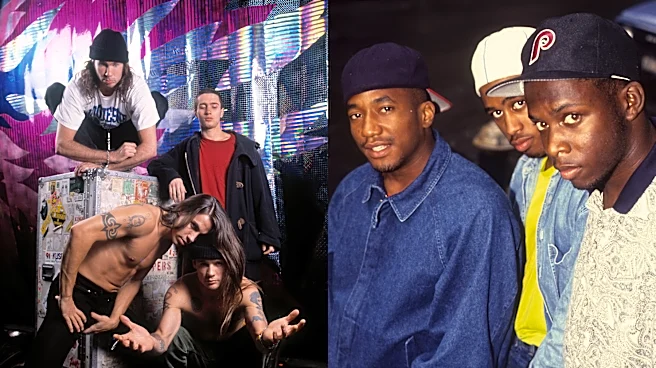
The Chili Peppers were widely seen as just a local L.A. thing until Blood Sugar Sex Magik, with “Give It Away” and “Under the Bridge” proving they were just learning how to write songs, with help from new guitar whiz John Frusciante. The Pixies’ Trompe Le Monde was a different kind of rock statement, since the band was a known quantity (plus Kurt Cobain faves who helped inspire Nevermind). But after the polish of Doolittle and Bossanova, it was abrasive, fresh, and pop at the same time, with the surge of “U-Mass” and “Subbacultcha,” just for kicks and giggles.
The Low End Theory was a wildly innovative romp through the paths of rhythm between jazz and hip-hop, with A Tribe Called Quest updating the Native Tongues aesthetic in jams like “Check the Rhime.” It proved hip-hop’s creative diversity, after a year when some thought gangsta was the only game in town. (Especially with the disastrous legal anti-sampling crackdowns against De La Soul and Biz Markie.) A week later, Public Enemy went hard on Apocalypse ’91…The Enemy Strikes Black, joining Michael Jordan and Spike Lee on one of the best SNL episodes ever. On the West Coast, Cypress Hill were blowing minds with the “Latin Lingo” of their super-stoned August debut. KMD made the underground experimental gem Mr. Hood —the first time many heads heard the genius of MF Doom.
The spirit of innovation was all over the map, in the U.K. dance sounds of Primal Scream’s Screamadelica, Orbital’s self-titled debut, and Massive Attack’s Blue Lines (an April release just hitting Stateside). The fall of 1991 also had the legendary rave episode of Beverly Hills, 90210 on November 14—yes, the one where the gang hits an illegal warehouse party where you need an egg to get in. Stay away from the U4EA, Brandon!
The Top 40 was insane that fall — a glorious blast of one-hit wonders, flukes, scams, dance crazes, novelty goofs that came out of nowhere to crash the radio. Rap bangers like Naughty By Nature’s “O.P.P.” or Salt N Pepa’s “Let’s Talk About Sex” were blowing up. Freestyle was booming, with classics by Lisette Melendez (“A Day in My Life Without You”) and Corina (“Temptation”). Metallica had a bona fide with “Enter Sandman,” so great that not even Metallica purists could find a way to hate it. Siouxsie had a bona fide hit with “Kiss Them For Me,” sampling Schoolly D. So many smooth R&B New Jack Swing boy bands rose up—light a candle for Hi-Five, with their magnificent slow jam “I Can’t Wait Another Minute,” or Mint Condition with “Breakin’ My Heart (Pretty Young Eyes).”
The Number One hit that week was a real puddle of pastel kitten puke: Color Me Badd’s “I Adore Mi Amor.” But there were goodies bubbling in the Top Ten, like Boyz II Men (“Motownphilly”), or Marky Mark and the Funky Bunch (“Good Vibrations,” which I will defend as an Actual Good Song). Martika’s “Love…Thy Will Be Done” was the autumn’s finest Prince hit (he actually wrote it), until the Purple One himself came back to hit Number One with “Cream.” But nobody could outsleaze Natural Selection, a one-shot duo who scored the most shamelessly ridiculous faux-Prince rip-off of all time, “Do Anything.” [https://www.youtube.com/watch?v=0vGAqK6VA1o] The Divinyls kept lingering on the radio with their sticky-fingered autoerotic sex jam “I Touch Myself.” (“I honestly doooo!”) The Geto Boys’ “Mind Playing Tricks On Me” was just starting to give people nightmares — just in time for Halloween.
Everybody’s favorite new pop stars that fall were the New Jersey duo P.M. Dawn, who mixed up Native Tongues-style rap, New Romantic synth-pop, and goth melodrama into their own weird sound, sampling Spandau Ballet in their Number One smash “Set Adrift on Memory Bliss.” They’re strangely forgotten now, which is a shame—when Prince Be died ten years ago, he didn’t even make the Grammy “In Memoriam” montage. The Midwest rap duo K.M.C. KRU scored a hit with “The Devil Came Up to Michigan,” updating the country classic with a guest shot from Charlie Daniels. It was that kind of year.
In the wake of Nevermind, punk rock went from a niche thing to a mass youth language—Nirvana were merely the gateway. “Indie rock,” a two-word idiom just a couple of years old, was now a trope you could mock and celebrate at the same time, as Sebadoh did in their hilarious summer single “Gimme Indie Rock!” (Sample verse: “Milk that sound, blow your load / Soon it’s further than you ever said it’d go / Four stars in the Rolling Stone!”)
Bikini Kill set off the riot grrrl alarm with their hugely influential 1991 cassette Revolution Girl Style Now!, with anthems like “Feels Blind.” The summer was packed with genius DIY indie broadsides: Superchunk’s “Cool,” Unrest’s “Cherry Cherry” and “Yes She Is My Skinhead Girl,” Pavement’s “Summer Babe” and the Perfect Sound Forever EP, the Silver Jews’ “Canada,” Lois’ Highlights, Slint’s Spiderland, L7’s Smell the Magic, Fugazi’s Steady Diet of Nothing. In the Pacific Northwest, K Records’ International Pop Underground convention in August inspired countless cardigan-clad bands. Hot on the heels of Nevermind came left-field hits from Matthew Sweet’s Girlfriend to Swervedriver’s Raise to Teenage Fanclub’s Bandwagonesque. And just in time for December, My Bloody Valentine dropped Loveless, an industrial ear-bleeder romance that has kept the world reeling ever since.
The rest of the year was stuffed with blockbusters aimed at Christmas shoppers: U2’s Achtung Baby(an artistic breakthrough initially reviled as a commercial flop), Michael Jackson’s Dangerous, Richard Marx’s Rush Street (his edgy album — as the TV ads proclaimed, “the dark side of Richard Marx!”), Ice Cube’s Death Certificate. But everything was different now. Poor Genesis waited just a little too long to release We Can’t Dance, which came out in November—it would have sounded a lot less craven a couple months earlier. After these albums dropped on September 24, the stakes were suddenly higher, and the possibilities were suddenly wide open. That’s why all these years later, these albums are still challenging everybody else to try harder.
Click here to read the full article.