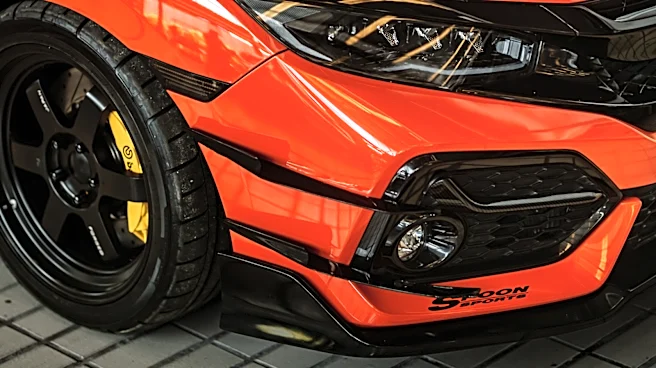







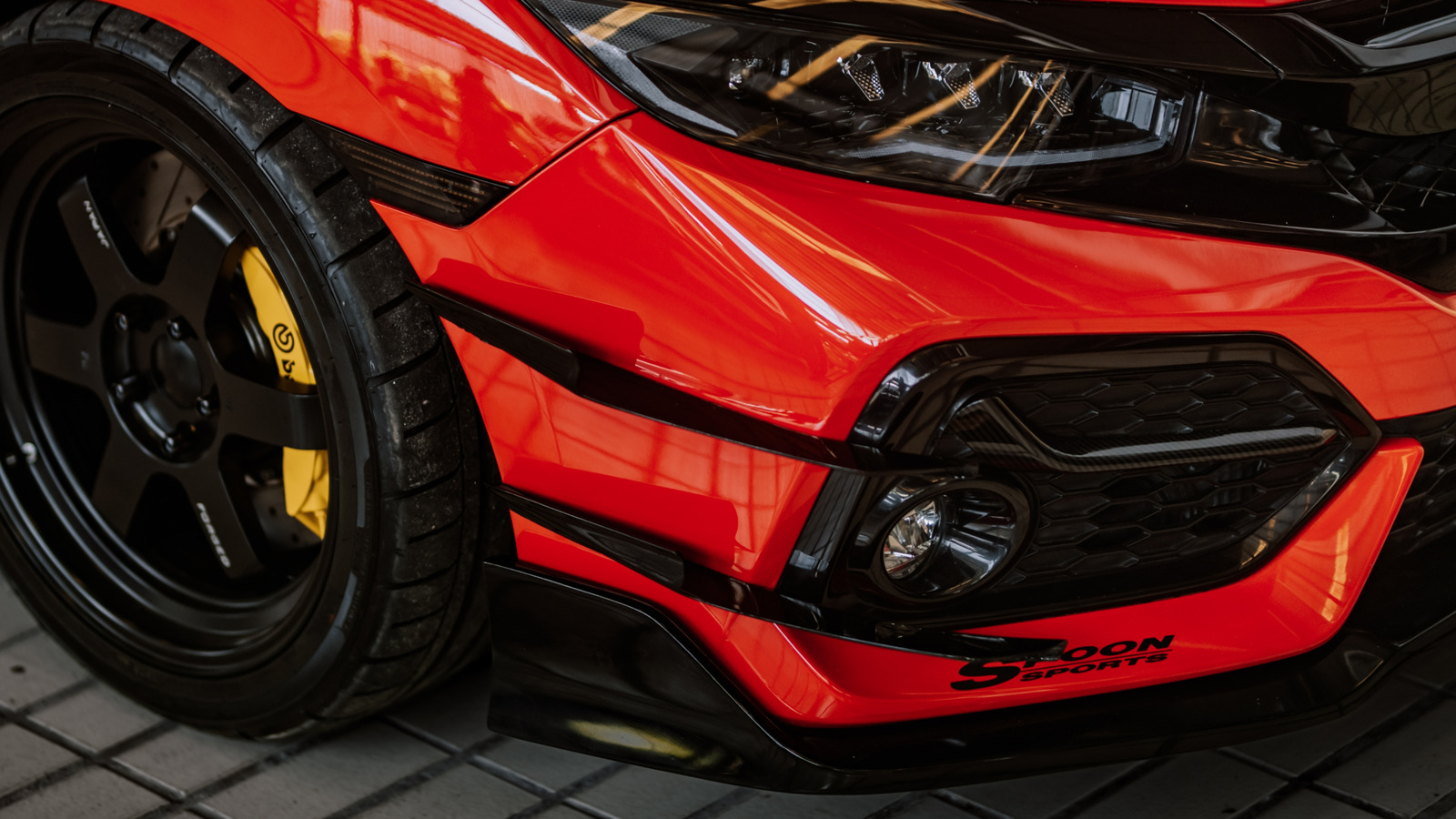
Form over function or function over form? Canards (also known as dive planes or dive plates) are those small aero winglets applied to the front corners of a vehicle's bumper that are intended to improve the aero performance of your vehicle and — depending on your aesthetic — make your car look more aggressive.
Downforce, lift, and drag should all be considered when looking to upgrade your car's aero with canards. Downforce is the vertical aerodynamic force that pushes your vehicle down into the ground,
expressed in pounds. Downforce increases are felt rapidly at speed, as downforce increases at the square of speed, meaning that as speed doubles, downforce increases by four times. Lift is the opposite, upward vertical force on a vehicle. Increased downforce and/or reduced lift can generate more tire grip, allowing for more stability at speed.
Canards can increase downforce in two ways: by altering the airflow to amplify other aero mods on your vehicle or by directly creating downforce themselves to balance out front and rear stability. Just like many other mods, the actual results of applying canards range from purely aesthetic to actual performance improvements to "I've made things worse and now my car is slower."
Improperly installed or designed canards can reduce high speed stability, slowing your car down–by exacerbating poor front end airflow, creating lift, or creating too much front end downforce and drag. Let's take a look at how that can happen.
Read more: 5 Exotics That Use Parts From Cheap Normie Cars (And Even Buses)
Can canards develop dynamic downforces?
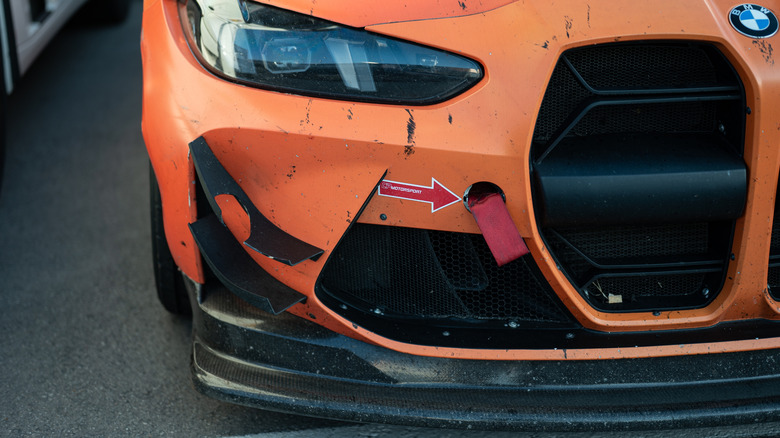
Canards can improve front-end stability at speed by either adding downforce or reducing lift. When they're structurally sound, mounted securely, and well designed, downforce is created on the canard and transferred to the chassis of your vehicle. They can also augment the aero forces to a front splitter and aid in resolving turbulent air patterns on the leading edge of a vehicle. Smooth is fast, and smoothing out turbulent air allows other aero components to do their jobs more efficiently.
There's no such thing as a free lunch, though, and this increased grip will usually be paid in the form of drag. Drag is the resistive horizontal force that acts against the vehicle when downforce is generated. Typically, as the downforce created by canards increases, drag will also increase. This force opposite to the direction of vehicle travel means more engine power is spent overcoming this force and less on forward speed.
Life is all about balance, and upsetting that balance can slow your car down. Creating too much downforce at the front end ahead of the front axle can act like a seesaw, creating lift in the rear of the vehicle and reducing stability at speed. This imbalance can nudge the car toward oversteer. Early Audi TTs were infamous for high-speed instability and accidents that were partly due to the high lift in the rear end. Few things slow your car more than a crash.
Go fast and add downforce

There are more efficient ways to create downforce without upsetting vehicle balance or slowing down your car. Full underbody trays work by cleaning up airflow below the vehicle. Mounted directly to the chassis, these create airflow that moves faster below the vehicle by creating a pressure differential. The lower pressure below 'sucks' the vehicle to the ground, increasing grip with less drag downsides.
As aero is significantly more effective at higher speeds, it means it's noticeably less effective at low speed. What if we wanted downforce at 0 mph? Well, the McMurtry Spéirling creates up to 4,400 lbs of downforce from a stop by using two electric fans and a skirt to create a vacuum gluing the vehicle to the ground. For reference, Car and Driver noted that a Dodge Viper ACR with additional ACR Extreme package has only 2,000 lbs of downforce at 177 mph.
Real aero performance gains are generally felt at higher speeds, but it's a tricky science. If you want to improve your vehicle's performance -– grip, stability and acceleration -– at all speeds, grab a set of performance tires. Wider tires can offer more lateral grip and stability, while tires that use specific compounds will increase grip without the need for additional downforce.
Want more like this? Join the Jalopnik newsletter to get the latest auto news sent straight to your inbox, and follow us or add us as a preferred search source on Google.
Read the original article on Jalopnik.