



While we're yearning for another generation of the legendary Chevrolet Camaro
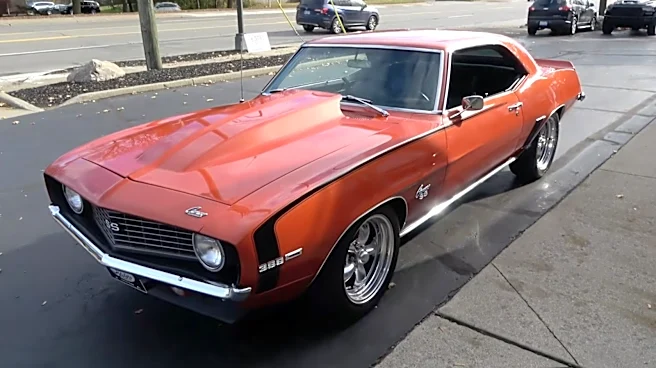
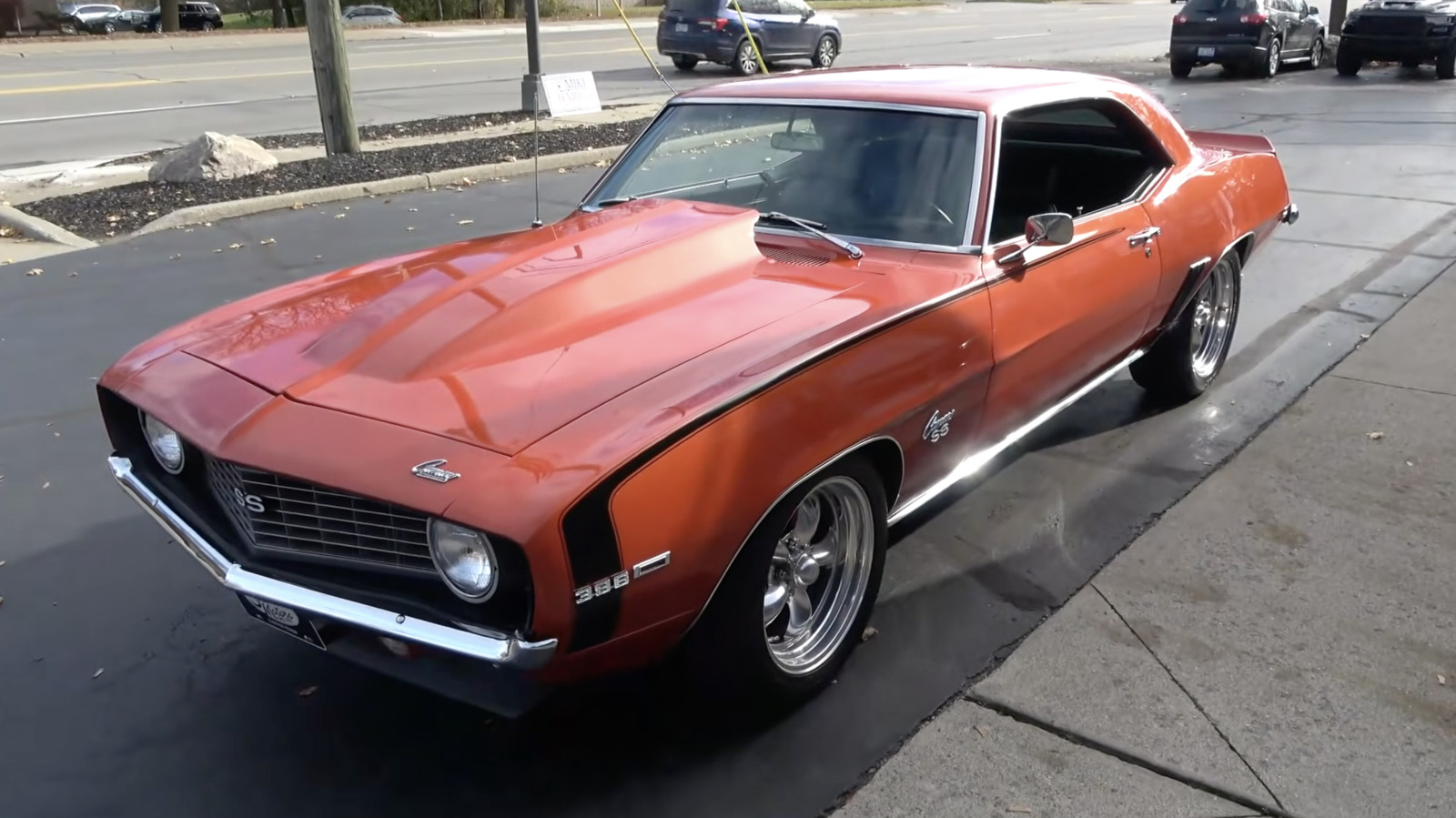
, our best bet is to look back at its golden era — and one of the most pristine restomods we've found on Hemmings. This Ontario orange 1969 Camaro SS, listed by a Clarkston, Michigan dealer for $58,900, shows 10,000 miles on the odometer and a body-up restoration. Its 396 big-block raises a fair question: How did that engine really stack up against its rivals back in '69?Neither the Hemmings listing nor the dealer's YouTube
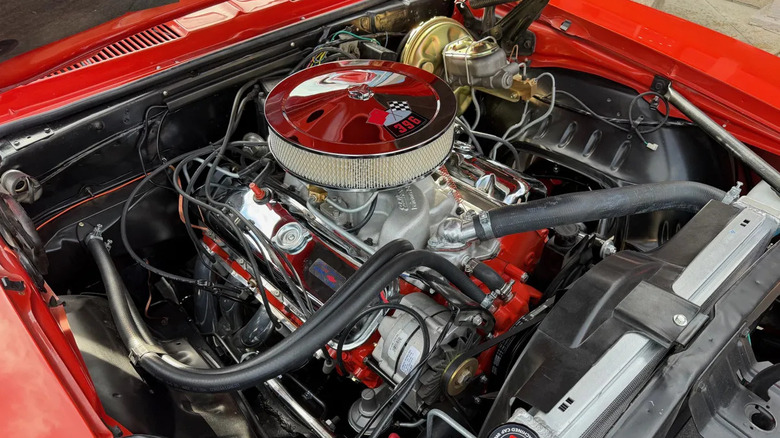
walkaround gives horsepower or torque figures, but this clearly isn't a stock motor. The 396 wears an Edelbrock Performer aluminum intake, ceramic headers, a mild camshaft, and a Flame Thrower high-energy-ingition distributor, with chrome valve covers and an air cleaner on top. Behind it, a Turbo-Hydramatic 400 automatic sends power to a 10-bolt rear axle with 3.23 gears.
[https://www.youtube.com/watch?v=j-bnQtJsNGQ]
For context, Chevrolet offered three 396s in the 1969 SS, rated at 325, 350, and 375 horsepower, with torque between 410 and 415 pound-feet. The 375-horsepower L78 sat at the top, peaking at 5,600 rpm. So without a dyno sheet, there's no telling where this restomod example lands among them.
Read more: How Fast Were The Fastest Muscle Cars, Really? A Look At 5 Top Speeds From The 1960s
How the 396 stacked up
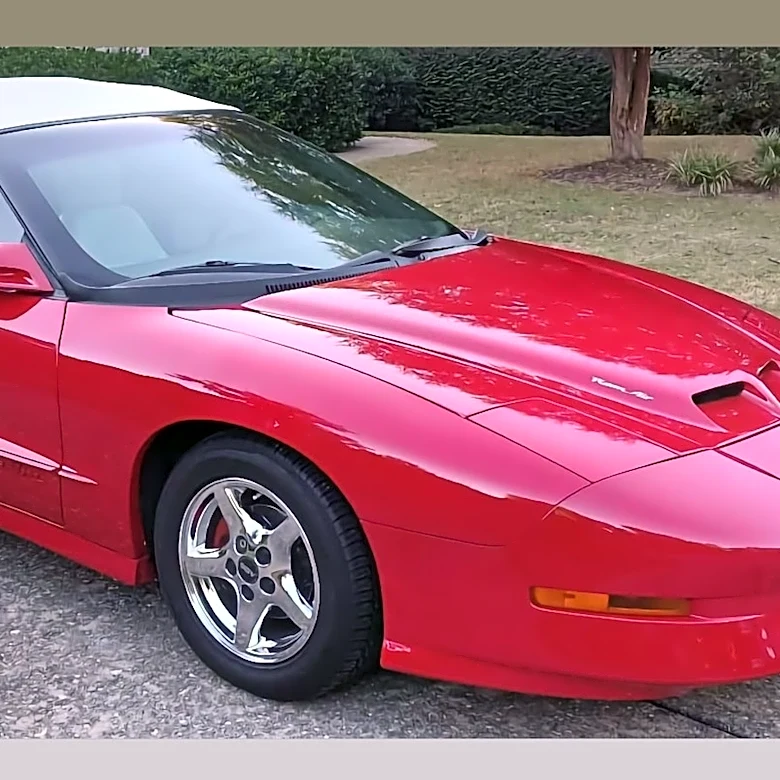
On paper, the L78 outgunned most of its competition. Its 375 horsepower beat the 345 claimed for Pontiac's Ram Air IV Firebird or the 335 rated for Mustang Mach 1's 428 Cobra Jet — one of the most powerful powertrains the Mach 1 ever came with. Even the base 325-horsepower SS 396 sat within 10 horsepower of the Cobra Jet.
Testing was less flattering. Car Life's figures (per Curbside Classic), recorded in showroom-stock trim, have a Camaro SS 396 L78 reaching 60 mph in 6.8 seconds and covering the quarter-mile in 14.77 seconds at 98.7 mph. The Mach 1 428, meanwhile, managed 5.5 seconds and 13.9 at 103.3 mph. Two other 375-horsepower rivals also ran quicker quarter-miles: the Plymouth 'Cuda 440 at 14.01 seconds, and the Boss 429 Mustang at 14.09, despite a slower 7.1-second run to 60. Traction was the usual culprit, since bias-ply tires struggled with big-block torque, so gross ratings didn't settle the pony car argument.
The Camaro's paint is Ontario orange metallic with a black hockey stripe, and there are front and rear spoilers, a cowl hood, and dual chrome mirrors. The 17-inch American Racing Torque Thrust wheels are wrapped in Dunlop 255/45ZR17 tires in back and 235/40R17s up front. The car also gets tubular upper and lower control arms, an aluminum radiator, power steering, and power front discs with slotted and drilled rotors. Inside, the black vinyl interior includes factory bucket seats, a center console, a sport steering wheel, and a Retrosound radio. So while we speculate on the return of the Camaro, consider looking to the past to get the edge off with this low-mile time capsule.
Want more like this? Join the Jalopnik newsletter to get the latest auto news sent straight to your inbox, and follow us or add us as a preferred search source on Google.
Read the original article on Jalopnik.