


James May, the former television presenter and current gin hawker, has just bought himself an old Range Rover. While he's not exactly what we'd call a trendsetter, today's Nice Price or No Dice Range Rover Classic may be alluring enough to make May jealous.
James May's former compatriot, Jeremy Clarkson, complained in a 2014 Top Gear magazine review that the BMW M3 (actually, M4, but let's not get pedantic) was too twitchy on the track. Jezza deduced that the problem lay in the car's fancy electric
power steering not being as communicative or as quick as its hydraulic predecessors.
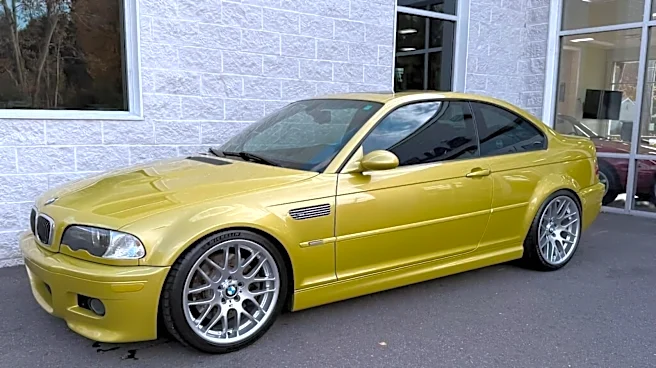
Happily for us, the 2006 BMW M3 we looked at on Monday was one of the last to be mostly analog. With low mileage and a great color, our M3 likely might have even earned Clarkson's approval. Unfortunately for its seller, the set $22,000 asking price did not get the approval of enough of you to carry the day. That was obvious in the 62% 'No Dice' loss it suffered.
Read more: 5 Nearly Indestructible Transmissions (And The Cars That Use Them)
Come over, Rover
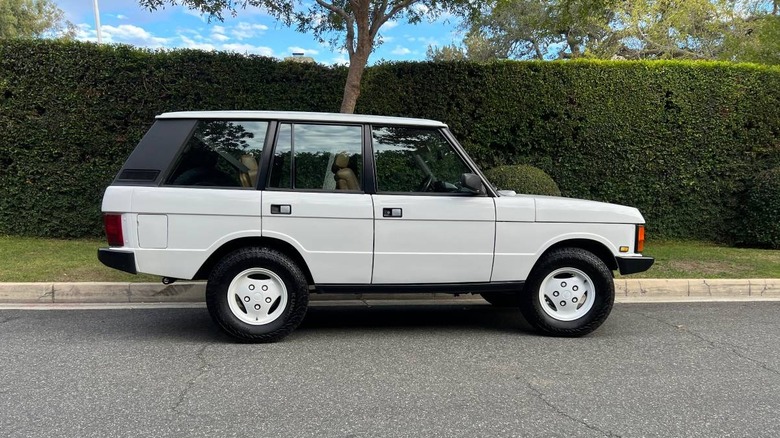
While the Range Rover name has become synonymous with high-end luxury off-roading, that wasn't always the case, nor was it the model's potential name. Land Rover long intended to build something more refined and civilized than its namesake hair-shirt-on-wheels, jeep-like truck introduced shortly after WWII. Back then, the internal code name for the envisioned more car-like truck was "Road Rover," with development beginning as far back as 1957.
That Road Rover evolved into Range Rover, introduced in 1971 and carrying the Rover (nee Buick) all-alloy V8 and coil springs in place of the Land Rover's leaves, wrapped in a clean, simple alloy-and-steel body. Rover intended to sell the Range Rover in the U.S. from the get-go, but financial turmoil at the company and its parent, British Leyland, quashed those plans. It took over a decade and a half for the company to get its ducks in a row, allowing North American sales to begin in 1987.
When it launched in North America, the fancy-pants Range Rover sold like hotcakes, though, in typical British Leyland fashion, quality-control and service issues tainted the ownership experience for many buyers. As a result, many used, off-warranty models tanked in value over the years. As we will see, that may not be the case anymore.
Roverhauled
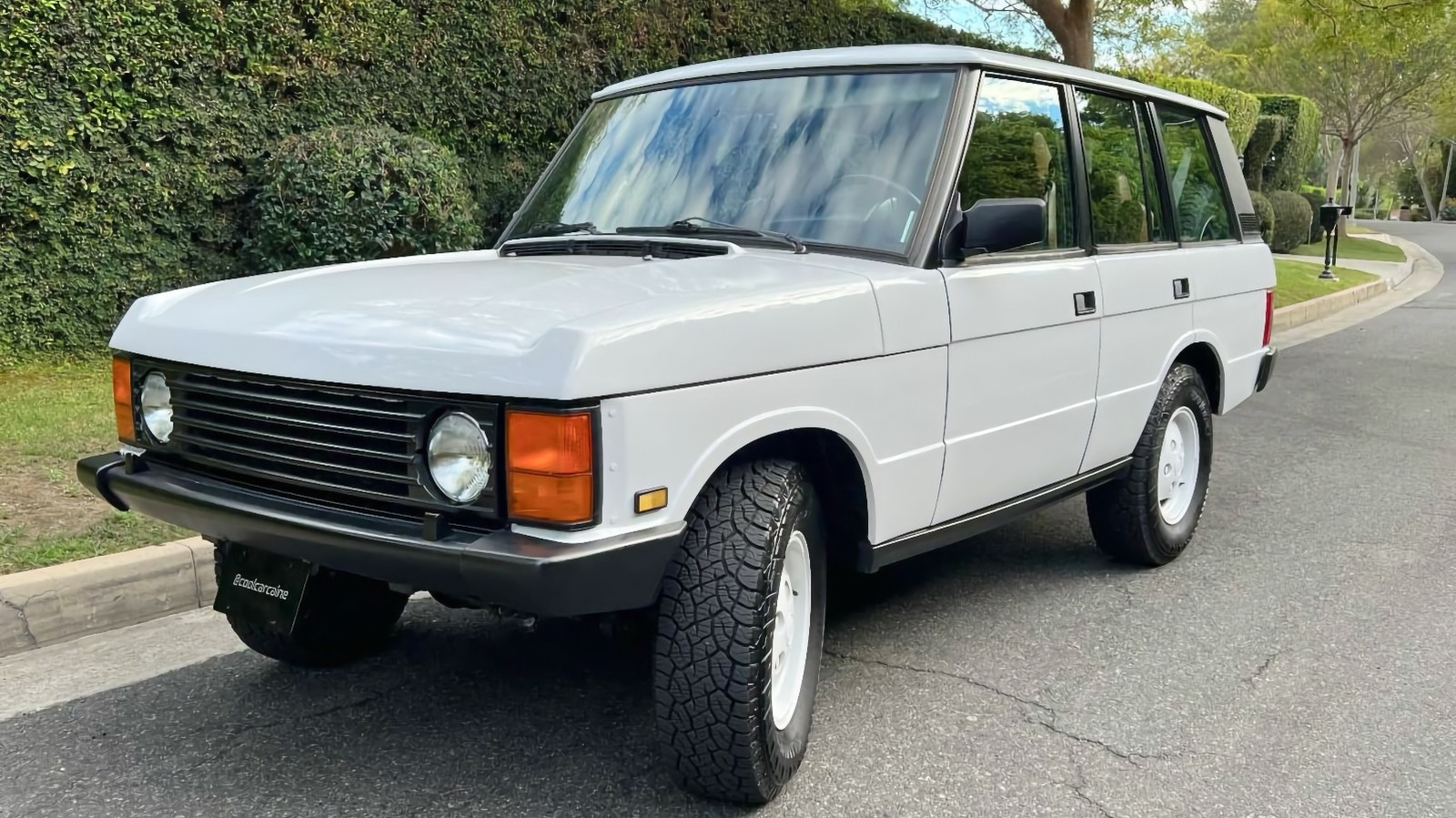
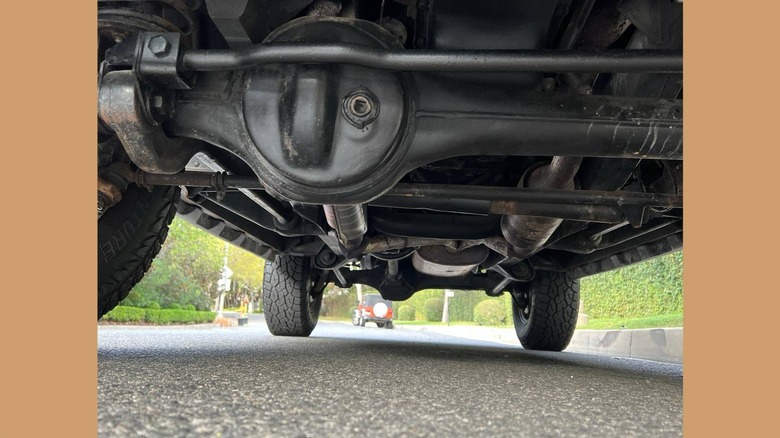
This 1989 Range Rover is the original short-wheelbase edition, powered by a 3.9-liter Lucas fuel-injected version of the long-running V8. In this model year, that was good for 178 horsepower and 298 pound-feet of torque, according to factory specifications. Behind that is a ZF-sourced four-speed automatic and Borg Warner two-speed transfer case. Stout live axles sit at both ends, and the coil-sprung suspension offers plenty of travel.
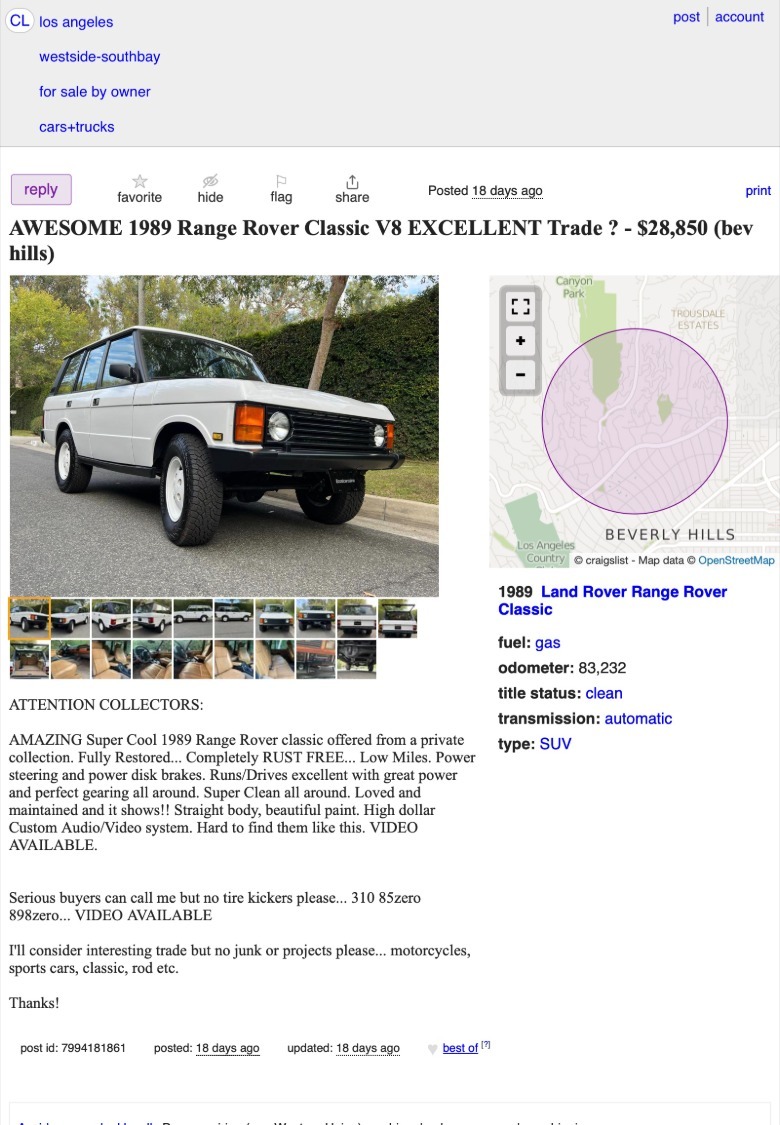
According to the ad, this 83,232-mile Range Rover has been "Fully Restored" and is described as "AMAZING Super Cool."
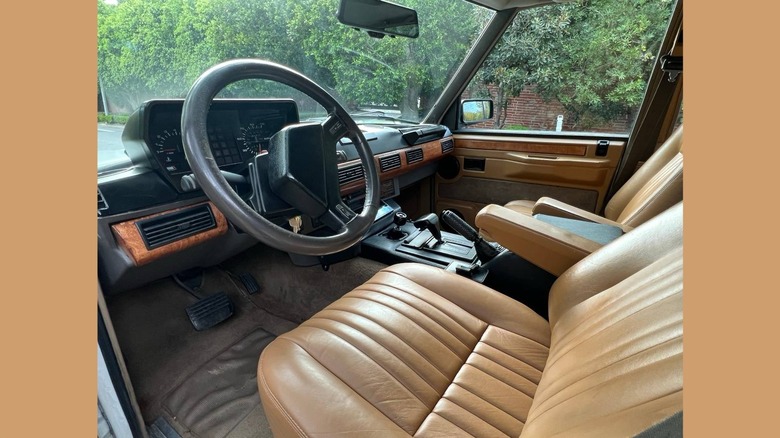
That restoration must have been fairly light in nature since there is evidence of some shortcuts having been taken. That's most obvious in the driver's seat leather, which has a large swath of dye attempting to mask (unsuccessfully) some crazing in the side bolster. Other issues include lumpy carpeting and a torn parking brake boot.
Aside from those minor issues, the interior appears to be in good condition and features what the seller describes as a "High dollar Custom Audio/Video system."
A Classic
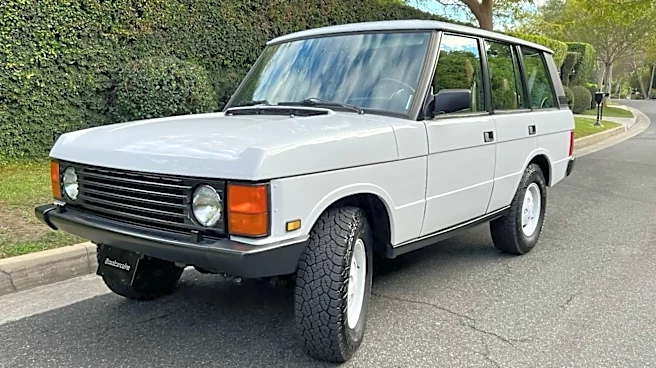
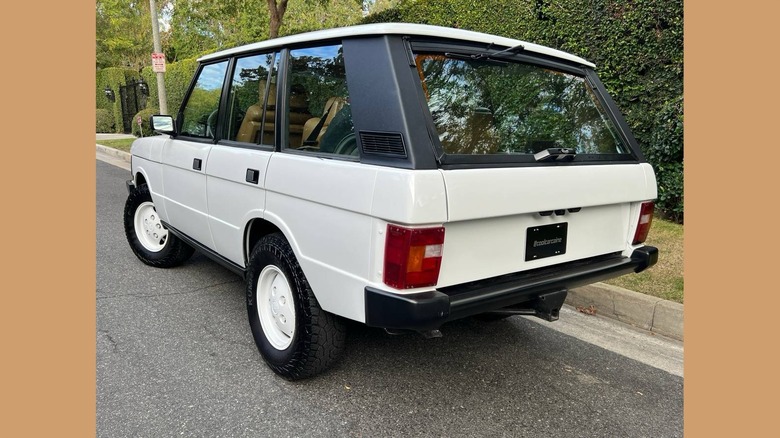
While the interior might have some demerits, there's nothing to complain about on the exterior. The white paint is clean and unmarred and is a color that is both popular and goes with anything. That white hue extends to the Range Rover's iconic three-spoke alloy wheels. Those might be better served by the original gun-metal finish, but that's subjective and irrelevant to our purposes. Other things to note: the bodywork has been drilled and capped on each corner outside of the light clusters, likely at one time for the fitting of brush guards. Also, the body has been entirely denuded of badges, save for the center caps on the wheels.
We aren't given any information about the truck's mechanical history, or any photos of the engine bay, although the seller assures us that it "Runs/Drives excellent with great power and perfect gearing all around," additionally saying that it has been "Loved and maintained and it shows!!"
The original Range Rover has entered the stage of life where it can be considered a classic, with those for sale being either cheap, absolute money-pit fright pigs or updated, restored pride-of-ownership examples like this one. Interestingly, Porsche's 928 falls in the same boat.
They're not cheap anymore
It is advised that any ridiculously cheap Range Rover should almost always be avoided at all costs. Bringing such a dog back from the brink would likely be a fool's errand, quickly emptying bank accounts in the process.
For anyone wanting to get into the classic Range Rover scene, it's probably best to pay the piper up front and get the best one money can buy. Is this clean-title claimed restored edition the best? No, but then it's probably good enough. We need to determine whether "good enough" is good enough to command the $28,850 the seller is asking. It should be noted that spectacular examples—those with re-trimmed cabins, better colors, and maybe a displacement bump for the engine—do tend to go for half again as much as this.
Still, it's a shock to see original Range Rovers asking so much after years of values being in the doldrums. What's your take on this restored Range Rover and that $28,850 price tag? Does that feel market-fair given the model's age and status? Or is that just crazy talk?
You decide!
Los Angeles, California, Craigslist, or go here if the ad disappears.
Help me out with Nice Price or No Dice. Hit me up at robemslie@gmail.com and send a fixed-price tip. Remember to include your commenter handle.
Want more like this? Join the Jalopnik newsletter to get the latest auto news sent straight to your inbox, and follow us or add us as a preferred search source on Google.
Read the original article on Jalopnik.