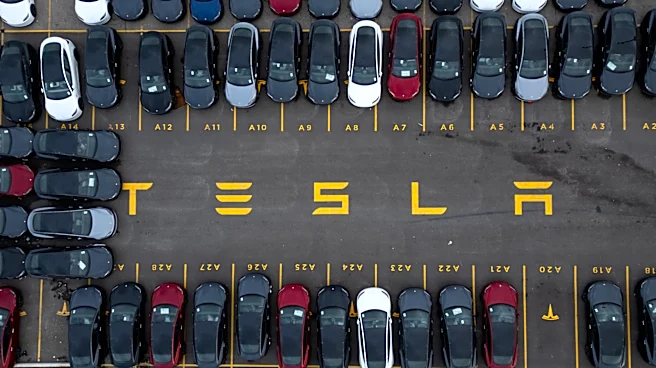

While Tesla faces legal challenges from a who's who of governmental oversight bodies, Tesla has been able to repeatedly dodge private citizens complaints through a seemingly ironclad arbitration clause
found in all new Tesla sales contracts.
In fact, civil lawsuits regarding deadly and damaging crashes
seem to end in quiet settlement after quiet settlement. When they don't, the payout is massive, like the $243 million judgement after a 2019 Autopilot crash in Florida. So what is Tesla hiding behind closed doors?The pivotal line item can be found in customer contracts regarding forced arbitration. As the San Francisco Chronicle points out in its investigation, Tesla quietly settled 920 consumer cases in the last 10 years; "twice as many as the nine other top 10 U.S. automakers combined." So far, in the public court records and case logs the Chronicle collected, it found Tesla managed to skirt 12 attempted class action lawsuits because of its ironclad arbitration clause.
Read more: 10 George Barris Custom-Built Cars Every Gearhead Should Know
Just sign the dotted line... after reading!
Should you find yourself in the unenviable position of buying a Tesla, you'll want to pay extra careful attention to Tesla's Energy Library Knowledge Agent Terms of Use, Full Self-Driving (Supervised) Subscription Agreement, Premium Connectivity Subscription Agreement, and Tesla Assist Terms of Use. All can be read on Tesla's website.
The specific arbitration agreement under each of those sections says that if an issue isn't resolved within 60 days of occurrence, the owner agrees to have any issue resolved via arbitration. Owners are unable to bring about any class-action lawsuits against the company.
Two attorneys found that out when they were hired to take on Tesla. The initial class-action lawsuit they brought against Tesla had 12 individuals behind it which ,due to the agreement, forced it to be broken down into 12 separate arbitrations. And as is the way in arbitration, Tesla wasn't required to supply discovery evidence, especially if it considered any data "proprietary information," so the problem disappeared without any admittance of wrongdoing.
The approach works so well for Tesla that other automakers are beginning to take notice and add similar agreements to their own vehicles or taking cases into arbitration as well. Rivian, also an electric vehicle maker, has already done so.
Owners can at least opt out within 30 days of signing the agreement by sending a letter to a Tesla P.O. Box in Fremont, California. How many of them knew that was a possibility is likely low, as even the Chronicle found most Tesla owners had no idea it was there. To truly see the entire picture you should read the entire investigation by the Chronicle, and watch its accompanying video.
It's a stark reminder of how important it is to read the terms of service to everything you purchase and use before signing. Otherwise, you end up in a losing battle against Tesla, or Stan's unfortunate situation.
Want more like this? Join the Jalopnik newsletter to get the latest auto news sent straight to your inbox, and follow us or add us as a preferred search source on Google.
Read the original article on Jalopnik.