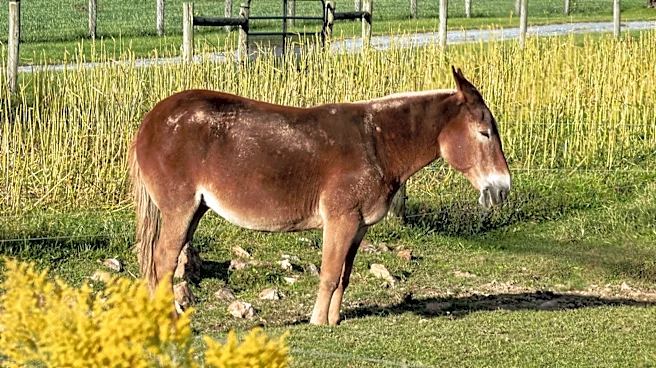



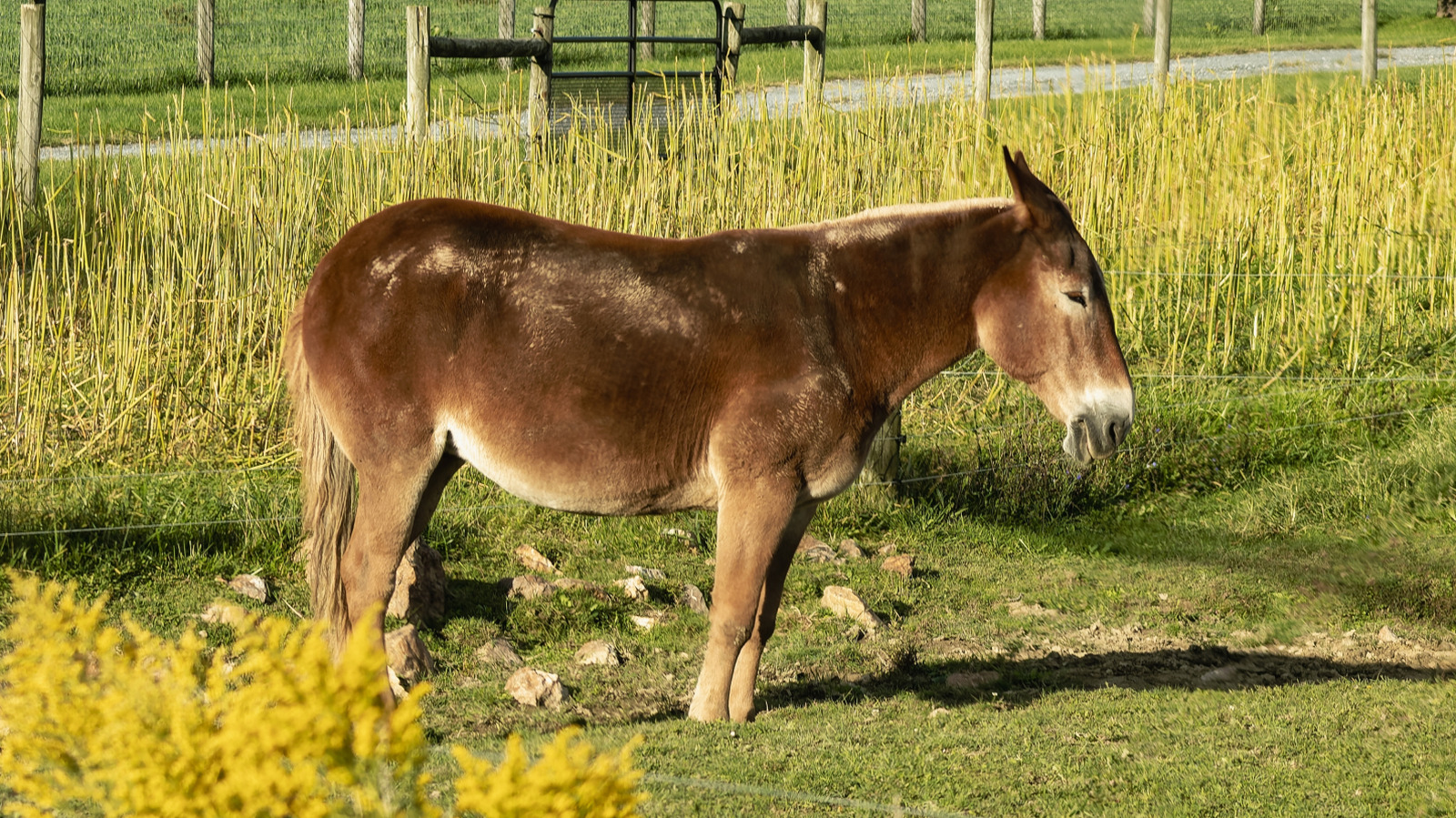
The hybrid equine offspring of a male donkey and a female horse is known as a mule. These animals have traditionally been useful pack animals and beasts of burden because they tend to be larger, stronger, and faster than a donkey, while tougher and able to endure longer days than a horse. Because mules are typically sterile, they almost always represent the end of their bloodline. Many of these attributes also apply to pre-production cars, which might explain why they're frequently known as "test
mules."
Surely you're familiar with the concept of a pre-production development car, and you'll likely have seen some of these cars wearing heavy camouflage in spy photography over the years. Automakers use these pre-production testers to help develop the driving and chassis dynamics and guide them through the parts-selection process. Usually they're used in the development of new hardware, whether that be a new engine, early electric motor prototyping, or a new suspension design. They are often cobbled together from existing componentry, and hidden under the skin of an existing production car in an effort to hide their true intent.
You may recall that Porsche cobbled some 911 bodywork around the hybrid drivetrain of a 918 Spyder back in 2012. That thing looked weird. Or maybe you remember the extra-long-wheelbase 348 Ferrari used to develop the now-iconic Enzo. Another favorite is the Holden Maloo ute Chevrolet imported from Australia to use as a development chassis for the mid-engine C8 Corvette, stuffing that V8 right in the truck bed (photo below). There are thousands of slightly less exciting examples, of course.
Read more: 10 George Barris Custom-Built Cars Every Gearhead Should Know
What are mule cars?
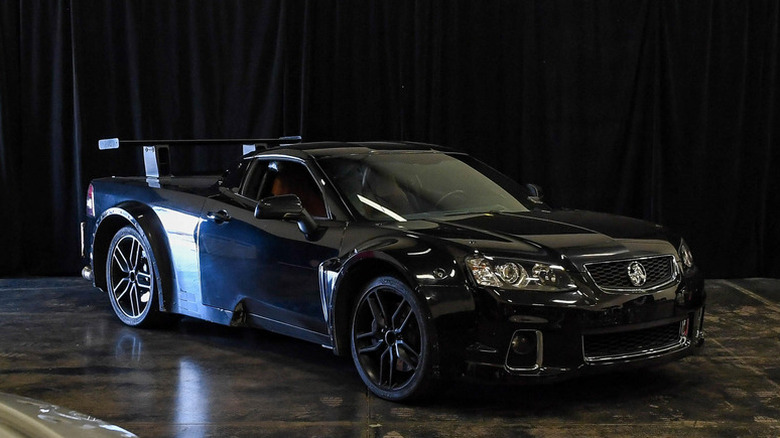
Before a vehicle reaches production, automakers have to spend thousands of hours and miles making sure the components are up to snuff. Sometimes these cars are used for years ahead of their scheduled production manufacture, letting engineers make changes on the fly in the development phase. Sometimes these mules end up going nowhere, as the engineers figure out their ideas weren't viable. Sometimes they're used for final validation of simple things like weight distribution, or setting ride and handling tweaks.
Like the animal mule, automotive mules are frequently hybrids of a few different cars, keeping costs down by using stuff automakers already have in the parts bin. The word has frequently been used to allude to anything made in a hybrid manner. Additionally, like the mule, these are cars that are putting in the work for the company. They may be philosophically sterile, never to produce offspring, but they can help move the heavy load of getting a car closer to production. Perhaps that's why these cars have been dubbed "mule."
However, pre-production prototype mules are likely called that because of the role of a mule car in motorsport. Italian race teams frequently referred to their spare or test cars as "mulettos" or little mules (also a slang term for forklifts in Italian). Here's a brief explanation from Pirelli Tires: "It originates from the 1930s, when cars that were used for training racing drivers or testing new parts needed to be strong and reliable rather than necessarily fast: a bit like mules, especially when contrasted with the capricious thoroughbreds that were the actual race cars."
After decades of use in motorsport, the concept of a test car being called a mule seems to have spread to the road car engineers as well.
What makes a mule car cool?
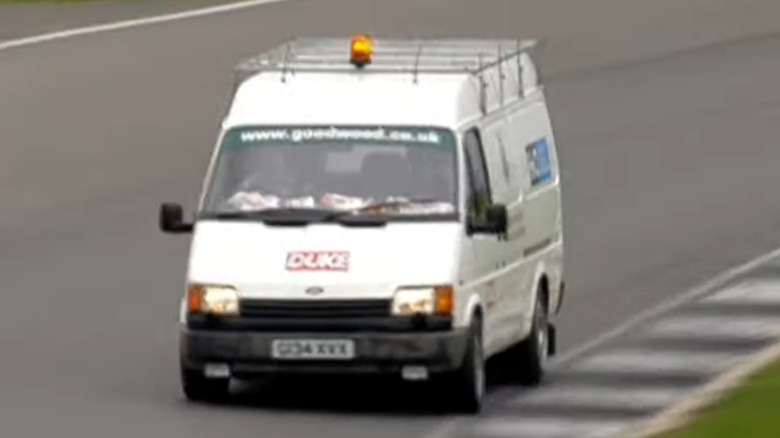
Consider, for a moment, this rather innocuous looking 1980s Ford Transit van. You probably wouldn't suspect from the outside that this is effectively a test bed for Jaguar's exciting 542-horsepower XJ220 supercar. That's exactly what it is, though. Right in the middle of the white van's load floor is the 3.5-liter Tom Walkinshaw Racing-built twin-turbo V6 cribbed directly from TWR's Jaguar racing program. In an effort to quickly work out all the bugs in the XJ220's drivetrain, Jaguar engineers slapped this van together.
The story goes that Jaguar not only could get plenty of road testing miles on the engine without attracting much attention, but could also position an engineer in the back of the van to directly monitor the engine while it was driving, tuning for turbo lag and the like. In an effort to disguise the van further and convince passersby that it was just a regular white van, Jag engineers put newspapers and candy wrappers on the dashboard to make it look like the work vehicle of a plumber or construction worker.
Perhaps I don't speak for everyone when I say this, but I believe this test van is perhaps even cooler than the XJ220 that it muled for. To get an XJ220, you merely had to be a wealthy person in the late 1980s, but this van has a story, and stories are what make cars cool. I feel the same about pre-production prototypes of pretty much any supercar ever made. There's an engineered necessity here that makes the prototype cooler. Mules are just plain cooler than the horses or the donkeys they're derived from — it's a real "the whole is greater than the sum of its parts" situation.
Want more like this? Join the Jalopnik newsletter to get the latest auto news sent straight to your inbox, and follow us or add us as a preferred search source on Google.
Read the original article on Jalopnik.