




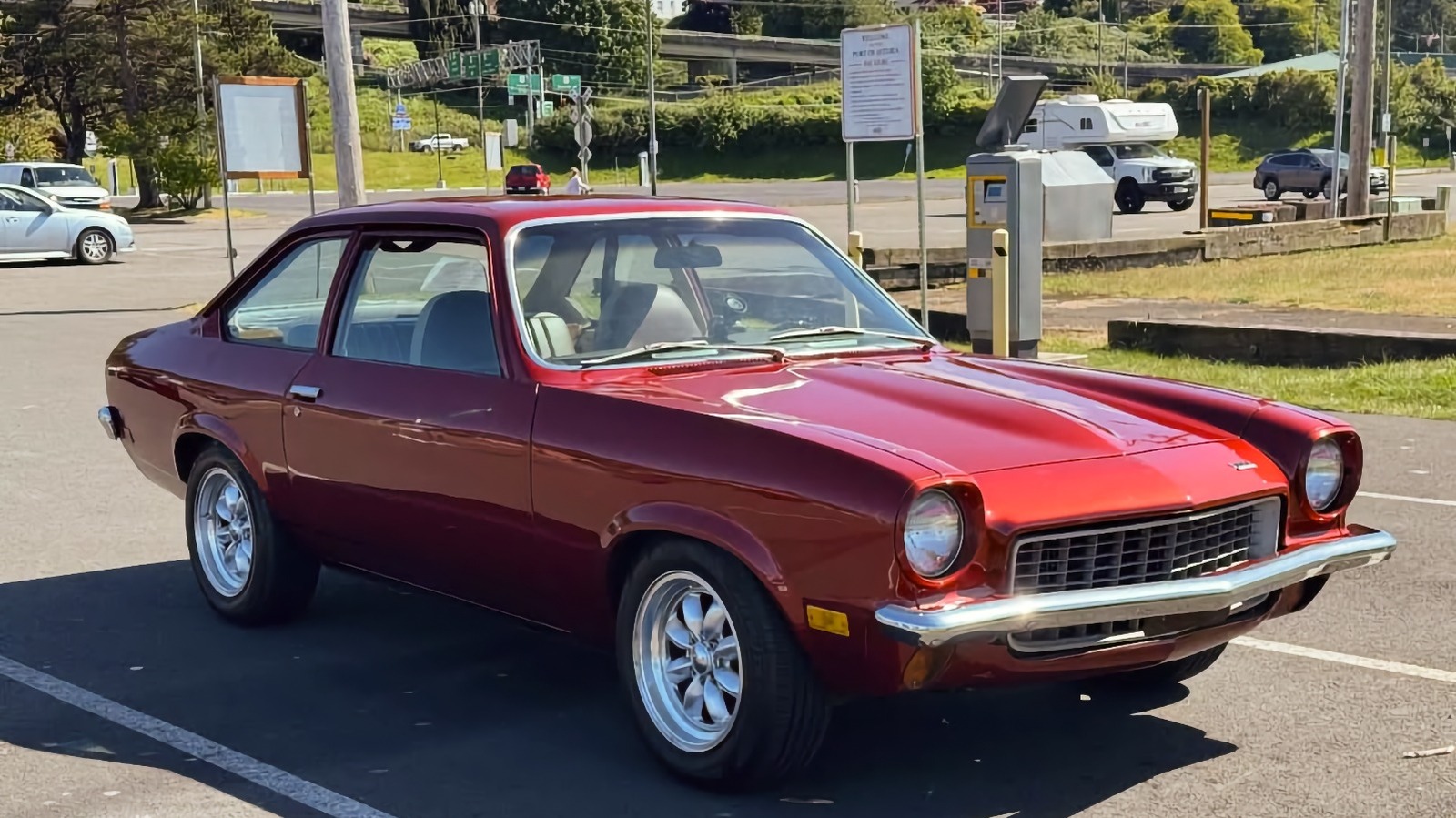
According to its ad, today's Nice Price or No Dice Vega was once a door prize on the TV game show, "The Price Is Right." Today, it appears nicely restored and has a surprise SBC under its hood. Let's see if any of you are game to pay its asking price.
A common way to describe avoidance of an object or idea is the phrase "I wouldn't touch it with a 10-foot pole." The origin of this idiom remains unknown, but a similar, earlier phrase, "not to be handled with a pair of tongs," carries the same meaning.
In 18th-century Great Britain, 10-foot was frequently substituted with "barge," as barge poles were typically long and thus offered reasonably remote poking opportunities.
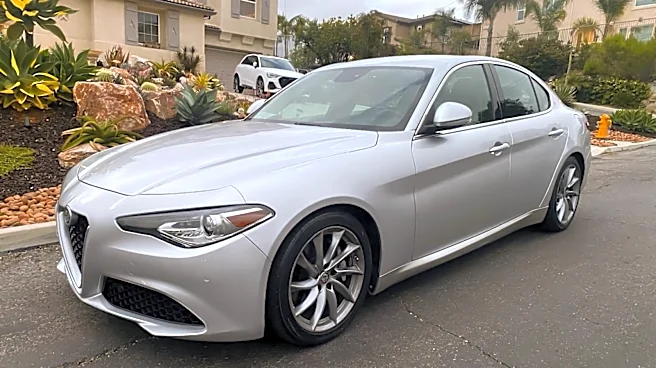
I bring this all up because, based on the comments, the 2017 Alfa Romeo Giulia we looked at on Wednesday was a car that some of you wouldn't touch with a 10-foot pole. That was because the car—and Alfa Romeo in general—carries a reputation for frustratingly frequent breakdowns and bank-account-bruising repairs. That being said, our Giulia's great looks, seemingly good condition, and $7,999 asking price proved a winning combination in the end. That's shown by the 70% 'Nice Price' win it received in the vote.
Read more: 5 '70s Sales Flops That Became Classics, And 5 Popular Cars That Didn't
A not-so-shining star
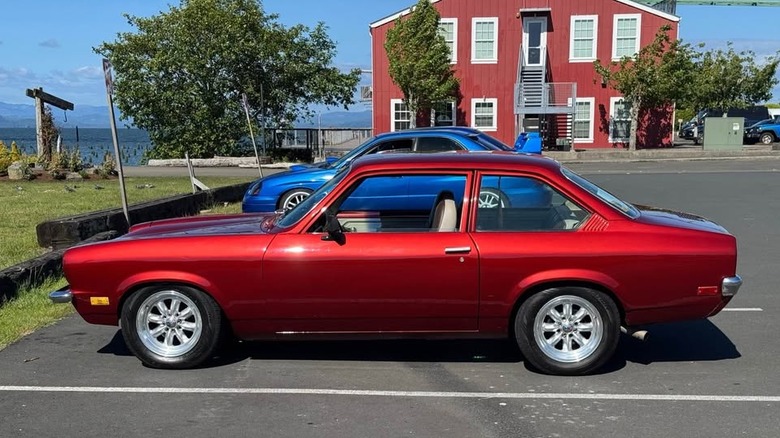
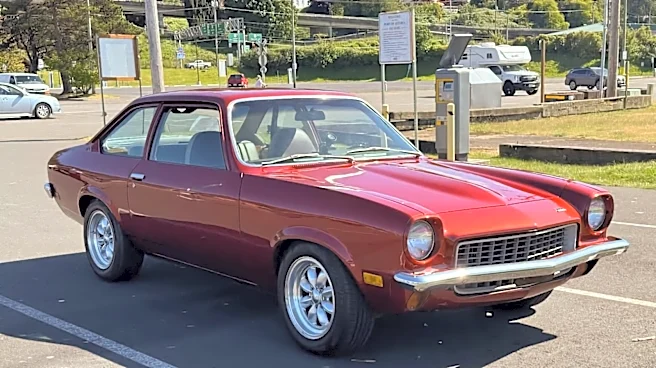
While not as good-looking as yesterday's Alfa, the 1973 Chevy Vega notchback that stands before us today is an arguably handsome, well-balanced design. The car's mini-Camaro nose and pleasing profile were the best things about it when it launched in 1970. Pretty much everything else about the car, however, was snake-bit from the start.
Chevrolet introduced the Vega in late summer 1970 as the brand's new compact car, nominally replacing the Corvair, which had ended its production run a year earlier. Like the Corvair, the Vega was a clean-sheet design, sharing little carryover parts from other GM cars. Also like the Corvair, the Vega proved problematic for the brand.
The issues that plagued the early model years weren't limited to engineering or production mistakes; even the car's innovative transportation method—shipping it vertically on specially designed train cars—caused unforeseen fluid leaks before the Vegas even reached a dealer. Premature corrosion was another Vega bugaboo, especially in rustbelt states. The biggest problem, though, was with the Vega's SOHC 2.3-liter four-cylinder engine. Built with an alloy block and cast iron head, the engine had no cylinder liners or special wear-resistant coating to keep the bores intact. Chevrolet had to issue recalls on almost every Vega produced to address safety and drivability issues after only two years of production.
Small block, big deal
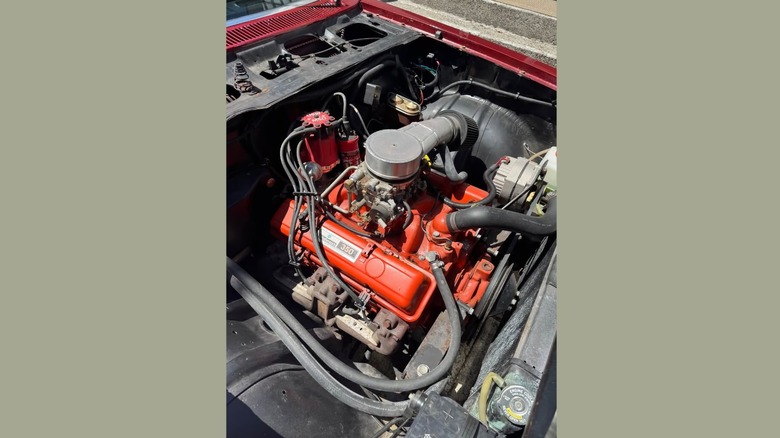
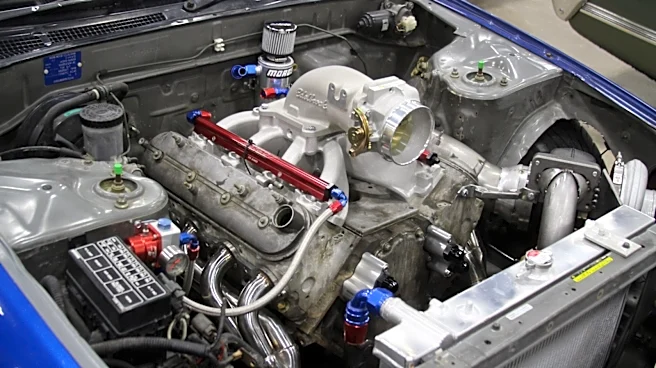
Fortunately, someone has addressed at least the engine issues with this Vega by sending its original motor to the recycler and replacing it with a 350 cubic inch small-block Chevy V8. Could there be a more reliable engine than the tried-and-true SBC?
That engine looks right at home in the Vega's engine bay and sits unencumbered by unnecessary ancillaries like a power steering pump or an air conditioning compressor. It does have a heater hookup and a larger-than-stock radiator to cool the plus-size engine. Other engine bay items of note include an MDS distributor and coil and a custom brazed-together air intake that flops the filter over one rocker cover.
Based on the underneath pictures, the V8 feeds what looks to be the Vega's Opel-sourced four-speed manual gearbox and punky factory rear end, so don't expect dramatics at the drag strip out of this car. According to the ad, the car has around 90,000 miles on the clock, but only a couple thousand of those were added after the engine swap. The seller claims it " Drives great and turns heads."
New, new, new
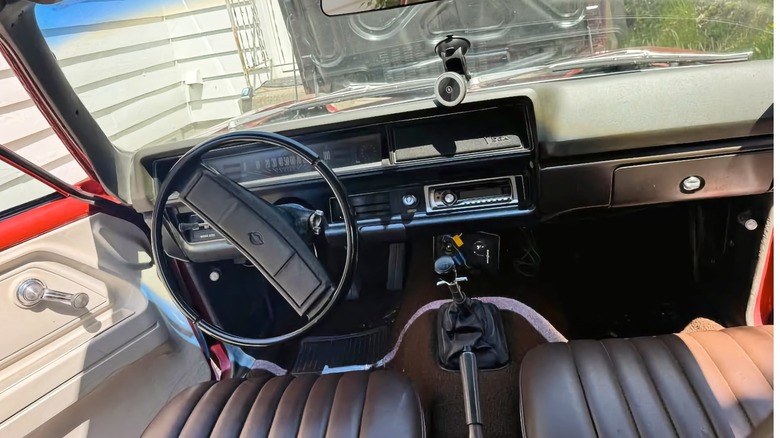
A new engine isn't the only update this Vega has seen. At the same time as the heart transplant, this car also got new candy-apple red paint and fresh vinyl seat upholstery. The remaining original parts of the interior—door cards, dash, and carpets—all look to be in suitably good shape. Two cracks, oddly at exactly 12 and 6, mar the factory two-spoke steering wheel, but shouldn't affect its use or safety. The only other potential misstep is a modern stereo head unit that spoils the overall old-school aesthetic.
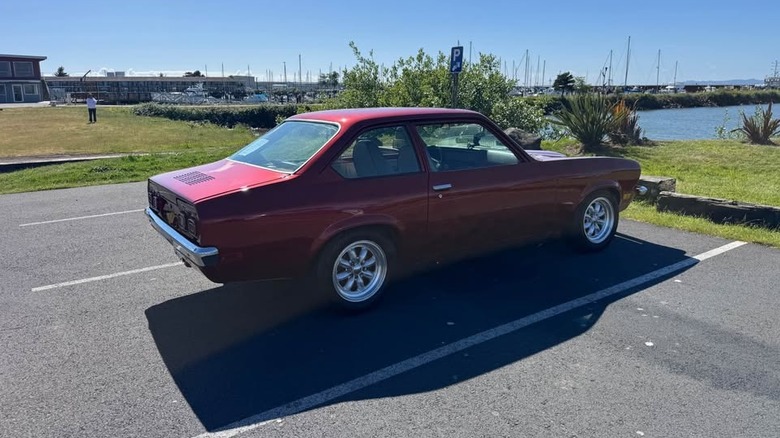
On the exterior, all the chrome shines nicely, and the paint appears to be a professionally applied respray. A set of Minilite-esque alloys underpins, and they appear to have reasonably new rubber. As is typical of Facebook Marketplace ads, the ad doesn't mention the car's title status, but given how old of a car it is, we might be able to overlook that.
Is the price really right?
As noted, the ad claims this Vega had a run-in with Bob Barker on the daytime TV game show "The Price Is Right." Amazingly, that show gave away a ton of Vegas, though a quick search of the videos I could find from the era didn't turn up any featuring this particular car. We'll just have to imagine that experience, along with the opportunity to win a Tappan range or an all-inclusive seven-day adventure to Bali.
Once we're done with all that, we'll have to come back to reality and decide whether this V8 Vega is worth its $17,000 asking price. Yes, no one would have guessed that on The Price Is Right, but that's what makes this an even more exciting opportunity.
What do you think? Is this refreshed, re-engined Vega worth $17,000 as-is? Or for that price, would you refuse to "come on down!"
You decide!
Facebook Marketplace out of Astoria, Oregon, or go here if the ad disappears.
Hat tip to Bill Lyons for the hookup!
Help me out with Nice Price or No Dice. Hit me up at robemslie@gmail.com and send a fixed-price tip. Remember to include your commenter handle.
Want more like this? Join the Jalopnik newsletter to get the latest auto news sent straight to your inbox, and follow us or add us as a preferred search source on Google.
Read the original article on Jalopnik.