


Foolishly, right as Aston Martin started slotting twin-supercharged V8 engines under the hood of its most brutish offerings, James Bond decided to walk away from the timeless (and endlessly bankrupt) British brand and instead jumped behind the wheel of a BMW. Specifically, a four-cylinder Z3 — what was he thinking? OK, MI6's secret weapon also man-handled a 750iL and Z8, so we will not judge his choices too harshly, but it's a shame that Aston's brilliant twin-supercharged creation never got to shine
brightly on the silver screen. Nevertheless, we will cast a light on Aston's V8 Vantages from the '90s here instead.
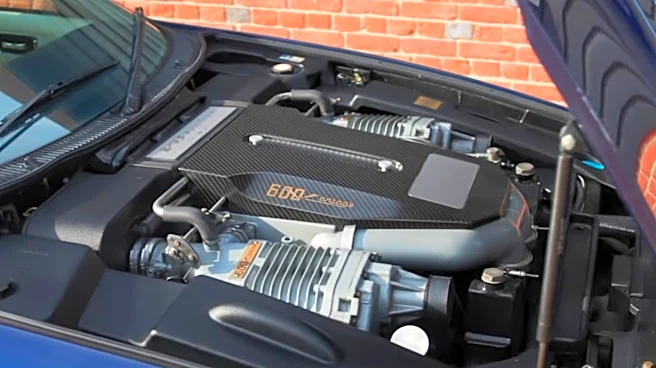
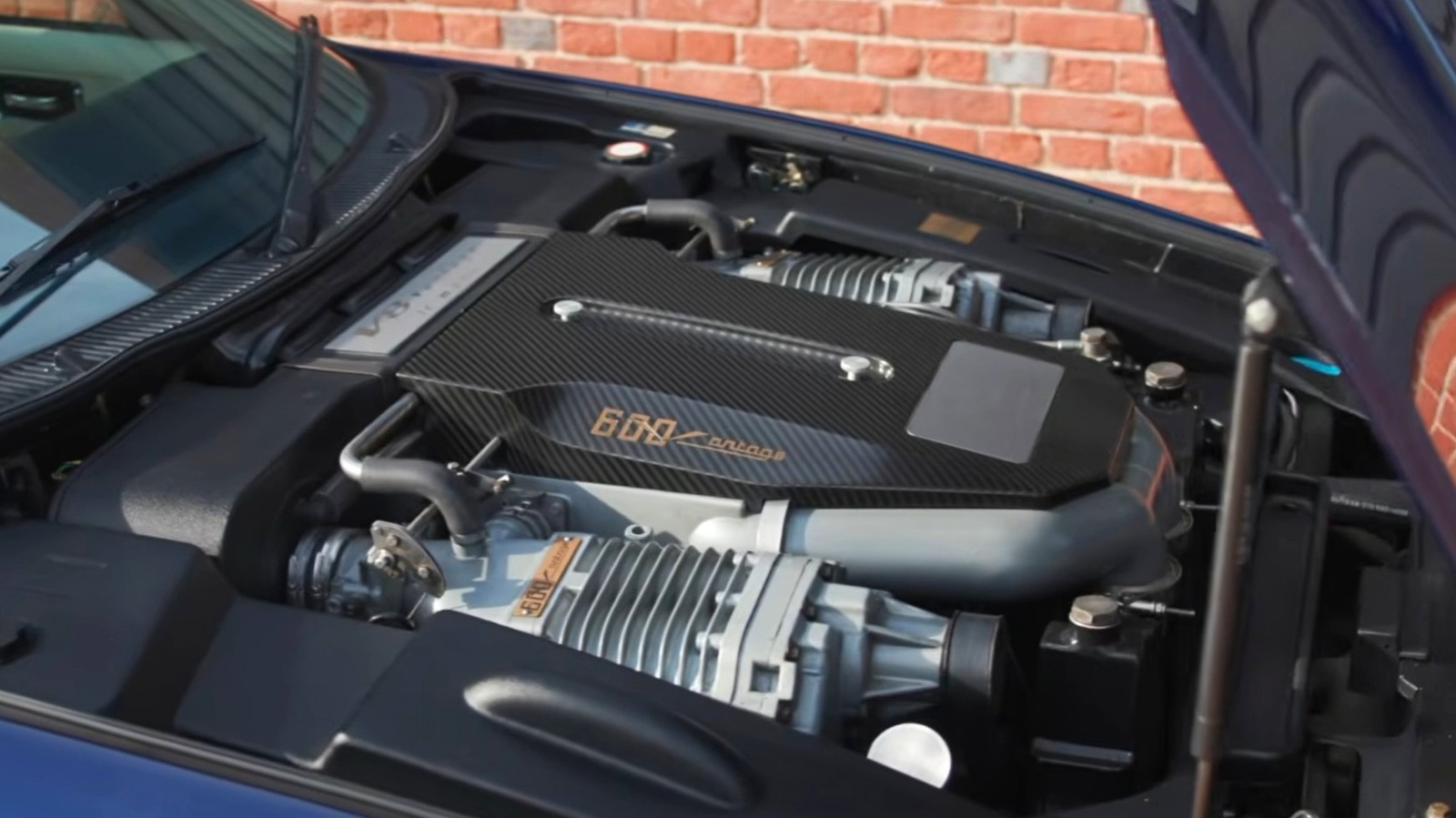
Vantage models from the late '70s and '80s made use of a naturally aspirated 5.3-liter V8 designed by Tadek Marek, the man also behind the DB4, 5, and 6's engine design. However, come the 1990s, the Vantage was to endure a thorough overhaul, both cosmetically and mechanically. That 5.3-liter V8 was tickled by Callaway Engineering, and now benefited from four valves per cylinder instead of two, quad-cam heads, and yes, two whopping great Eaton superchargers.
The "base" Vantage, which arrived as a 1993 model year and was dubbed the V550, delivered 550 horsepower (hence the name) alongside 555 pound-feet of torque, courtesy of this monstrous twin-supercharged engine. Later, in '98, a V600 model arrived with, you guessed it, 600 horsepower, while a limited-to-40 special edition called the Le Mans debuted a year later to commemorate Aston's 40th anniversary of winning the legendary 24-hour race.
Read more: 5 Exotics That Use Parts From Cheap Normie Cars (And Even Buses)
Further exploring the twin-supercharged Vantage
Preceding the Vantage was the Virage, which debuted in the very late 1980s. However, despite being largely similar to the Vantage, it never really lived up to expectations. It too boasted the Marek V8, but without the superchargers and mustered up just north of 300 horsepower – a figure that would soon be bested by the brand's new "entry-level" DB7. The Vantage was built on the Virage's platform, albeit with a much more masculine silhouette that was reportedly more in tune with what the Virage's designers had always envisioned, plus the extra muscle it needed in order to truly distinguish itself as a proper flagship.
Aston could have opted for the 6.3-liter V8 that was supplied to some Virage customers, but the brand selected a pair of Eatons to amplify the V550's output instead. That's because the superchargers better enabled it to exceed 500 horsepower, which the engineers deemed necessary to achieve their desired 186-mph top speed goal. The end result sat among the fastest cars in the world, with a 0-to-60 mph time of just 4.6 seconds and a top speed of 186 mph. A ZF six-speed manual transmission was the standard affair, although automatic 'boxes were available on special order.
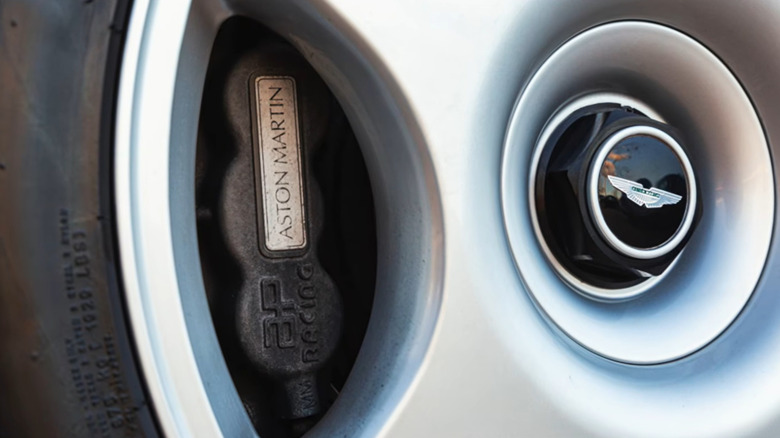
When it came time to deliver the 600-hp V600, a few mechanical tweaks were in order. Owners could have the car's 6th gear blanked off, resulting in many of these more powerful V600 cars being close-ratio 5-speed only. AP Racing brakes were also fitted to counter the car's increased grunt. Koni supplied stiffer sway bars and adjustable dampers, while Eibach took care of providing some stiffer springs. It was thoroughly reworked, and — perhaps most importantly in a 600-hp Aston — traction control was also added on these later cars.
Aston's '90s flagship has always commanded a pretty penny
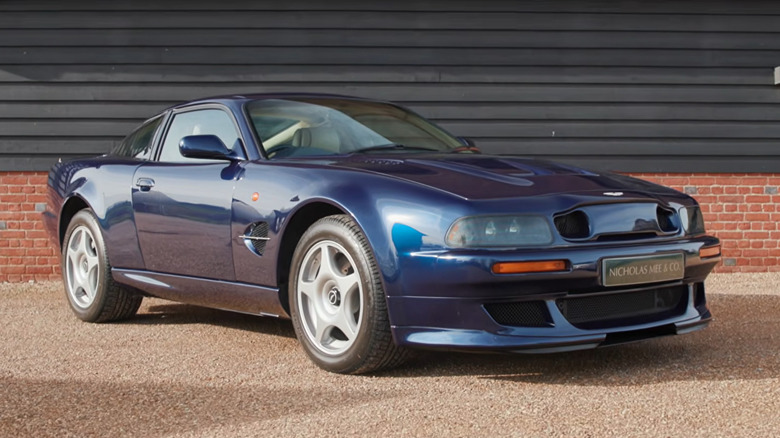
Unfortunately, these rad '90s Aston Martin models were never sold in the U.S. new. We can speculate as to why, but it's likely down to the difficulties surrounding homologating the engine to satisfy both EPA and CARB regulations. So, while we have no dollars-and-cents figure to throw around, we do, of course, have the sticker prices from across the pond.
When it first debuted, the 1997 Vantage asked £177,600 from buyers, which translated to roughly $295,000 in 1997. Keep in mind that Ferrari's finest GT of the era, the 456, which arrived on U.S. shores as a '95 model year, required "just" $207,000. When the V600 Vantage arrived a few years later, it was capable of 200 mph and a 0-to-60 mph in just 3.9 seconds, and it commanded an altogether far more significant sum of £233,682. Of course, these cars were heavily customizable, too, so no doubt that figure could quickly soar upward should buyers get adventurous with the options. That equated to just shy of $388,000 — enough to buy a small island back in '98, let alone a nice house.
Around 280 of these coupes were built — including V600 and Le Mans specification cars — along with 9 Volante convertibles. However, prices haven't really moved far from their MSRPs. A clean and well-presented 634-mile V600 Vantage sold for £180,000 ($236,530) earlier this year via The Market auctions, while a 6,000-mile V550 Vantage sold on Bring A Trailer for $226,000 in January. The highest confirmed figure paid for one of these cars is £449,500 ($651,775) including auction premium for a 3,000-mile Le Mans model, which was sold via Bonhams way back in 2016.
Want more like this? Join the Jalopnik newsletter to get the latest auto news sent straight to your inbox, and follow us or add us as a preferred search source on Google.
Read the original article on Jalopnik.