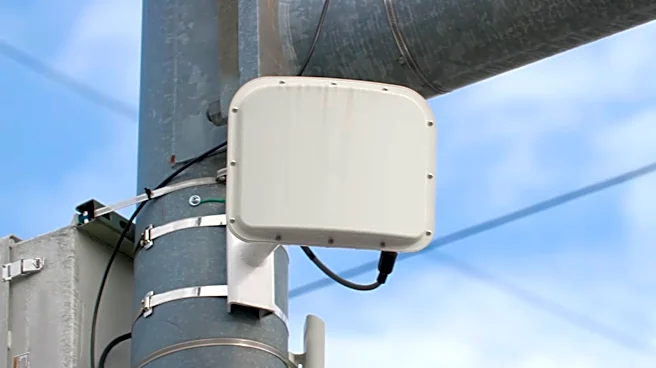

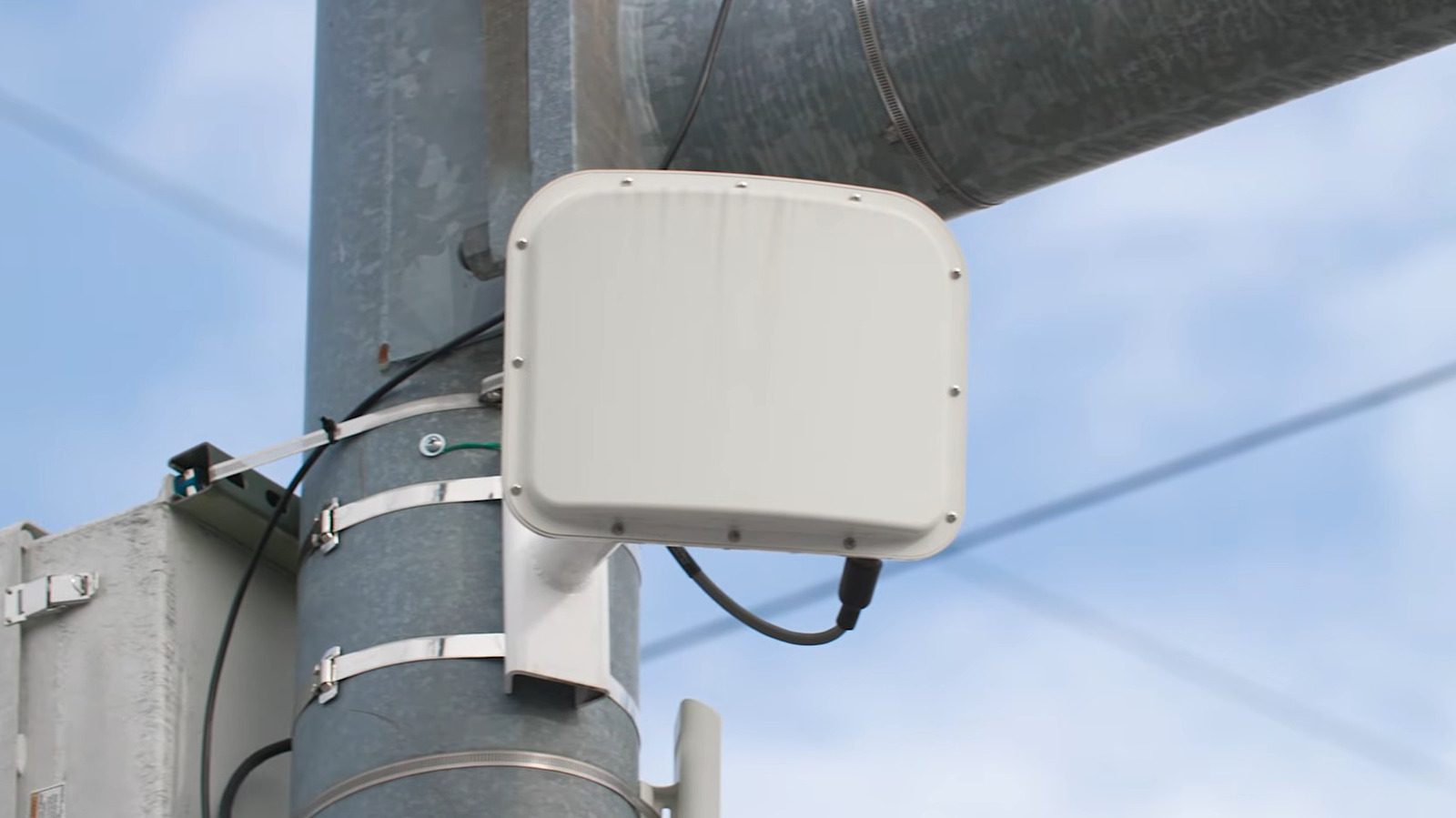
You are being tracked. Even if you didn't agree to the Terms & Conditions, Big Brother is surveilling you anyway. And it doesn't need cameras or a microphone to do so. Case in point: white rectangular
panels perched alongside traffic lights. Although the information they gather is used less nefariously than data from the more than 100,000 Flock cameras that dot U.S. roadways , they still monitor your vehicle's movements.
The good news is these white boxes are radar-based and relatively low-tech compared to the AI-powered automated license plate readers (ALPRs) that collect more data than necessary. The less intrusive white radar units strictly monitor traffic flow, which is why they're found near or at intersections. Flock devices, on the other hand, are so widespread that DeFlock, an open-source mapping project, was created to educate the public on their locations.
Also called stop bar sensors or stop boxes, these aboveground radar presence detectors (RPDs) are essentially weatherproof. Standard traffic control cameras, on the other hand, can be compromised during foggy or rainy days. These easy-to-maintain RPDs are used in conjunction with other traffic light sensors and congestion-monitoring technology. All of these gizmos and gadgets are making traffic light mounts resemble bird-heavy power lines, but can also be intimidating to an already leery public concerned about privacy issues. Thankfully, RPDs don't care about where you're going or coming from, only that, well, you leave.
Read more: The 240 Mile Stretch Of American Highway With No Services At All
Who makes the white traffic boxes, and how do they work?
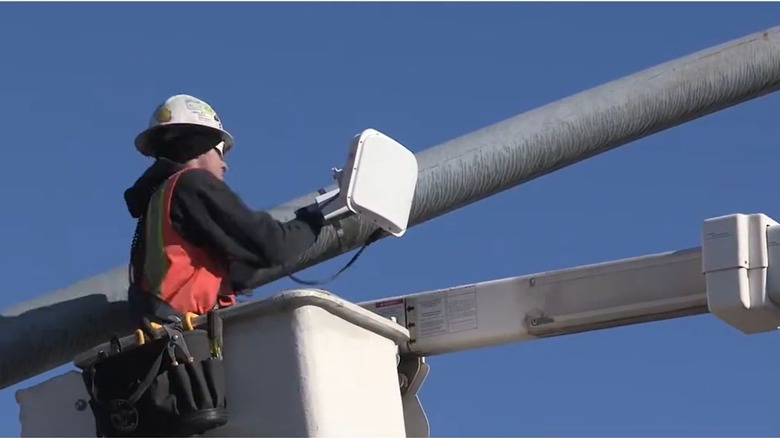
Many of these white-box sensors are developed by Wavetronix, a Utah-based manufacturer specializing in radar traffic detection and monitoring systems. Part of its Intersection Performance System lineup are two types of panel-style monitors.
Featuring a large flat panel, the SmartSensor Matrix utilizes 16 beams and supports just as many zones and channels. With a 140-foot range and a 90-degree field of view, the Matrix can track up to 10 lanes individually and takes about 10 minutes to install. The SmartSensor Advance offers a more focused single radar that tracks up to three lanes, but with a 600-foot standard range that extends to 900 feet with the Advance Extended Range model for large vehicles like buses and trucks. The Advance can also prolong a green light to allow lagging cars to pass the intersection safely as well as keep traffic from blocking access to fire stations and hospitals.
Weighing 4.2 and 3.8 pounds, respectively, both the Matrix and the Advance are 13 inches long, 10.6 inches wide, and 3 to 4 inches thick. Plus, they're basically set-it-and-forget-it products. They need no cleaning, battery replacement, or recalibration, and the mean time between failures is an estimated 10 years.
However, Wavetronix radars do cost more upfront than Flock cameras. In Dubuque, Iowa, after installation began in 2008, the city had more than 20 intersections equipped with Matrix sensors by 2015, with four devices used at a typical intersection. Wavetronix doesn't publish its pricing, but in a 2015 Telegraph Herald interview, the city traffic engineer said the devices cost about $5,000 apiece. When Flock cameras get damaged, taxpayers are billed $800 per camera and between $500 and $2,000 for the pole. The radar return on investment, though, is that your commute remains your business.
Stalkers, look elsewhere; radar boxes collect data only for traffic control
If you're worried about what else these white boxes are monitoring, don't be. Like white hat hackers, RPDs are about improving our quality of life and not about helping your ex stalk you — the information is gathered solely for traffic mitigation purposes and specific to the intersection. They are used by traffic engineers, not by law enforcement. In 2022, Springfield, Missouri, had about 60 radar sensors in use at various intersections and planned to install 33 more.
To quell public concern at the time, the city's traffic engineer, Tom Dancey, told local news station KYTV, "These are just radar units, that would be picking up the presence of the moving vehicle that's approaching the intersection. So the information is just tied to the traffic signal system, it's in no way being used for enforcement. The data that we're collecting from that is traffic or traffic counts."
Wavetronix devices simply capture traffic data and nothing more. No images of your license plate or tracking of the route of your vehicle at every corner. So, there's no need to vandalize them like license plate readers or cover vehicle trackers with garbage bags, though Flock's infrared cameras can still record while under wraps. With these white boxes, you're just part of the headcount, a mere blip on a screen. Who knew being relegated to a basic statistic could feel so refreshing?
Want more like this? Join the Jalopnik newsletter to get the latest auto news sent straight to your inbox, and follow us or add us as a preferred search source on Google.
Read the original article on Jalopnik.