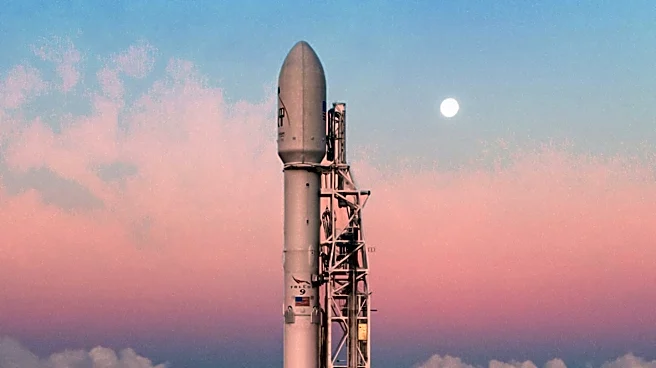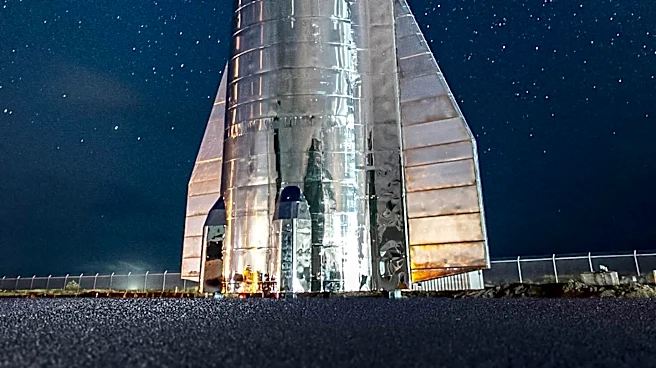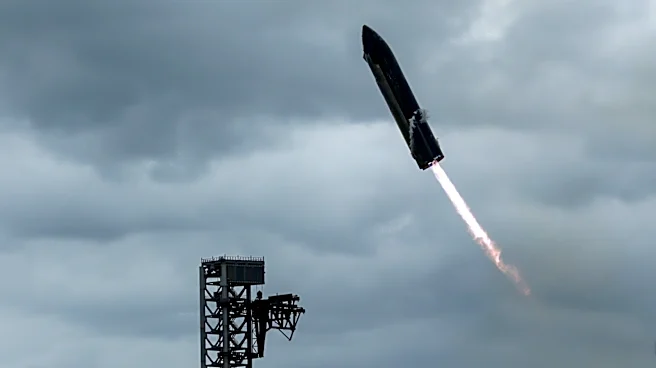

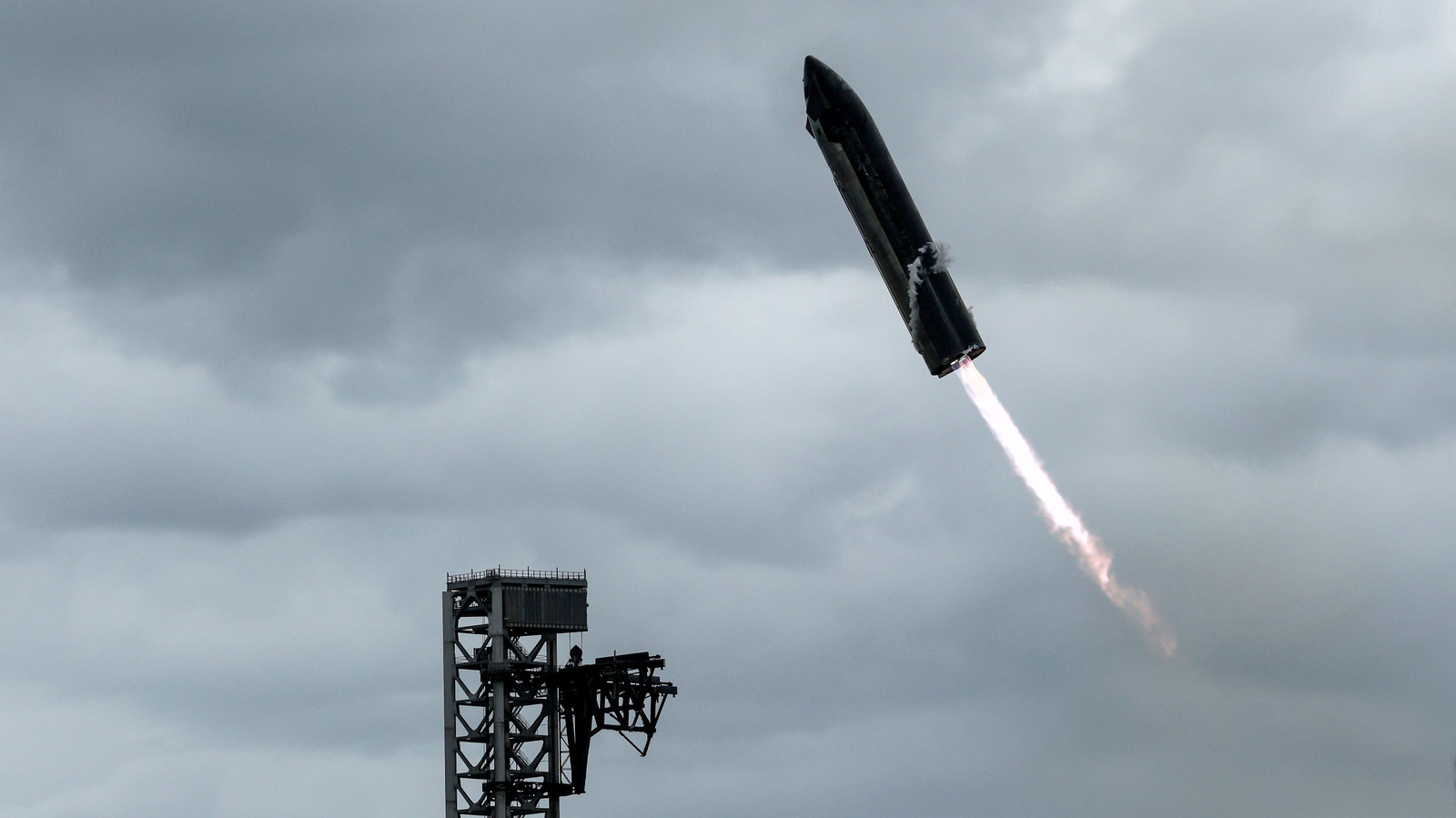
SpaceX achieved a historic first earlier this month by successfully catching the upper stage of its Starship rocket after it returned to Earth from orbit. While the company of course celebrated its accomplishment,
this is SpaceX: it's already moving on the next iteration of the rocket. The upcoming Starship V4 won't be a minor change, either. The plan is for the next-gen upper stage (called a "Ship") to be around 230 feet tall, about 40% longer than the V3 model that just was recovered for the first time ever. In other words, instead of trying to repeat the feat multiple times to ensure the technology is reliable, SpaceX will just move straight on to the next thing. It's all very representative of the cultural shift that Elon Musk's company brought to the space industry, which used to move only slowly and methodically. On the sunny side, that leads to rapid innovation and deployment. On the dark side, it means every flight is an unproven risk.
You can see all of this playing out with the lower-stage booster (called a "Super Heavy"). Back in the distant years 2024 and 2025, SpaceX successfully recaptured the Super Heavy on three separate occasions. The first was a V1, and the next two were each a V2. Mission accomplished, right? Well, not quite: the V1 was never flown again, and both V2s were lost on subsequent flights. No booster has ever been recaptured twice. This also means that no V3 booster has ever been recaptured, including on the most recent Flight 15 when the upper-stage Ship was caught. So while SpaceX can rightfully claim that both halves of its rocked have flown home to the launch pad, making it the first fully reuseable rocket ever, it's never done that all at once. Another way to look at it is that across 15 flights (30 total stages), only four stages have been recovered.
A traditional space company would now turn all its attention to nailing down the issues until the current model is as dependable as possible. This would be the equivalent of freezing the main design of the V3 and just making reliability upgrades until both the Super Heavy and the Ship are working at a high success rate over many trials. SpaceX, by contrast, is already whipping up V4 designs and getting ready to retire V3 altogether, well before it fully proved itself.
Read more: 5 Worst Manual Transmission Habits That'll Shorten Their Lifespans
A whole new way to think about space
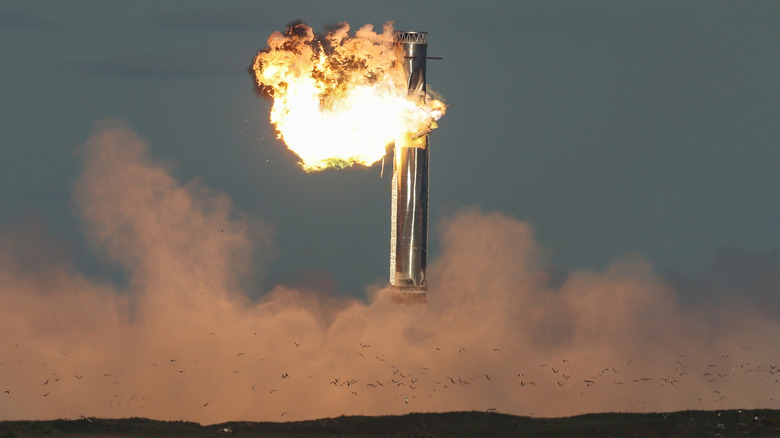
The exact specs on the Starship V4 are still being hashed out by SpaceX engineers, but Space.com reports that the upper-stage Ship will be 30 feet wide in addition to 230 feet tall. That makes this one stage larger, in both dimensions, than a fully stacked Falcon 9 rocket. That will allow for around 60% more fuel load, so the Ship can do more maneuvers in Earth orbit, or for that matter in lunar orbit. It is supposed to land astronauts on the Moon, after all. A bigger fuel tank might mean it won't have to refuel 22 times before headed to our celestial neighbor. Only, you know, 15 times or so. That fuel will be going to three more engines as well, nine as opposed to V3's six.
Those engines, by the way, are one of the main sticking points here. Since V3 has been flying, that generation's Raptor engines have never all worked right. This is a major reason the flights haven't all hit their mission targets (though in Flight 15, the booster was lost due to a low-fuel warning). Elon Musk has claimed that Starship V4 will have V4 engines as well, meaning that even those are being replaced before being fully nailed down.
In fairness, part of the issue here is that Musk and SpaceX think about all this in a very different way. In their minds, each new iteration is a way of addressing older problems; V4 engines will be designed with lessons learned from the V3 engines, and so on. It's just that these iterations are so wildly different from one another! Can we expect a massive V4 Ship to operate the same way as a smaller V3 Ship? Can we declare that larger V4 Super Heavy boosters can be recaptured, if no V3 Super Heavy has ever done so?
It's worth noting that the triumphant V3 Ship that flew back home will never fly again. It will instead become a public display, according to Musk via Space.com. That's a fitting tribute, but one wonders if it's not also a stealthy way of saying it was too damaged to attempt a second flight. Is SpaceX pushing the envelope at incredible speed? Or is it just flinging itself from one partial success to the next and calling it progress? We'll get a clue when NASA picks whether Starship will be its lunar lander or not.
Want more like this? Join the Jalopnik newsletter to get the latest auto news sent straight to your inbox, and follow us or add us as a preferred search source on Google.
Read the original article on Jalopnik.