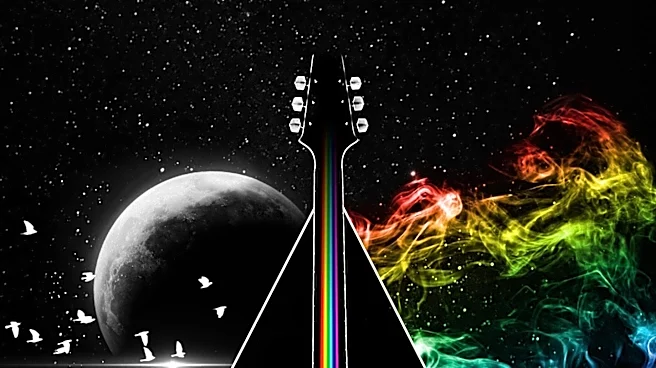








Released on August 4, 1967, "The Piper at the Gates of Dawn" stands as the debut studio album by the English rock band Pink Floyd. This pivotal record is uniquely significant as the only Pink Floyd album created under the direct leadership of founding member Syd Barrett, who served as the primary creative force. His influence shaped the album's distinctive sound and lyrical content, marking a crucial moment in the band's early history and the broader
psychedelic music movement. The album's release followed a period of influential performances by Pink Floyd at London's UFO Club in 1966-67, as well as their initial chart success with non-album singles like "Arnold Layne" and "See Emily Play" earlier in 1967.
Syd Barrett's Visionary Leadership
Syd Barrett, contributing lead vocals and guitar, was the driving artistic vision behind "The Piper at the Gates of Dawn." He was the sole writer for all but three of the album's tracks, demonstrating his profound impact on its direction. The remaining tracks featured additional writing contributions from other band members: Roger Waters on bass and vocals, Nick Mason on drums, and Richard Wright on keyboards and vocals. This collaborative, yet Barrett-dominated, songwriting process resulted in a collection of songs that would define the album's unique character.
Barrett's compositions on the album are noted for their blend of catchy, melodic acid pop songs with more extended, experimental pieces. These experimental tracks often showcased the group's instrumental "freak-outs," pushing the boundaries of conventional rock music. His lyrical themes frequently explored imaginative and fantastical realms, drawing inspiration from sources such as chapter seven of Kenneth Grahame's 1908 children's novel "The Wind in the Willows," a book Barrett particularly favored. This literary influence contributed to the album's whimsical and often childlike quality.
A Psychedelic Masterpiece
"The Piper at the Gates of Dawn" is widely celebrated as a psychedelic masterpiece, with LSD explicitly cited as a direct influence on its creation. AllMusic, a prominent music database, lauded it as one of the greatest psychedelic albums of all time. The review described the album as being "full of colorful, childlike, distinctly British whimsy, albeit filtered through the perceptive lens of LSD." This description encapsulates the album's blend of innocent charm with a mind-altering, experimental edge.
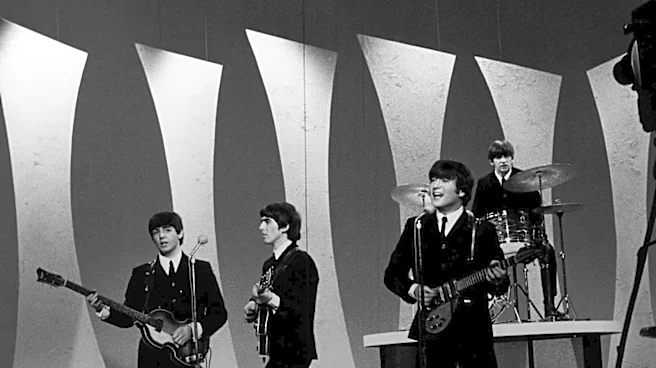
Beyond its whimsical elements, the album is also recognized for its overarching psychedelic themes and its innovative, experimental sound. The recording sessions for the album took place from February 21 to May 21, 1967, at EMI Studios in London. Notably, during this same period, The Beatles were recording their seminal album "Sgt. Pepper's Lonely Hearts Club Band" in an adjacent studio, highlighting the vibrant and experimental atmosphere of the London music scene at the time. This shared environment underscores the era's creative ferment, where groundbreaking music was being forged simultaneously by some of the most influential bands in history.
Enduring Legacy and Reissues
The album's impact has resonated through decades, solidifying its place in music history. In 2007, to commemorate its fortieth anniversary, "The Piper at the Gates of Dawn" was reissued in various formats. These reissues included a two-CD set featuring both stereo and mono versions of the album, and a limited edition three-CD box set. The limited edition included a third CD comprising singles from the Barrett era and other rare tracks, offering fans a comprehensive look at this formative period of Pink Floyd's career. These reissues underscore the album's lasting appeal and its continued relevance to new generations of listeners, cementing its status as a foundational work in psychedelic rock.