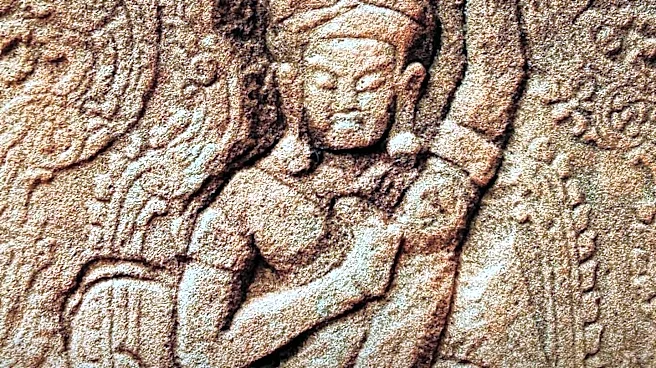



The Abhayamudra, a revered hand gesture in Hinduism, Buddhism, and other Indian religions, is far more than a simple pose; it is a profound symbol of divine protection, reassurance, and the dispelling of fear. Known as the "gesture of fearlessness," its very name, derived from Sanskrit, signifies an "absence of fear," embodying peace and security. This mudra is one of the earliest to be depicted in religious art across various Indian traditions, consistently
conveying a message of safety and spiritual well-being to devotees.
Bestowing Protection and Dispelling Fear
The core essence of the Abhayamudra lies in its ability to represent protection, peace, and benevolence. When depicted, the right hand is raised to shoulder height, with the palm facing outward and fingers pointing upwards. This open-hand gesture is universally understood as a sign of non-aggression and welcome, making it a powerful symbol for warding off fear and offering solace. It is believed to grant divine protection and bliss, creating a sense of security for those who encounter it.In Hindu iconography, the significance of the Abhayamudra is vividly illustrated through deities like Shiva. In his cosmic dance form, Nataraja, Shiva is often shown with one of his right hands performing the Abhayamudra. This specific gesture from Nataraja is interpreted as a promise of protection from both evil and ignorance for individuals who adhere to the path of dharma, or righteous conduct. This demonstrates how the mudra is not just a passive symbol but an active bestower of spiritual benefits.
Spiritual Applications in Buddhism
Within Buddhism, the Abhayamudra holds particular spiritual weight and is depicted in various contexts. In Theravada Buddhism, the gesture is typically made with the right hand raised, arm bent, palm outward, and fingers upright and joined, while the left hand hangs down. This specific posture is often seen in standing figures of the Buddha, emphasizing his role as a protector and a source of peace.A notable historical application of the Abhayamudra by Gautama Buddha himself underscores its power. According to ancient frescos and scriptures, Buddha used this very gesture to subdue a rampaging, intoxicated elephant that had been set upon him. This event highlights the mudra's association with spiritual authority and the ability to overcome physical and spiritual threats through calm and fearlessness. In Mahayana Buddhism, deities frequently combine the Abhayamudra with another mudra in their other hand, suggesting a layered meaning and a broader spectrum of divine functions.