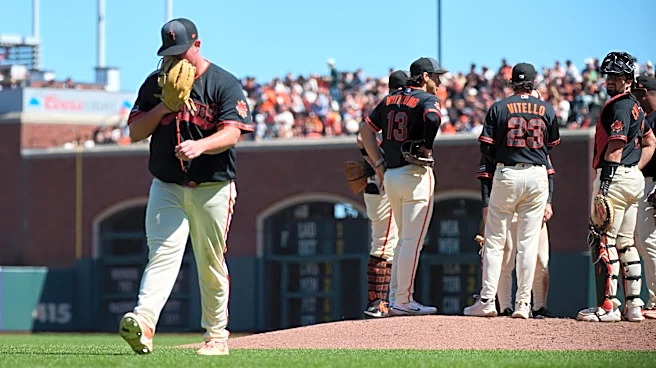






Masanori Murakami, known by his nickname "Mashi," holds a significant place in baseball history as the first Japanese player to ever compete in Major League Baseball (MLB). His journey began in 1964 when, at the young age of 20, he debuted as a reliever for the San Francisco Giants. Sent to the United States by his Japanese team, the Nankai Hawks, Murakami's unexpected success in the MLB sparked a notable contractual dispute that ultimately shaped
his career path. His pioneering efforts paved the way for future generations of Japanese baseball players to pursue their dreams in American professional baseball.
Early Career and Unexpected MLB Debut
Murakami's professional baseball career started in September 1962 when he joined the Nankai Hawks of the Japanese Pacific League, even while still attending high school. In 1964, the Hawks sent him and two other young players to the San Francisco Giants' single-A team in Fresno as part of a baseball "exchange student" program. His initial stay in the United States was only scheduled until June, but the Hawks' oversight in recalling him led to him remaining with the Giants for the remainder of the season.
This extended stay proved pivotal. In August of that same year, Murakami was promoted to the major leagues, making his historic debut on September 1, 1964. Facing the New York Mets, he pitched in the ninth inning, striking out two of the four batters he faced and allowing only one hit and zero runs. His impressive performance continued, and on September 29, he earned his first career win by pitching the final three innings of an 11-inning victory against the Houston Colt .45s. In his nine games with the Giants that season, he pitched a total of 15 innings, allowing only eight hits and three runs (all in his final game), while recording 15 strikeouts and just one walk, culminating in an impressive 1.80 ERA.
The Contractual Dispute and MLB Stint
Murakami's exceptional performance in his debut MLB season led the San Francisco Giants to refuse the Nankai Hawks' order for his return to Japan. This disagreement escalated into a significant dispute during the 1964 off-season. The matter eventually required the intervention of Yushi Uchimura, the commissioner of Nippon Professional Baseball, to reach a resolution. A compromise was struck: Murakami would play one more full season with the Giants before returning to the Hawks.
During his second and final campaign with the Giants in 1965, Murakami continued to demonstrate his talent. He appeared in 45 games, pitching a total of 74.1 innings. In this season, he achieved a 4-1 record with a 3.75 ERA, accumulating 85 strikeouts and 22 walks. Notably, he also collected the only two hits of his MLB career, including a leadoff bunt single off legendary pitcher Sandy Koufax on June 29, 1965. Wearing number 10 for the Giants, his combined MLB record over two years stood at 5-1, with 9 saves and a 3.43 ERA across 54 games. His impact was significant, setting a precedent for Japanese players in American baseball.
Return to Japan and Continued Success
Following his two impactful seasons with the San Francisco Giants, Masanori Murakami honored the commissioner's decision and returned to the Nankai Hawks in 1966. Initially, he faced high expectations that he struggled to meet immediately. However, he soon found his stride, proving his capabilities by winning 18 games in 1968. He played a crucial role in the Hawks' league championship victory in 1973, showcasing his enduring talent and contribution to the team.
After his successful tenure with the Hawks, Murakami was traded to the Hanshin Tigers in the 1974 off-season. His time with the Tigers was brief and less successful, leading to his release after just one year. However, his career was far from over. The Nippon Ham Fighters picked him up, and he made a remarkable comeback in 1978, winning 12 games. He further contributed to another league championship for the Fighters in 1981. Masanori Murakami ultimately retired from professional baseball in 1982, concluding a career marked by pioneering achievements in MLB and sustained success in Japan.