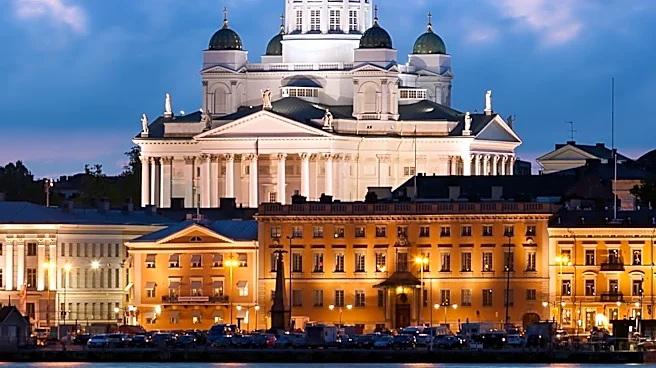








As Finland's capital and largest city, Helsinki plays a pivotal role in the nation's cultural and political landscape. With a population of around 650,000, the city is a hub for economic, cultural, and governmental activities. This article examines Helsinki's influence on Finnish culture and politics, highlighting its dual-language identity and its importance as a center for national decision-making.
Cultural Significance
Helsinki is a cultural epicenter in Finland, hosting
numerous events and institutions that contribute to the nation's artistic and intellectual life. The city is home to five of Finland's 14 universities, making it a key location for higher education and research. Additionally, Helsinki was named a European Capital of Culture in 2000, underscoring its cultural prominence.
The city's architecture, museums, and theaters reflect its rich cultural heritage. Helsinki's diverse population, including a significant Swedish-speaking minority, adds to its cultural vibrancy. Approximately 6.2% of residents speak Swedish, contributing to the city's bilingual identity and fostering a multicultural environment.
Political Importance
Helsinki is the political heart of Finland, housing the country's main government institutions. The relocation of the capital from Turku to Helsinki in 1812 marked a significant shift in Finland's political landscape. Since then, Helsinki has been central to national decision-making and governance.
The city's role in politics is further emphasized by its status as the location for major political events and discussions. Helsinki's strategic position on the Gulf of Finland has historically made it a focal point for international relations, particularly during periods of conflict and negotiation.
Economic and Social Impact
Beyond culture and politics, Helsinki is a vital economic center in Finland. The metropolitan area, including Espoo, Vantaa, and Kauniainen, has a population of about 1.4 million, making it the largest urbanized area in the country. This region is crucial for Finland's economy, hosting the headquarters of major companies and serving as a hub for trade and commerce.
Helsinki's social landscape is shaped by its diverse population and urban environment. The city's parks and neighborhoods offer a mix of rugged and refined spaces, reflecting its dynamic character. As Finland's capital, Helsinki continues to influence national culture, politics, and economic development, solidifying its role as a cornerstone of Finnish society.