






Wiley Post stands as a towering figure in the annals of American aviation, renowned not only for being the first pilot to fly solo around the world but also for his groundbreaking work in high-altitude flying. His relentless pursuit of aerial innovation led to the development of one of the world's first practical pressure suits and the pivotal discovery of the jet stream. Post's career was characterized by a daring spirit and a commitment to pushing
the limits of what was thought possible in the skies. His contributions profoundly influenced the trajectory of aviation, opening up new realms of exploration and understanding of Earth's atmosphere, even as his life was tragically cut short in an aircraft crash in 1935.
Early Life and the Call of Flight
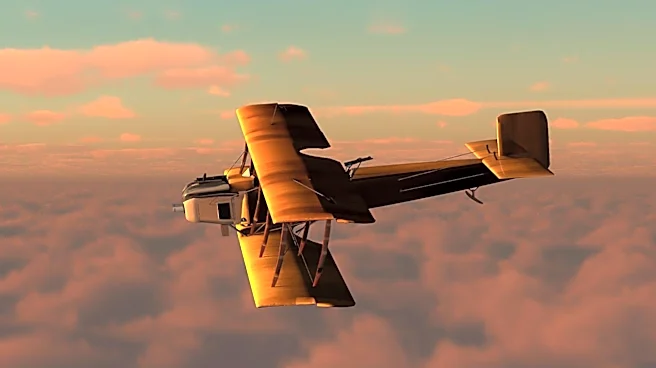
Born on a cotton farm near Grand Saline, Texas, Wiley Post's early life was marked by a move to Oklahoma at age five and an indifferent academic record, completing only the sixth grade. By 1920, his family had settled near Maysville, Oklahoma. A pivotal moment occurred in 1913 when Post witnessed an aircraft in flight at a county fair in Lawton, Oklahoma. This encounter with a Curtiss-Wright "Pusher type" aircraft ignited a passion that would define his life. He immediately enrolled in the Sweeney Automobile and Aviation School in Kansas City, though his formal training was brief.
After seven months, he returned to Oklahoma, working at the Chickasaw and Lawton Construction Company. During World War I, Post attempted to join the U.S. Army Air Service, learning radio technology at the University of Oklahoma, but the armistice was signed before he completed his training. His post-war life saw him working as a "roughneck" in the Oklahoma oilfields, a period of unsteady employment that even led to a brief stint in armed robbery and a year in the Oklahoma State Reformatory, from which he was paroled in 1922. Despite these early challenges, the allure of flight remained a constant in his life.
Conquering High Altitudes with Innovation
Post's ambition to explore the limits of high-altitude, long-distance flight became a central focus of his career. Recognizing that his modified Lockheed Vega aircraft, the Winnie Mae, could not be pressurized, he sought a solution that would allow him to operate in the thin, cold air of the upper atmosphere. This led to his collaboration with Russell S. Colley of the B.F. Goodrich Company to develop the world's first practical pressure suit. The development process was iterative and challenging, with two earlier versions failing before the third, redesigned suit proved successful.
This final suit was a marvel of engineering for its time, featuring three layers, including an inner rubber air pressure bladder and an outer layer of rubberized parachute fabric. It incorporated arm and leg joints for mobility, pigskin gloves, rubber boots, and an aluminum-and-plastic diver's helmet with a removable faceplate. On September 5, 1934, Post made his first flight in the suit, reaching 40,000 feet above Chicago. He eventually flew as high as 50,000 feet, altitudes that enabled him to discover the jet stream, a monumental contribution to meteorology and aviation. His work made the first major practical advances in pressurized flight, fundamentally changing how aviators approached high-altitude operations.
Legacy and Tragic End
Wiley Post's pioneering efforts in high-altitude flight and his discovery of the jet stream left an indelible mark on aviation. His modified Lockheed Vega, the Winnie Mae, a symbol of his achievements, was displayed at the National Air and Space Museum's Steven F. Udvar-Hazy Center and is now a centerpiece in the "Time and Navigation" gallery in Washington, D.C. However, Post's life was cut short on August 15, 1935, when he and American humorist Will Rogers were killed in an aircraft crash during takeoff from a lagoon near Point Barrow in the Territory of Alaska. Despite his untimely death, Post's legacy as an innovator who pushed the boundaries of flight and unlocked the secrets of the stratosphere endures, influencing generations of aviators and scientists.