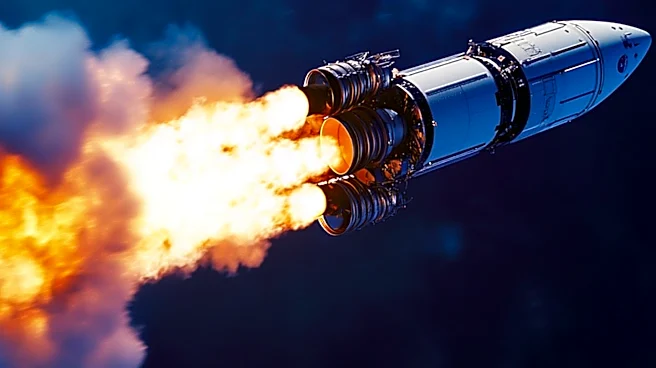






The UGM-27 Polaris missile marked a significant advancement in military technology as the United States Navy's first submarine-launched ballistic missile (SLBM). Operational from 1961 to 1996, the Polaris missile was a product of strategic innovation and collaboration, influenced by the Navy's decision to abandon the Jupiter missile program. This article delves into the historical development and timeline of the Polaris missile, highlighting key milestones
and the factors that shaped its creation.
Early Beginnings and Project Nobska
The journey of the Polaris missile began with the Navy's initial interest in the Jupiter missile program, a joint effort with the Army to develop an intermediate-range ballistic missile (IRBM). However, the large diameter and liquid-fueled design of Jupiter posed challenges for submarine deployment. In 1956, Project Nobska, a study on anti-submarine warfare, played a pivotal role in redirecting the Navy's focus. During this conference, nuclear physicist Edward Teller proposed the development of a small one-megaton warhead, prompting Admiral Arleigh Burke to shift attention from Jupiter to Polaris.
Rear Admiral W. F. "Red" Raborn was appointed to lead the Special Project Office, tasked with developing the Polaris missile. The Navy's decision to pursue a solid-fueled missile was influenced by the logistical advantages and safety of solid fuels compared to liquid fuels. The Polaris missile was designed to be smaller and more manageable, weighing significantly less than the Jupiter missile.
Development and Testing
The Polaris missile's development was characterized by rigorous testing and innovation. The USS George Washington became the first submarine capable of deploying Polaris missiles, marking a milestone in naval warfare. The Navy faced challenges in creating a launch platform that could withstand the dynamic conditions of the sea. The development of both wet and dry launch methods ensured reliability and safety during missile deployment.
Testing of the Polaris missile began in 1958, with several trials conducted at Cape Canaveral. Initial tests faced setbacks, including programming errors and fuel overheating. However, by April 1959, successful tests demonstrated the missile's capability, paving the way for its operational deployment.
Operational Impact and Legacy
The Polaris missile significantly enhanced the strategic nuclear deterrent capability of the United States Navy. With variants like the A-1, A-2, and A-3, the Polaris missile evolved to meet changing defense needs. The introduction of the W-58 warhead in the Polaris A-3 model addressed issues with the earlier W-47 warhead, ensuring greater reliability and destructive power.
The Polaris missile's legacy is marked by its role in shaping modern naval warfare and strategic deterrence. Its development set the stage for future advancements in submarine-launched ballistic missiles, influencing military strategies and defense policies for decades.