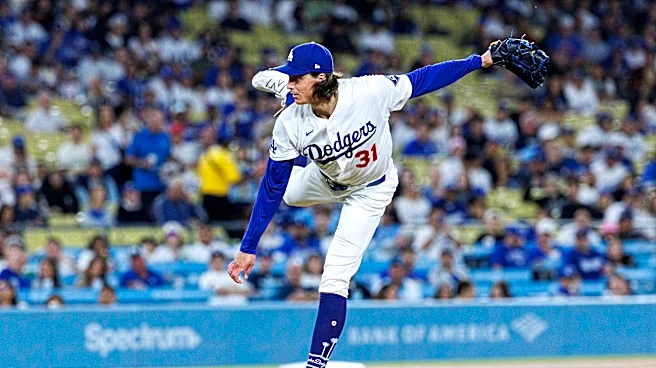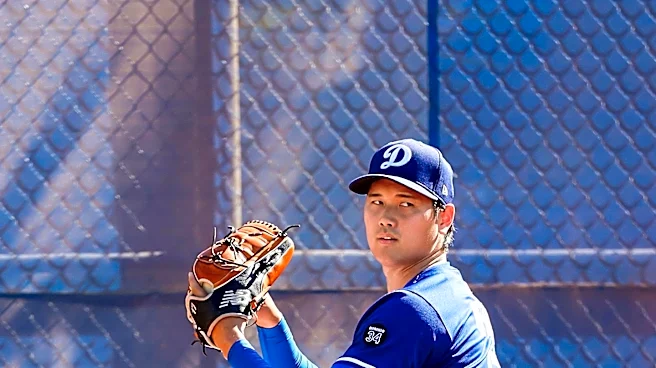


Fernando Valenzuela Anguamea, born on November 1, 1960, in Etchohuaquila, Mexico, became a celebrated figure in Major League Baseball, particularly known for his pitching prowess. His career, which began professionally in 1978, quickly led him to the Los Angeles Dodgers organization. Valenzuela's unique pitching style and remarkable early success captivated fans and media alike, leading to a cultural phenomenon known as "Fernandomania." This period
marked a significant moment in baseball history, especially for the Latino community in Los Angeles, who flocked to games to witness his extraordinary talent.
Early Career and the Path to the Dodgers
Valenzuela's professional baseball journey started in 1978 with the Guanajuato Tuzos in the Mexican Central League, where he posted a 5–6 record with a 2.23 ERA. The following year, the Mexican Central League was absorbed into the Liga Mexicana de Béisbol, a Triple-A level league. Playing for the Leones de Yucatán, he achieved a 10–12 record, a 2.49 ERA, and 141 strikeouts. His performance caught the attention of several Major League teams, ultimately leading to his acquisition by the Los Angeles Dodgers on July 6, 1979, for $120,000. After joining the Dodgers, he played briefly for the Lodi Dodgers in the Class A California League, where he had a 1–2 record with a 1.13 ERA in three starts.
In 1980, Valenzuela advanced to the Double-A San Antonio Missions, where he led the Texas League with 162 strikeouts. His impressive showing earned him a call-up to the Los Angeles Dodgers in September 1980, where he debuted as a reliever. In 10 appearances, he pitched 17 2/3 scoreless innings, recorded 16 strikeouts, and earned two wins and a save. This strong finish to the 1980 season set the stage for what would become an unforgettable year.
The Unforgettable 1981 Season and "Fernandomania"
The 1981 season was a breakout year for Fernando Valenzuela, launching him into superstardom. Initially slated as the third starter, an injury to the team's ace, Jerry Reuss, thrust Valenzuela into the opening day start against the Houston Astros. He delivered a complete game shutout, allowing only five hits and striking out five batters. This performance was just the beginning of an incredible streak. In his first eight starts, he recorded eight wins, seven complete games (including the first five), and five shutouts. During this period, he allowed only four runs over 72 innings, resulting in an astonishing 0.50 ERA, and struck out 68 batters.
This unprecedented success quickly ignited "Fernandomania," a phenomenon that saw a significant increase in attendance at Dodger Stadium, particularly among the Latino community in Los Angeles. On average, an additional 12,925 spectators attended games when Valenzuela was pitching. His distinctive pitching motion, characterized by a high leg kick and a glance skyward, became iconic. Valenzuela's first loss didn't come until May 18 against the Philadelphia Phillies. Despite a mid-season players' strike that canceled 713 games, he finished the season with a 13–7 record, a 2.48 ERA, and led all pitchers in shutouts (8), innings pitched (192.1), and strikeouts (180).
Historic Achievements and World Series Glory
Valenzuela's 1981 season was not only remarkable for his individual performance but also for the historic accolades he received. He became the first player in Major League Baseball history to win both the Cy Young Award for best pitcher and the Rookie of the Year Award in the same season. Beyond his pitching, Valenzuela also demonstrated surprising skill at the plate, earning a Silver Slugger Award with a .250 batting average and seven runs batted in. His offensive capabilities were such that he occasionally played as an outfielder or first baseman in particularly long games when he wasn't pitching.
In the postseason, Valenzuela was a key contributor to the Dodgers' success. He started five games in the playoffs, including two complete games. Most notably, he pitched a complete game in Game 3 of the World Series against the New York Yankees, helping the Dodgers secure their first championship since 1965. His dominant performance throughout the season and in the World Series solidified his place as a baseball legend and a cultural icon, leaving an indelible mark on the sport and its fans.