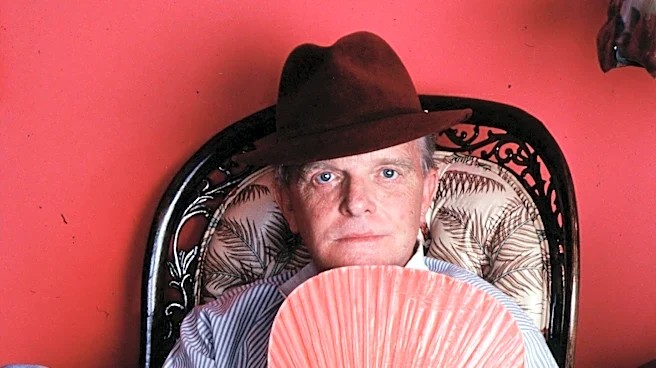





Truman Capote's 1966 non-fiction novel, "In Cold Blood," stands as a landmark achievement in American literature, widely recognized for its innovative approach to true crime storytelling. The book meticulously details the 1959 murders of the Clutter family in Holcomb, Kansas, and the subsequent investigation, trial, and execution of the perpetrators, Richard Hickock and Perry Smith. Capote's work is often credited with pioneering the genre of New
Journalism, a style that blends factual reporting with literary techniques typically found in fiction. However, despite its critical acclaim and commercial success, "In Cold Blood" has also been the subject of significant debate regarding its factual accuracy and Capote's methods.
The Genesis of a Non-Fiction Novel
Capote's interest in the Clutter murders was sparked by a "New York Times" article he read in 1959. Recognizing the potential for a compelling narrative, he traveled to Kansas, accompanied by his childhood friend and fellow author, Nelle Harper Lee, who would later achieve fame for "To Kill a Mockingbird." Lee's presence was instrumental in helping Capote gain the trust and confidence of the local residents, who were understandably wary after the horrific events. Capote embarked on an exhaustive research process, ultimately compiling an astonishing 8,000 pages of notes. His research included not only interviews with community members and investigators but also correspondence, such as letters from Smith's Army buddy, Don Cullivan, who was present during the trial.
An alternative account suggests that "The New Yorker" presented Capote with two story options: the Clutter case or following a Manhattan cleaning woman. Capote reportedly chose the Clutter story, believing it would be the easier assignment. He later did write about a cleaning woman in a piece titled "A Day's Work," included in his book "Music for Chameleons." Capote's dedication to immersing himself in the unfolding events, following the court trials, and conducting personal interviews with both Smith and Hickock after their conviction, exemplified the principles of New Journalism. He researched and wrote the story simultaneously as it developed in real life, creating a unique non-fiction narrative.
The Question of Veracity and Critical Scrutiny
While "In Cold Blood" garnered immense praise, its claim of being "immaculately factual" was challenged by some critics. Phillip K. Tompkins, writing in "Esquire" in 1966, noted factual discrepancies after speaking with some of Capote's interviewees in Kansas. For instance, Josephine Meier, the wife of Finney County Undersheriff Wendle Meier, denied Capote's portrayal of her close relationship with Smith, stating she spent little time with him and did not hear him cry or hold his hand as described in the book. Tompkins concluded that while Capote achieved a work of art, his insistence on every word being true made him vulnerable to scrutiny.
True-crime writer Jack Olsen also accused Capote of fabricating quotes and entire scenes, though he acknowledged the book's artistic merit. Olsen suggested that the publishing industry was reluctant to criticize such a lucrative work. Duane West, the prosecutor in the case, claimed the story lacked veracity because it failed to properly credit Richard Rohlader, whose photograph showing two culprits was crucial to solving the crime. West believed that without Rohlader's picture, the case might not have been solved. Alvin Dewey, the lead investigator portrayed in the book, confirmed that the scene where he visits the Clutters' graves was Capote's invention. Other Kansas residents also claimed mischaracterizations or misquotations. While Dewey stated that the rest of the book was factually accurate, further evidence, such as files from the Kansas Bureau of Investigation, indicated that Floyd Wells came forward voluntarily to name Hickock and Smith, and Dewey did not immediately act on this information, initially believing the murders were committed by locals with a grudge against Herb Clutter. These revelations highlight the ongoing debate about the boundaries between journalistic integrity and literary license in Capote's seminal work.