




The 1972 Olympic men's basketball final concluded with the Soviet Union declared the winner over the United States, but the outcome was immediately challenged by the American team. The controversy surrounding the final three seconds of the game, marked by multiple replays and disputed official rulings, led to a formal protest by the U.S. team. This protest, and its subsequent rejection, culminated in the unprecedented decision by the American players
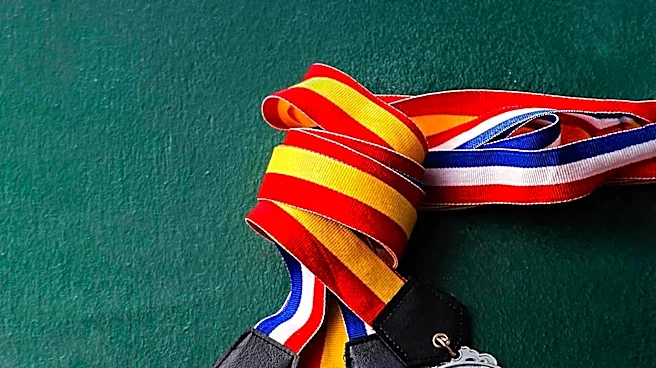
to unanimously refuse their silver medals, a powerful statement that continues to resonate in Olympic history.
The U.S. Protest and FIBA's Jury of Appeal
Following the chaotic conclusion of the game, Herb Mols, the resident manager of the U.S. team, and MK Summers, chairman of the U.S. Olympic Basketball Committee, filed a detailed protest. Their argument centered on the elapsed time during the controversial final seconds. They contended that the game's 40-minute duration was exceeded by the two seconds that ran during the first inbounds play and the one second during the second play. This, they argued, meant the game should have legally ended with a U.S. victory of 50-49. The protest asserted that allowing a third inbounds play with the clock reset to three seconds violated FIBA rules, which specify a game length of 40 minutes, effectively extending the game to 40 minutes and three seconds.
The protest was heard by FIBA's five-member jury of appeal. At the ensuing press conference, Mols engaged in an animated argument with the jury's chairman, Ferenc Hepp of Hungary, regarding the propriety of resetting the clock. Hans Tenschert, the game's official scorekeeper, also expressed strong dissent with the jury's ruling, stating, "Under FIBA rules, the United States won." The jury ultimately voted down the protest and awarded the gold medals to the Soviet team. Hepp, in announcing the verdict, refused to provide specifics of the vote count, only acknowledging that the decision was not unanimous.
Allegations of Political Influence and the Unanimous Refusal
The lack of transparency regarding the vote count fueled speculation that the decision was influenced by Cold War politics rather than strict adherence to FIBA rules. Three of the five jury members, including Hepp, were from Soviet-allied nations. This led to the belief that the tally was 3-2. This view was further supported by reports that jury members Rafael Lopez from Puerto Rico and Claudio Coccia from Italy, both from U.S.-allied nations, confirmed voting for the United States. This suggested that the pro-Soviet votes came from Hepp of Hungary, Adam Bagłajewski of Poland, and Andres Keiser of Cuba. Hepp later confirmed his own vote was in favor of the Soviets, but maintained his refusal to divulge the specific votes of other panel members. Despite the absence of full confirmation, it has become widely accepted that the 3-2 vote reflected the political alliances of the time.
Beyond political motivations, Mols also suggested that panel members might have feared retribution from Renato William Jones, FIBA's secretary general, if they had ruled against his decision to reset the clock. Regardless of the underlying reasons, the U.S. players did not accept the jury's verdict. In a unanimous decision, they voted to refuse their silver medals and did not attend the medal ceremony. This act of defiance underscored their belief that they had been unjustly deprived of the gold. The silver medals remain in a vault in Lausanne, Switzerland, to this day, a tangible symbol of the enduring controversy and the U.S. team's unwavering stance.
Continued Appeals and Lasting Legacy
After the conclusion of the games, the United States Olympic Committee launched another appeal, this time to the executive committee of the International Olympic Committee (IOC). This appeal received support from lead referee Renato Righetto, who was quoted saying the Soviet victory was "completely irregular, and outsides the rules of the game of basketball." Righetto criticized Jones's insistence on resetting the clock to three seconds, suggesting it would have been fairer to resume play with only the one second that had remained when play was suspended. He also attributed some initial confusion to a language barrier, as he spoke Portuguese while the scorer's table officials spoke German. Andre Chopard, the timekeeper, also supported the U.S. appeal, noting that in his 12 years of service, Jones's order to put elapsed time back onto the clock was unprecedented. However, the appeal was unsuccessful, as the IOC ruled in February 1973 that the matter fell under FIBA's jurisdiction. The U.S. team's refusal to accept their medals remains a powerful and unique protest in Olympic history, highlighting the deep-seated conviction that the game's outcome was fundamentally unfair.