




Within the diverse world of yoga, different styles often feature poses that bear striking resemblances while originating from distinct traditions or approaches. A prime example of this is the "Swan Pose" found in Yin Yoga, which is depicted in a photograph and noted for its similarity to the "yang yoga" posture known as Supported King Pigeon Pose, or Salamba Kapotasana. This connection highlights the fascinating interplay between various yoga methodologies,
where similar physical forms can serve different energetic or therapeutic purposes depending on the style of practice. The Swan Pose, as part of Yin Yoga, typically involves a longer hold and a focus on connective tissues, contrasting with the more active, muscle-engengaging nature often associated with Yang styles.
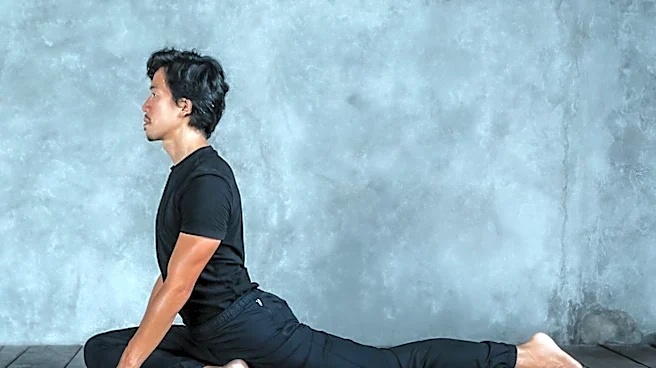
The photograph illustrating the Swan Pose shows a subject with their back bent backward and their right knee positioned at a 90-degree angle in front of them. This visual description immediately brings to mind the characteristic shape of the pigeon pose, a common and often challenging hip opener in many yoga traditions. The explicit mention of its similarity to Salamba Kapotasana, a posture known for its advanced nature and specific benefits, underscores that while the names and stylistic contexts may differ, the underlying physical alignment and target areas of the body can be quite alike.
Yin Yoga's Approach to a Familiar Shape
Yin Yoga, as a practice, distinguishes itself from more dynamic or "yang" forms of yoga through its emphasis on passive, longer-held stretches. While the Swan Pose visually mirrors the Supported King Pigeon Pose, the experience and intention behind practicing it in a Yin context would likely differ significantly. In Yin Yoga, the goal is often to access and gently stress the deeper connective tissues, such as ligaments, joints, and fascia, rather than primarily engaging muscles. This approach requires practitioners to relax into the pose, often with the support of props, and hold it for several minutes.
The specific alignment described for the Swan Pose—back bent backward and the knee at a 90-degree angle—suggests a deep hip opener and a gentle backbend. In a Yin practice, holding this position for an extended period would allow for a slow, sustained release in the hips and lower back, targeting areas that often hold tension. This contrasts with the more active engagement and muscular effort that might be employed when performing Salamba Kapotasana in a Yang style, where strength and flexibility are built through dynamic movement and shorter holds.
The Yang Counterpart: Salamba Kapotasana
Salamba Kapotasana, or Supported King Pigeon Pose, is explicitly identified as a "yang yoga" posture. Yang yoga styles are generally characterized by their active, rhythmic, and often flowing sequences that build heat and strengthen muscles. As an advanced asana, Salamba Kapotasana requires significant muscular engagement, flexibility, and balance. It is known for its benefits in improving circulation in the pelvic area, enhancing the tone and flexibility of pelvic and perineal muscles, and promoting better and more controlled orgasms.
The distinction between the Yin Swan Pose and the Yang Salamba Kapotasana, despite their visual similarities, lies in their methodological approach and intended effects. While both poses work on similar areas of the body, the Yin version aims for a deeper, more passive stretch of connective tissues, fostering stillness and introspection. The Yang version, on the other hand, focuses on building strength, flexibility, and active engagement, often within a more dynamic practice. This comparison illustrates how the same physical form can be utilized in different ways to achieve diverse outcomes within the broad spectrum of yoga.