
Domestic cats, while often seen as independent creatures, exhibit a fascinating array of behaviors that highlight their adaptability and complex social lives. From their unique physical traits that aid
in survival to their nuanced interactions with both their own kind and humans, understanding feline behavior offers insights into their evolutionary journey and their place in our homes. Their ability to thrive in diverse environments, from solitary hunters to members of communal colonies, underscores their remarkable flexibility.
Physical Adaptations for Survival
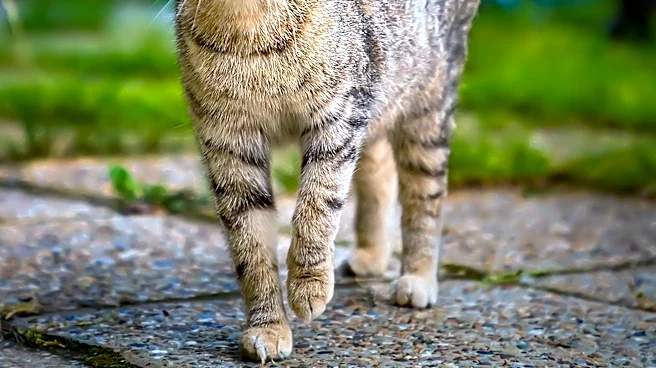
Cats possess several physical characteristics that are integral to their behavior and survival. For instance, their claws are protractible and retractable, meaning they can be extended for hunting, fighting, climbing, or gaining traction on soft surfaces, and then sheathed to keep them sharp and allow for silent stalking. The claws on their forefeet are typically sharper than those on their hindfeet. When scratching rough surfaces, cats shed the outside layer of their claw sheaths, a natural process that maintains their sharpness.
Another key adaptation is the cat's righting reflex, which allows them to twist and orient themselves to land on their feet during a fall. This reflex is so efficient that a cat can right itself in falls of at least 90 cm (3.0 ft). This ability is linked to their acute sense of balance and spinal flexibility, which is enhanced by having more lumbar and thoracic vertebrae than humans. Their forelimbs are also attached to the shoulder by free-floating clavicle bones, enabling them to fit through any space their head can pass through, a useful trait for navigating tight spots.
Sensory World of Felines
Cats experience the world through highly developed senses. Their night vision is exceptional, requiring only one-sixth the light level that humans need to see. This is due in part to a tapetum lucidum in their eyes, which reflects light back through the retina, increasing sensitivity in dim conditions. They also have large, slit pupils that expand to cover most of the eye's surface in low light, allowing them to gather more light. While their color vision is rather poor, optimized for blue and yellowish-green, their ability to detect middle wavelengths might be an adaptation to low light levels.
Their sense of hearing is also remarkably acute, spanning a frequency range from 55 Hz to 79 kHz, far exceeding human capabilities. Large, movable outer ears, known as pinnae, amplify sounds and help pinpoint their origin. This allows them to detect ultrasound, including the ultrasonic calls of rodent prey. Furthermore, cats possess an acute sense of smell, aided by a well-developed olfactory bulb and a large olfactory mucosa. They also have a Jacobson's organ in their mouths, used in a behavioral process called flehmening, which allows them to sense certain pheromones and aromas that humans cannot detect.
Social Structures and Communication
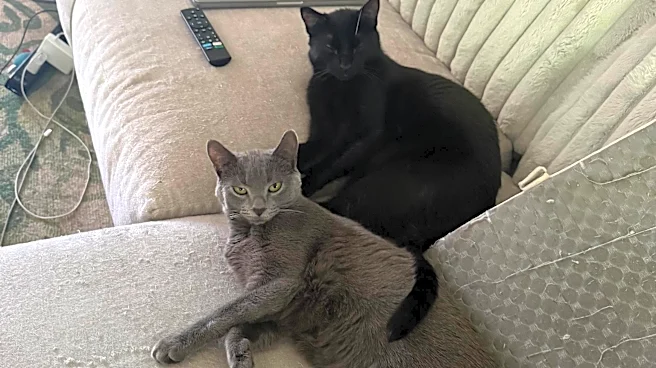
The social behavior of domestic cats can vary widely, from solitary individuals to feral cat colonies organized around food sources and composed of cooperating females. Within these colonies, a dominance hierarchy often exists. Each cat maintains a distinct territory, with sexually active males typically having the largest territories, which can be about ten times larger than those of females and may overlap with several female territories. These territories are marked using urine spraying, rubbing objects at head height with facial gland secretions, and defecation.
Between these individual territories are neutral areas where cats can observe and interact with one another without territorial disputes. Outside these neutral zones, territory holders usually deter unfamiliar cats through staring, hissing, growling, and, if necessary, short, noisy attacks. Unlike animals with social survival strategies or herd behaviors, cats generally hunt alone. However, living in close proximity to humans and other domestic animals has fostered a symbiotic social adaptation, leading cats to express affection towards humans and other animals. Ethologically, a human caregiver can function as a mother surrogate, and adult cats often exhibit a form of behavioral neoteny, essentially an extended kittenhood, with their high-pitched vocalizations sometimes mimicking the cries of a hungry human infant, making them difficult for humans to ignore.
Play, Grooming, and Aggression
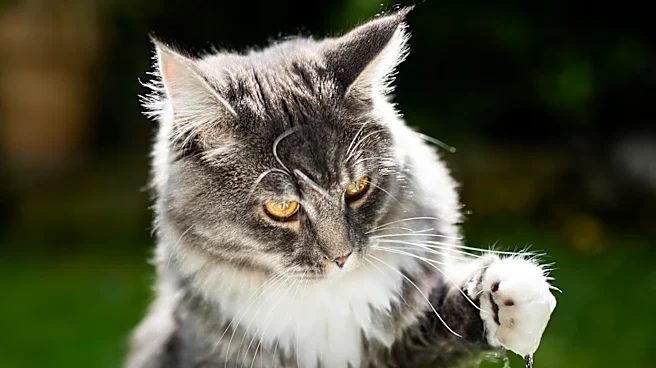
Play is a crucial aspect of feline behavior, especially for young kittens. This behavior mimics hunting, helping them develop skills for stalking, capturing, and killing prey. Cats also engage in play fighting with each other and with humans, which may serve to practice combat skills and reduce fear associated with attacking other animals. They tend to play more when hungry and prefer toys that resemble prey, though they can quickly lose interest in familiar toys. String, while a common toy, poses a significant medical risk if ingested.
Grooming is another prominent feline behavior, with cats spending considerable time licking their coats to keep them clean. Their tongues have backward-facing, keratinized spines called filiform papillae, which act like a hairbrush. This rigorous grooming can lead to the formation of hairballs, particularly in long-haired cats, which are occasionally regurgitated. Regular grooming with a comb or brush and certain remedies can help prevent hairball issues. Aggression, particularly among males, is often linked to competition for mates, with heavier males typically winning fights. In domestic settings, territorial disputes within a small home can also lead to fighting. Neutering can often reduce or eliminate these aggressive behaviors, suggesting a link to sex hormones. When aggressive, cats try to appear larger by raising their fur, arching their backs, and hissing, often pointing their ears down and back to protect them and listen for changes behind them.