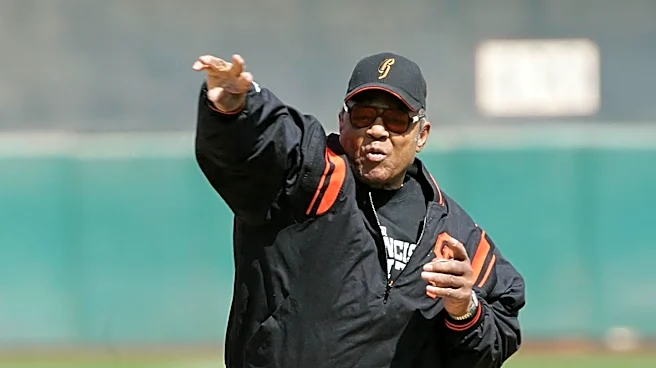



Willie Mays, a legendary figure in baseball, was recognized for his exceptional performance throughout the 1960s, earning the prestigious title of Player of the Decade from The Sporting News. This accolade, announced on January 17, 1970, underscored his consistent excellence and significant impact on the sport during that era. While the decade saw him achieve numerous personal milestones, it also presented challenges as his career progressed, yet
his overall contribution remained unparalleled.
Milestones and Records of the Sixties
The 1960s were a period of remarkable achievement for Willie Mays. On May 4, 1966, he surpassed Mel Ott's National League record for career home runs, hitting his 512th. This was a significant moment, solidifying his place among the game's all-time power hitters. His ability to consistently hit for power was a hallmark of his play during this time, contributing greatly to his team's offensive capabilities.
Beyond home runs, Mays continued to demonstrate his all-around skill. By September 22, 1969, he had reached another monumental milestone, hitting his 600th career home run. This made him only the second player in baseball history, after Babe Ruth, to achieve such a feat, further cementing his legacy as one of the sport's greatest sluggers. These achievements highlight a decade where Mays was not just good, but historically great.
Navigating the Later Years of the Decade
Despite his overall dominance, the latter part of the 1960s saw a gradual decline in some of Mays's statistical output. After 1967, he no longer consistently reached the 30-home run and 100-RBI marks that had been characteristic of his earlier career. This shift in performance was noted by contemporary observers, including *Sports Illustrated*.
In 1967, *Sports Illustrated* published an article observing that Mays, then 36 years old, had dark circles under his eyes, suggesting he might not be sleeping well due to fatigue. The article commented that the energetic and vibrant player of the past seemed to be fading. Mays himself acknowledged the article's observations without dispute, indicating an awareness of his changing physical state. Nevertheless, his overall body of work during the decade was so profound that it still earned him the Player of the Decade honor, showcasing the enduring respect for his talent and contributions.