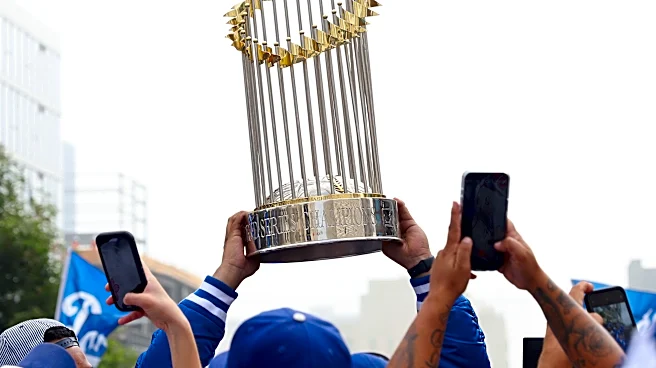




The 2005 World Series was more than just a championship series; it was a clash between two teams burdened by decades of disappointment, each vying to end a long-standing title drought. The 101st edition of Major League Baseball's championship series pitted the American League champion Chicago White Sox against the National League champion Houston Astros. What unfolded was a swift, four-game sweep by the White Sox, securing their third World Series championship and their first
in 88 years, effectively ending the infamous "Curse of the Black Sox." Beyond the sweep, the series itself, particularly Game 3, etched its name into baseball history with several notable records and unique circumstances.
Ending Decades of Waiting
Both the Chicago White Sox and the Houston Astros entered the 2005 World Series with significant historical weight on their shoulders. Combined, the two teams had endured 132 years without a championship title. The Astros were making their inaugural World Series appearance after 44 years of play, a momentous occasion for the franchise. For the White Sox, the wait had been even longer and more agonizing; their last World Series victory dated back to 1917, and they hadn't even appeared in the series since 1959, three years before the Astros' first season. This series represented a chance for one of these teams to finally break free from their past and claim baseball's ultimate prize. The White Sox's dominant sweep not only secured their third championship but also marked the end of an 88-year drought, a significant moment for the team and its fans. This would be the last postseason series won by the White Sox until 2026, highlighting the rarity of their achievement.
Home Field Advantage and Wild Card Aspirations
Home field advantage for the 2005 World Series was awarded to the Chicago White Sox, a direct result of the American League's 7–5 victory over the National League in the 2005 MLB All-Star Game. This provided the White Sox with the opportunity to host the crucial early games of the series. Meanwhile, the Houston Astros were attempting to achieve a unique feat: becoming the fourth consecutive wild card team to win the World Series. This trend had been established by the Anaheim Angels in 2002, followed by the Florida Marlins in 2003, and the Boston Red Sox in 2004. The Astros' appearance in the World Series was also notable as it marked the only time they reached the Fall Classic as a National League team; all their subsequent appearances would come as members of the American League.
Game 3: A Marathon of Records
While the series was a sweep, Game 3 itself was a standalone epic, setting and tying numerous records. Played at Minute Maid Park, it became the longest World Series game in terms of time, clocking in at 5 hours and 41 minutes. It also tied for the longest in innings, extending to 14 frames, a record shared with Game 2 of the 1916 World Series and Game 1 of the 2015 World Series, until it was surpassed by Game 3 of the 2018 World Series. The game was a statistical anomaly, with teams combining to use 17 pitchers (nine for the White Sox, eight for the Astros), throwing a total of 482 pitches, and issuing 21 walks (a dozen by Chicago, nine by Houston). A staggering 43 players participated (22 for the White Sox, 21 for the Astros), and 30 men were left on base (15 for each team), all new high-water marks in Fall Classic history. Scott Podsednik set an individual record with eight official at-bats in this single game. The game also tied a record for total double plays, with six executed throughout the contest (four by the Astros, two by the White Sox). These statistics underscore the extraordinary nature of Game 3, a true test of endurance and strategy within the broader context of a historic World Series.