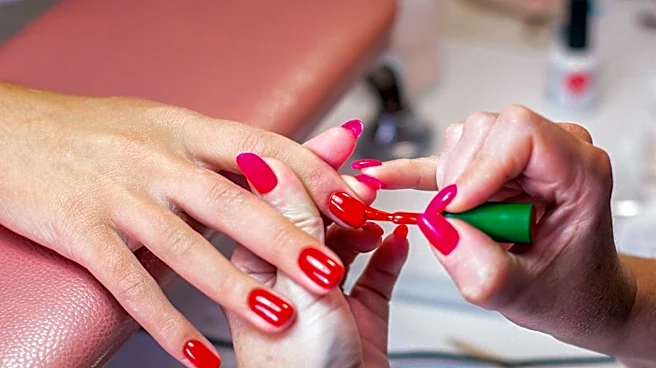




Manicures are a popular beauty treatment focused on the care and aesthetic enhancement of fingernails and hands. The process typically involves several steps, utilizing various tools to achieve desired results. One key implement in this process is the cuticle pusher, an essential tool for preparing the nail bed. The term "manicure" itself originates from the French word "manucure," meaning "care of hands," which in turn comes from the Latin words
"manus" for hand and "cura" for care.
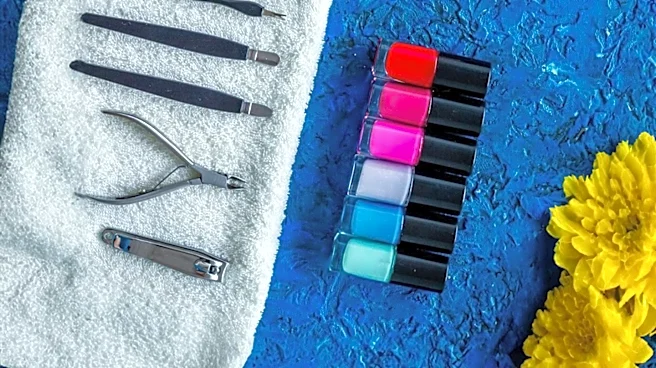
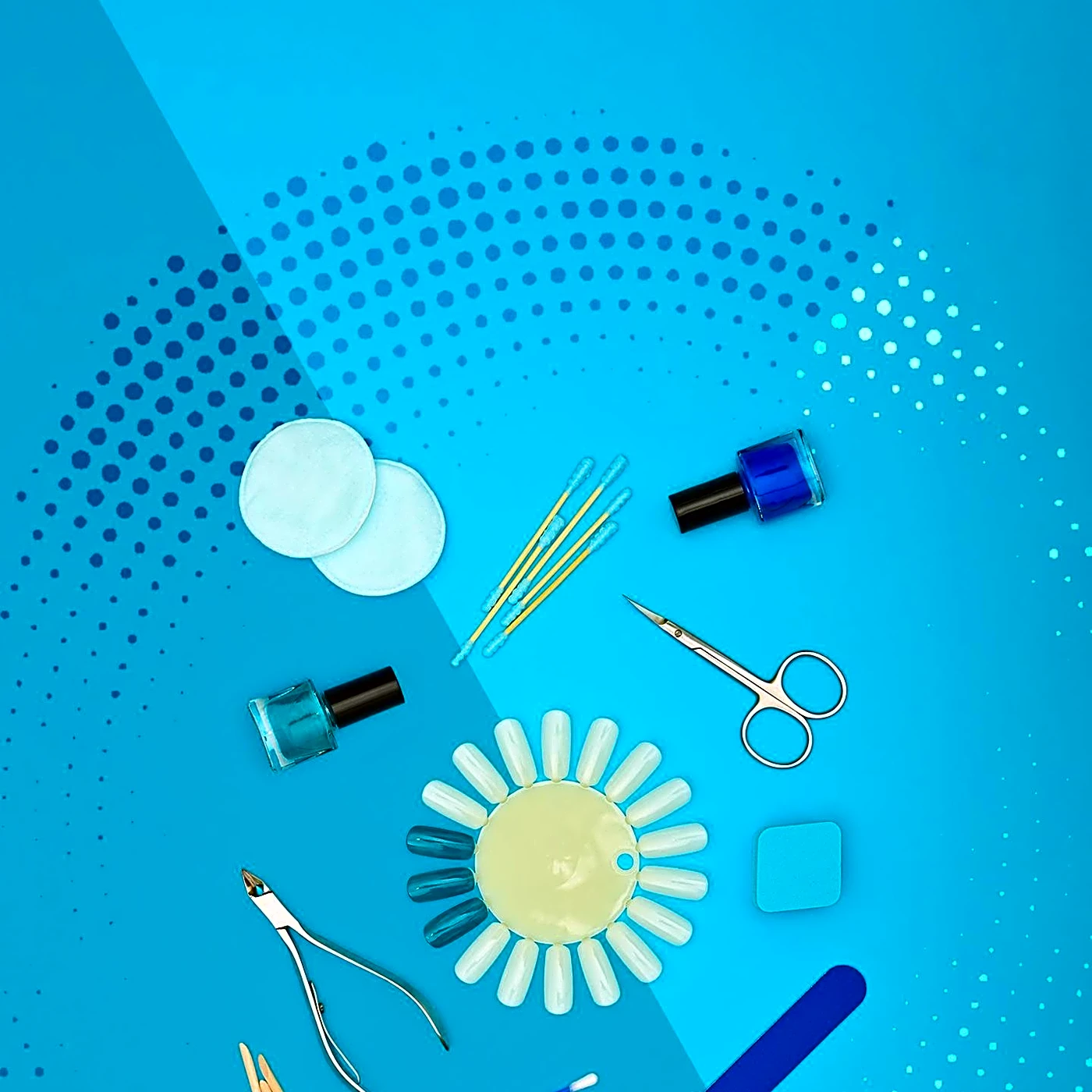
A standard manicure often begins with filing and shaping the free edge of the nails. This step is crucial for achieving the desired nail form and can be performed using tools like nail files. Following shaping, attention turns to the cuticles. A cuticle pusher is used to gently push back the cuticles, and in some cases, clipping may be involved, often with cuticle nippers. This preparation helps to create a clean and neat appearance for the nail plate.
The Role of the Cuticle Pusher in Nail Preparation
The cuticle pusher is a specialized tool designed to manage the eponychium, which is the thickened layer of skin surrounding the fingernails and toenails. In Indonesian, this tool is referred to as "Pendorong kutikula" or "Pendorong kutikal," which directly translates to "cuticle pusher." Its function is to gently push back the cuticle from the nail plate, making the nail bed appear longer and cleaner. This action is a fundamental part of many manicure routines, contributing to the overall neatness and health of the nails.
While the cuticle pusher is used to manage the cuticle, it's important to understand the biological context of the cuticle itself. In human anatomy, the cuticle can refer to this eponychium, or to the superficial layer of dead cells covering the hair shaft. The general definition of a cuticle is a tough but flexible outer covering that provides protection. In the context of nail care, the cuticle pusher helps to maintain the appearance of this protective layer around the nail.
Complementary Tools and Techniques in Manicures
Beyond the cuticle pusher, other tools are integral to a comprehensive manicure. Nail files, for instance, are used to shorten and shape fingernails and toenails. These can come in various materials, including emery boards, ceramic, glass, crystal, or metal files. Emery boards, first patented in 1883, are known for being abrasive yet flexible, and are often preferred for their disposability and hygiene. They are generally less abrasive than metal files, requiring more strokes but offering precise shaping.
After trimming with nail clippers, nail files are typically employed to refine the nail's edge. For more advanced or professional settings, a nail drill, a powered rotary tool, can be used by a nail technician for faster and more precise filing. The combination of these tools and techniques, including the careful use of a cuticle pusher, contributes to the art and science of nail care, ensuring both the aesthetic appeal and health of the nails.