








The New York Yankees hold an unparalleled place in the history of the World Series, establishing multiple dynasties that reshaped the landscape of Major League Baseball. Their consistent presence and remarkable success in the championship event, particularly from the 1920s through the mid-1960s, cemented their status as one of the most dominant franchises in sports. This era of Yankees supremacy was marked by strategic acquisitions, exceptional talent,
and an almost routine appearance in the Fall Classic.
The Babe Ruth Era and Early Success
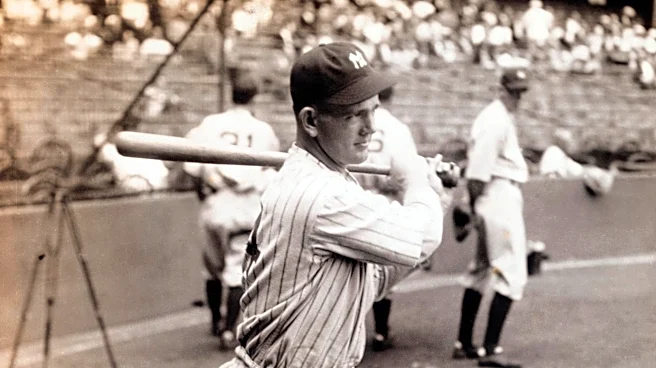
The foundation of the Yankees' dynasty was laid with a pivotal transaction after the 1919 season: the purchase of Babe Ruth's contract from the Boston Red Sox. This move immediately transformed the team, and just two years later, in 1921, the Yankees made their first World Series appearance. This marked the beginning of a long period of frequent participation in the championship. The 1921 World Series was also notable for being the first to be broadcast on radio, expanding the reach of the sport to a wider audience.
Over a span of 45 years, from 1920 to 1964, the New York Yankees played in an astonishing 29 World Series championships, winning 20 of them. This level of sustained success is virtually unmatched in professional sports. Their ability to consistently reach and win the World Series during this period speaks to the strength of their organization and the caliber of players they assembled.
The Apex of the Dynasty: 1949-1964
The Yankees' dynasty reached its zenith between 1949 and 1964, a period of extraordinary dominance. During these 16 years, the team appeared in the World Series 14 times. This remarkable run was partly aided by an agreement with the Kansas City Athletics, after that team moved from Philadelphia during the 1954–1955 offseason. This arrangement led to several deals that were advantageous to the Yankees, a practice that continued until new Athletics' owner Charles O. Finley ended it. Throughout this span, the Yankees participated in every World Series except for 1954 and 1959, securing nine championships.
Within this golden age, the Yankees achieved two particularly impressive streaks. From 1949 to 1953, they won the World Series five years in a row, a feat that remains a benchmark of sustained excellence. Earlier, from 1936 to 1939, the Yankees had won four consecutive World Series Championships. These consecutive victories highlight the depth of talent and organizational strength that characterized the franchise during these decades. Only two other occasions have seen a team win at least three consecutive World Series: the Oakland Athletics from 1972 to 1974, and the Yankees themselves again from 1998 to 2000, underscoring the rarity and significance of their earlier achievements.
New York City's World Series Era (1947-1964)
Beyond the Yankees' individual success, the period from 1947 to 1964 was a golden age for New York City baseball in the World Series. In an 18-year span, with the exceptions of 1948 and 1959, the World Series was played in New York City, featuring at least one of the three teams located there at the time. The city was home to the Yankees, Dodgers, and Giants, creating intense local rivalries that often culminated on the sport's biggest stage. In seven of those years—1947, 1949, 1951, 1952, 1953, 1955, and 1956—both teams in the World Series were from New York, with the Yankees frequently facing either the Dodgers or Giants. This era, however, began to change when the Dodgers and Giants relocated to California after the 1957 season, leaving the Yankees as the sole team in the city until the Mets were enfranchised in 1962.