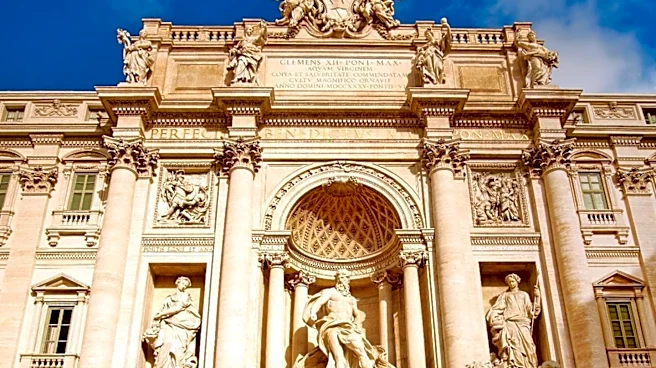






The Trevi Fountain, an 18th-century Baroque masterpiece located in Rome, Italy, is renowned not only for its architectural grandeur but also for its significant presence in popular culture. Standing 86 feet high and 161.3 feet wide, it is the largest Baroque fountain in the city and one of the most famous fountains globally. Beyond its historical and artistic value, the fountain has achieved iconic status through its numerous appearances in cinema,
becoming a beloved symbol of Rome and a backdrop for memorable cinematic moments. This cultural prominence has also necessitated dedicated efforts to preserve its beauty through extensive restoration projects.
A Star on the Silver Screen
The Trevi Fountain's dramatic beauty and romantic allure have made it a favorite location for filmmakers. Its cinematic legacy began early in the mid-20th century, cementing its image in the minds of audiences worldwide. It famously appeared in the 1953 classic *Roman Holiday*, contributing to the film's romantic atmosphere. Following this, it was featured in *Three Coins in the Fountain* in 1954, a film whose title directly references the popular tradition of throwing coins into the fountain to ensure a return to Rome. Perhaps its most iconic role was in Federico Fellini's 1960 masterpiece, *La Dolce Vita*, where Anita Ekberg's famous dip into its waters became one of cinema's most enduring scenes.
Its appeal has continued into more contemporary productions, including *Sabrina Goes to Rome* in 1998 and *The Lizzie McGuire Movie* in 2003. These appearances have ensured that the Trevi Fountain remains a recognizable and cherished landmark for new generations, solidifying its status as a cultural touchstone. The fountain's ability to evoke romance, dreams, and the timeless charm of Rome has made it an indispensable character in its own right within the world of film.
Preserving a Masterpiece: Restoration Efforts
Given its age and constant exposure to the elements, the Trevi Fountain has required significant restoration over the years to maintain its splendor. The fountain was first refurbished in 1988 to address discoloration caused by smog, a common issue for urban monuments. A more comprehensive restoration took place in 1998, during which the stonework was thoroughly scrubbed, and skilled artisans meticulously repaired all cracks and areas of deterioration. This project also included equipping the fountain with recirculating pumps to improve its functionality.
One of the most extensive restoration efforts began in 2013 when the Italian fashion company Fendi announced it would sponsor a 20-month, 2.2-million-euro project. This thorough restoration commenced in June 2014 and was completed in November 2015. The work culminated in an official reopening ceremony on the evening of November 3, 2015. A notable enhancement during this period was the installation of over 100 LED lights, specifically designed to improve the fountain's nighttime illumination, allowing its intricate details to be admired even after dark. These continuous efforts underscore the global commitment to preserving this magnificent piece of art and history for future generations.