
Lynette "Squeaky" Fromme, a name inextricably linked with the infamous Manson Family cult and a shocking attempt on a U.S. President's life, lived a life marked by devotion to Charles Manson and a dramatic
confrontation with authority. Born Lynette Alice Fromme, she gained her distinctive nickname from George Spahn. Her journey from a follower of a notorious cult leader to an attempted assassin of President Gerald Ford in 1975 is a complex narrative that reveals the depths of her commitment to Manson's ideology and her unique motivations, particularly concerning environmental issues. Her actions led to a lengthy prison sentence, solidifying her place in American criminal history.
Early Life and Manson Family Devotion
Lynette Fromme was one of the earliest and most devoted followers of Charles Manson, the leader of the cult responsible for the 1969 murders of actress Sharon Tate and eight others in Los Angeles. Although Fromme was not directly involved in the Tate-LaBianca murders, her loyalty to Manson was unwavering. She played a significant role in maintaining communication among cult members after many of them were imprisoned, assuming a leadership position within the group. Her commitment to Manson's cause was evident in her actions and her continued association with other Manson Family members.
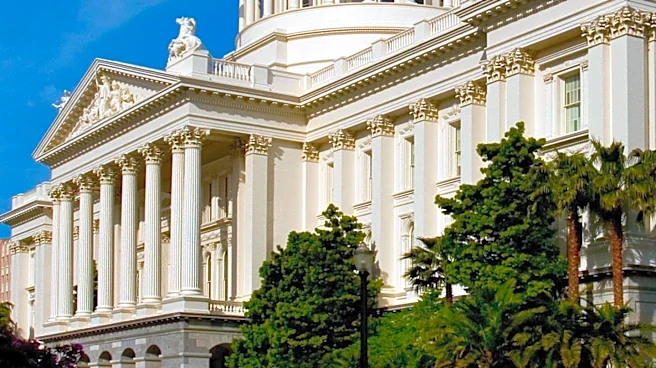
Fromme's devotion extended to living with fellow Manson Family member Sandra Good in an attic apartment at 1725 P Street in Sacramento. During this period, she also had a prior brush with the law, serving 90 days in jail in April 1971 for attempting to feed a hamburger laced with LSD to Barbara Hoyt, a witness in the Tate murder trial, in an effort to prevent her testimony. This incident underscores her willingness to take extreme measures in support of Manson and his associates. Her deep-seated beliefs and loyalty would later manifest in her attempt on President Ford's life.
Environmental Activism and the Path to Sacramento
By 1975, Fromme's focus had broadened to include fervent environmental concerns. She believed that President Ford's policies and campaign activities were contributing to environmental pollution, specifically impacting "ATWA" (air, trees, water, animals). A particular concern for her was the perceived threat to California's giant coastal redwoods, which she feared were in danger from automobile smog. Feeling personally responsible for the fate of these trees, Fromme even traveled to San Francisco to meet with a government official to advocate for their protection.
Upon returning to Sacramento, Fromme learned of President Ford's upcoming visit. The Senator Hotel, where Ford would be staying, was conveniently located less than a mile from her apartment. This proximity, combined with her environmental anxieties, led her to a drastic decision. She resolved to bring attention to the plight of the redwoods by instilling fear in the government, symbolized by President Ford. Her stated motivation was a desire "to get life. Not just my life but clean air, healthy water, and respect for creatures and creation."
The Attempt and Its Aftermath
On September 5, 1975, Fromme approached President Ford in Capitol Park, armed with a Colt M1911 pistol. Dressed in red, which she explained was "for the animals and earth colors," she pointed the weapon at Ford. However, the gun failed to fire because there was no round in the chamber. Secret Service agent Larry Buendorf quickly disarmed her and brought her to the ground. Fromme was subsequently arrested and charged with the attempted assassination of the President. She spent 34 years in prison for her crime, being released on August 14, 2009, approximately two years and seven months after Ford's death. The M1911 pistol used in the attempt was later gifted to the Gerald R. Ford Presidential Museum in Grand Rapids, Michigan, where it was put on display, serving as a tangible reminder of this extraordinary event.