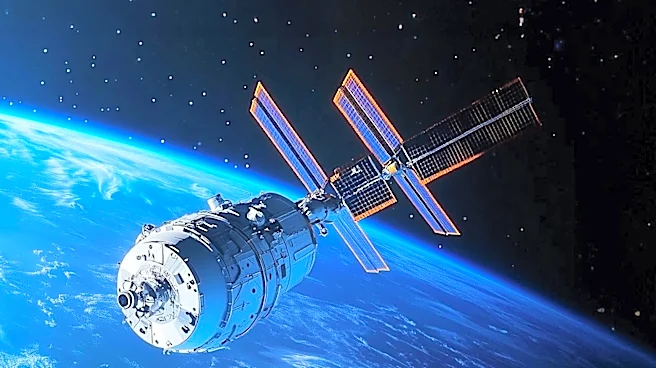


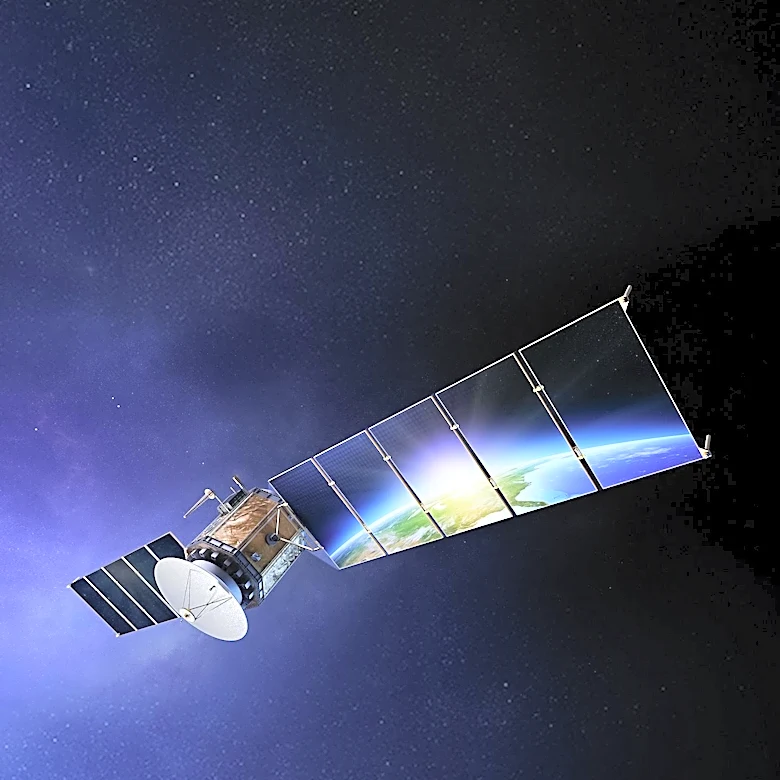




The Syncom satellite series marked a significant milestone in the history of telecommunications, paving the way for modern communication technologies. Developed by Hughes Aircraft Company, these satellites were part of a NASA program initiated in 1961 to explore the potential of geosynchronous communication satellites. Syncom 2, launched in 1963, became the world's first geosynchronous communications satellite, followed by Syncom 3 in 1964, which
was the first geostationary satellite. This article delves into the historical journey and key milestones of the Syncom satellite series.
The Birth of Syncom Satellites
The concept of geosynchronous satellites was first proposed by Arthur C. Clarke in 1945, but it wasn't until 1959 that Harold Rosen and his team at Hughes Aircraft began developing the technology. By 1961, Hughes had created a prototype, and NASA ordered three Syncom satellites to test the feasibility of geosynchronous orbit for communication purposes. Syncom 1 was launched on February 14, 1963, but unfortunately, it was lost due to an electronics failure.
Despite the setback with Syncom 1, the program continued with Syncom 2, launched on July 26, 1963. Syncom 2 successfully achieved geosynchronous orbit, demonstrating the viability of maintaining a satellite in a fixed position relative to the Earth. This achievement marked a turning point in satellite communications, proving that geosynchronous satellites could be used for reliable communication.
Syncom 2: A Groundbreaking Achievement
Syncom 2's successful operation was a landmark in satellite technology. Positioned at a longitude of 55° with an inclination of 33°, it followed a figure-eight trajectory over the Atlantic Ocean. This satellite underwent numerous communication tests, all of which were successful, verifying its ability to maintain position and perform communication tasks effectively.
During its first year, Syncom 2 facilitated various communication tests, including voice, teletype, and facsimile transmissions. One notable event was the first live two-way call between heads of government via satellite, when President John F. Kennedy spoke with Nigerian Prime Minister Abubakar Tafawa Balewa. This demonstrated the satellite's potential for international communication.
The Legacy of Syncom Satellites
Syncom 3, launched on August 19, 1964, further solidified the legacy of the Syncom series by becoming the first true geostationary satellite. It played a crucial role in broadcasting the 1964 Tokyo Olympics, showcasing the power of satellite technology in global media coverage.
The Syncom satellites continued to operate until 1969, leaving a lasting impact on the field of telecommunications. They laid the groundwork for future satellite developments and demonstrated the immense potential of geosynchronous orbit for communication purposes. The Syncom series remains a pivotal chapter in the history of satellite technology, influencing subsequent advancements in the field.