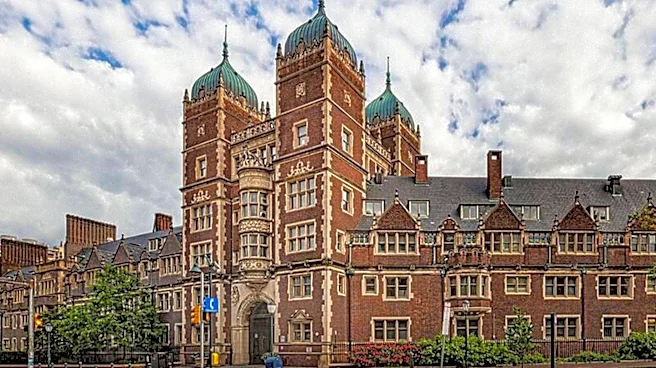







Yale University's campus is not merely a collection of academic buildings; it is a landscape rich with architectural history, artistic treasures, and significant cultural collections. From its distinctive Collegiate Gothic structures to its world-renowned museums and libraries, the physical environment of Yale reflects centuries of intellectual and artistic endeavor. This blend of historical design and modern facilities creates a unique setting that
supports both academic pursuits and a vibrant cultural life, making the campus itself a significant part of the Yale experience.
Collegiate Gothic and Deliberate Aging
Many of Yale's iconic buildings, constructed between 1917 and 1931, were designed in the Collegiate Gothic architectural style. This extensive building program was largely financed by educational philanthropist Edward S. Harkness. These structures, including the Yale Drama School, feature intricate stone sculptures integrated into their walls, depicting contemporary college personalities such as writers, athletes, and even a student asleep while reading. Decorative friezes further illustrate scenes of daily life, like a policeman chasing a robber or a student relaxing with a beer.
Architect James Gamble Rogers employed unique techniques to give these new buildings an aged appearance. He would splash the walls with acid, deliberately break leaded glass windows and then repair them in a medieval style, and create niches for statuary that were left empty to simulate loss over time. While appearing to be constructed of solid stone blocks, most of these buildings actually incorporate steel framing, a common construction method in the 1930s. An exception is Harkness Tower, a 216-foot-tall structure that was originally free-standing stone and later reinforced in 1964 for the installation of the Yale Memorial Carillon.
World-Class Museums and Libraries
Yale's commitment to culture extends to its impressive array of museums and libraries, which are of international stature. The Yale University Art Gallery, the country's first university-affiliated art museum, houses over 200,000 works, including Old Masters and significant modern art collections. Another architectural highlight is the Yale Center for British Art, which holds the largest collection of British art outside the United Kingdom and is housed in a building designed by Louis Kahn, who also designed the Kahn building of the Art Gallery.
Beyond art, the Peabody Museum of Natural History in New Haven serves both school children and researchers, with collections spanning anthropology, archaeology, and the natural environment. The Yale University Collection of Musical Instruments, affiliated with the Yale School of Music, offers another specialized cultural resource. The university's library system is equally remarkable; the Yale University Library holds over 15 million volumes, making it the second-largest university collection in the United States after Harvard. The main library, Sterling Memorial Library, alone contains about 4 million volumes, with other holdings distributed across various subject and location-specific libraries. Rare books and manuscripts are preserved in specialized collections like the Beinecke Rare Book and Manuscript Library, the Harvey Cushing/John Hay Whitney Medical Library, and the Lewis Walpole Library, which boasts the largest collection of 18th-century British literary works.