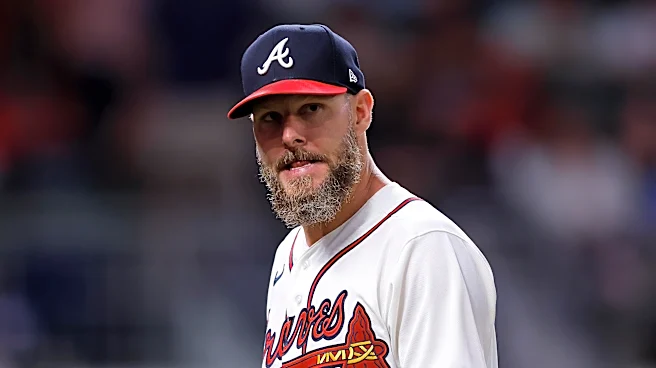

The Atlanta Braves, a prominent Major League Baseball team, boast a history that stretches back to 1871, making them the oldest continuously operating professional sports franchise in North America. Their
journey began in Boston, Massachusetts, under the name Boston Red Stockings, and over the decades, the team underwent numerous name changes and two significant relocations before settling in Atlanta. This rich and complex history reflects not only the evolution of baseball but also the changing landscapes of American cities and sports culture.
From Boston Red Stockings to Beaneaters: The Early Years
The franchise's origins are deeply rooted in Boston, where it was founded in 1871 as the Boston Red Stockings. This early iteration of the team was a charter member of the National Association of Professional Base Ball Players. By 1876, when the National League was established, the team joined as the Boston Red Caps, playing the very first National League game and securing a victory against the Philadelphia Athletics. Despite a challenging first year in the new league, they quickly rebounded to win pennants in 1877 and 1878.
Under the management of Frank Selee, the team, then known as the Boston Beaneaters, became a dominant force in the 19th century, clinching eight pennants. By 1898, the Beaneaters had an impressive season, winning 102 games with star players like Hugh Duffy, Tommy McCarthy, and "Slidin'" Billy Hamilton. However, the turn of the century brought new challenges. The introduction of the American League in 1901 led to the departure of several key Beaneaters players, including Duffy and Jimmy Collins, to rival league clubs. This period saw the team struggle, recording only one winning season between 1900 and 1913. During this time, in 1907, they even temporarily removed the red color from their stockings due to infection concerns.
The Braves Era and the Miracle of 1914
The team officially adopted the name Boston Braves in 1912, a moniker given by club president John M. Ward in honor of owner James Gaffney, who was known as one of the "braves" of New York City's Tammany Hall political machine, which used a Native American chief as its symbol. Just two years later, in 1914, the Boston Braves experienced one of the most remarkable turnarounds in baseball history. Starting with a dismal 4–18 record and trailing the league-leading New York Giants by 15 games on July 4, the team embarked on an incredible hot streak, winning 41 of 53 games between July 6 and September 5.
This dramatic surge saw them defeat the Giants in two out of three games on September 7 and 8, propelling them into first place. Despite being in last place as late as July 18, the Braves secured the pennant, becoming the only team under the old eight-team league format to achieve this feat after being in last place on the Fourth of July. They moved into fourth place by July 21 and second place by August 12, culminating in a memorable pennant win. This period of success, however, was followed by struggles from 1917 to 1933, with the team facing financial difficulties and inconsistent performance.
Relocation to Milwaukee and Atlanta: A New Chapter
After decades in Boston, including a brief rebranding as the Boston Bees from 1936 to 1940, the franchise made a significant move. In 1953, owner Lou Perini announced the club's relocation to Milwaukee, citing the advent of television and a lack of fan enthusiasm in Boston as key factors. The Milwaukee Braves enjoyed a period of success, never having a losing season during their 13 years there. They won a World Series in Milwaukee, marking one of the four championships for the franchise across its different homes.
In 1966, the team moved once again, this time to Atlanta, Georgia, becoming the Atlanta Braves. This move established the team in its current home, where it would continue to build its legacy. The Braves' history is a testament to their resilience and adaptability, having navigated numerous identity changes and geographical shifts while maintaining their status as a foundational franchise in professional baseball. Their journey from the Boston Red Stockings to the Atlanta Braves encapsulates a significant portion of baseball's storied past.