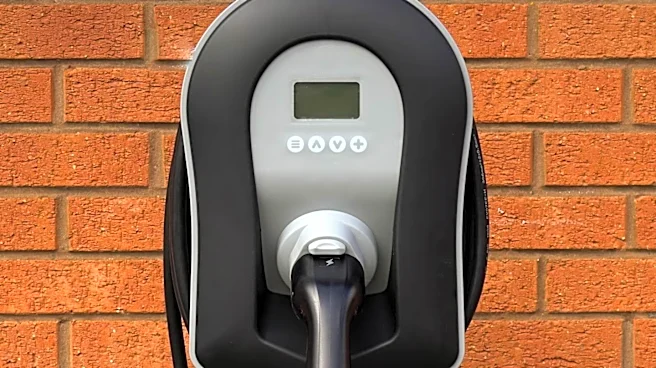







In the world of electric vehicles (EVs), charging standards play a crucial role in determining the accessibility and convenience of charging infrastructure. CHAdeMO, a fast-charging system developed in Japan, is one of the key players in this arena. However, it faces stiff competition from other standards like the Combined Charging System (CCS) and Tesla's North American Charging System (NACS). This article explores how CHAdeMO compares to its competitors
and the challenges it faces in the global market.
The Rise of CHAdeMO
CHAdeMO was introduced in 2010 by the CHAdeMO Association, which included major Japanese automakers and the Tokyo Electric Power Company. It was the first organization to propose a standardized DC fast charge system that could be used across different EV brands. The first-generation CHAdeMO connectors delivered up to 62.5 kW of power, providing a significant boost in charging speed compared to traditional methods.
Despite its early success, CHAdeMO's market share has been challenged by the emergence of other standards. In 2013, the European Commission mandated the use of CCS Combo 2 for DC high-power charging infrastructure in Europe, which limited CHAdeMO's expansion in the region. Tesla's NACS, used in its Supercharger network, also presents a formidable competitor, particularly in North America.
Competing Standards
CCS and NACS have gained traction due to their widespread adoption and compatibility with various EV models. CCS, in particular, has become the standard in Europe and North America, offering a unified solution for both AC and DC charging. This has made it a preferred choice for many automakers outside of Japan.
Tesla's NACS, on the other hand, benefits from the extensive Supercharger network, which provides fast and reliable charging for Tesla vehicles. While CHAdeMO remains popular in Japan, its presence in North America and Europe is limited, with only a few models like the Nissan Leaf and Mitsubishi Outlander PHEV still using the standard.
The Future of CHAdeMO
To remain competitive, CHAdeMO has introduced the ChaoJi connector, also known as CHAdeMO 3.0. Released in 2020, ChaoJi supports charging at up to 900 kilowatts and is designed to be compatible with both CHAdeMO and the GB/T DC-charging standard used in China. This backward compatibility and high power capacity aim to position CHAdeMO as a viable option for future EVs.
However, the challenge remains for CHAdeMO to expand its market share outside of Japan. As automakers increasingly adopt CCS and NACS, CHAdeMO must continue to innovate and adapt to the evolving needs of the EV market. The development of Ultra-ChaoJi for megawatt charging is one such effort, targeting electrified heavy-duty vehicles and other large applications.
In conclusion, while CHAdeMO faces significant competition, its continued innovation and adaptability may help it maintain a foothold in the global EV charging landscape.