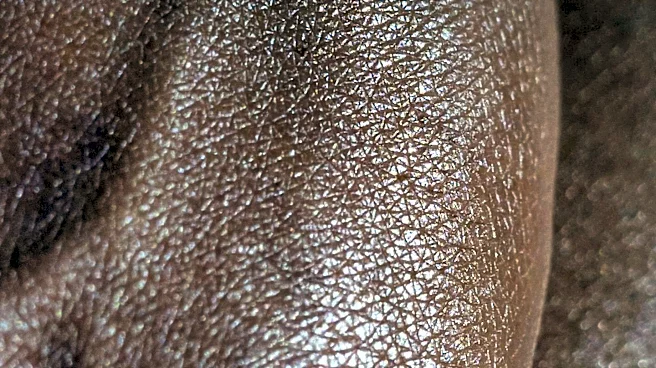








Dermatitis is a comprehensive term used to describe various forms of skin inflammation, typically characterized by symptoms such as itchiness, redness, and a rash. While often used interchangeably with "eczema," the latter term is frequently reserved for the most common type of skin inflammation, atopic dermatitis. The presentation of dermatitis can range from small, localized areas to conditions covering the entire body, and its duration can vary,
leading to small blisters in acute cases or thickened skin in long-term scenarios.
This condition is not merely a cosmetic concern; it represents a significant health issue globally. As of 2010, dermatitis affected approximately 230 million people, accounting for 3.5% of the world's population. The prevalence of dermatitis has shown a notable increase, particularly in developed countries, over the latter half of the 20th century, with rates in school-aged children rising between the late 1940s and 2000.
Terminology and Historical Context
The terms "dermatitis" and "eczema" are sometimes used synonymously, though their specific meanings can vary by region and language. In some contexts, dermatitis might imply an acute condition, while eczema suggests a chronic one. The word "dermatitis" originates from the Greek "derma" meaning 'skin' and "-itis" meaning 'inflammation.' Similarly, "eczema" comes from the Greek "ekzema," meaning 'eruption,' derived from roots meaning 'out' and 'to boil.' The specific term "atopic dermatitis" was coined in 1933 by Wise and Sulzberger, highlighting a more defined understanding of this particular type of skin inflammation.
Historically, treatments for eczema have evolved. For instance, sulfur was a fashionable topical treatment during the Victorian and Edwardian eras, indicating early attempts to manage the condition. The ongoing research and understanding of dermatitis reflect a continuous effort to better define, treat, and prevent these inflammatory skin conditions.
Signs, Symptoms, and Prognosis
The visible signs and felt symptoms of dermatitis can be quite varied. Common symptoms include intense itching, and some individuals may also experience burning, soreness, or pain. The skin often appears generally dry and can take on a grayish hue in individuals with darker skin tones. Inflamed areas are typically not well-defined and can appear red in light-colored skin or purple/dark brown in dark-colored skin. Surface changes can include scaling, cracking (skin fissures), swelling (edema), scratch marks (excoriation), bumpiness (papulation), oozing of clear fluid, and thickening of the skin (lichenification) in chronic cases.
For many, the prognosis for dermatitis is positive. Most cases can be effectively managed with topical treatments and ultraviolet light therapy. In fact, over 60% of young children affected by the condition see it subside by adolescence. However, about 2% of cases prove more challenging to manage. The inflammation can leave behind "footprints" known as postinflammatory pigmentation, which can be lighter or darker than the surrounding normal skin. These marks are not permanent scars and typically return to normal over several months if the underlying dermatitis is treated effectively.
Epidemiology and Workplace Impact
Dermatitis is a widespread condition, affecting a significant portion of the population across different age groups and demographics. While it is most commonly observed in infancy, there is a female predominance of eczema presentations during the reproductive period, specifically between 15 and 49 years of age. In the UK, approximately 20% of children experience the condition, while in the United States, about 10% are affected.
The impact of dermatitis extends to the workforce as well. In 2010, dermatitis affected about 10% of U.S. workers, representing over 15 million individuals. Prevalence rates were found to be higher among females compared to males, and among those with some college education or a college degree versus those with a high school diploma or less. Workers in healthcare and social assistance industries, as well as those in life, physical, and social science occupations, reported the highest rates of dermatitis. A healthcare professional attributed about 6% of these cases to work-related factors, indicating that the prevalence of work-related dermatitis among U.S. workers was at least 0.6%.