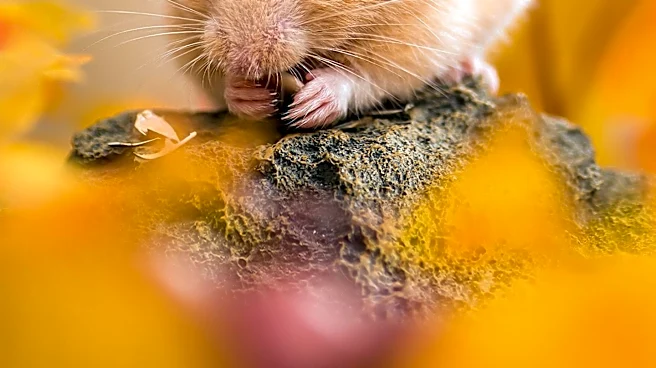

The genus Phodopus encompasses several species of small hamsters, distinguished by their compact bodies, short tails, and fur-covered feet. These rodents are native to the steppes, semideserts, and mountainous
forests of central Asia, including regions of Mongolia, China, Kazakhstan, and the southern part of the West Siberian lowlands. While they are known for their resilience in extreme environments, their journey from wild inhabitants to popular household pets and significant laboratory animals highlights their adaptability and the varied ways they interact with humans.
Physical Traits and Environmental Adaptations
Phodopus hamsters, including species like Campbell's dwarf hamster (P. campbelli), Winter white dwarf hamster (P. sungorus), and Roborovski's hamster (P. roborovskii), share common physical characteristics. They are generally small, with an average body mass for some species around 23.4 grams. A distinctive dark stripe often runs from the base of the neck to the base of the tail, while the fur on their throat, abdomen, and legs is typically white, and the fur on top of their paws is silvery white. Their cheek pouches, when full, can extend back to their shoulders.
These hamsters have evolved remarkable adaptations to survive the extreme temperature fluctuations and aridity of their natural habitats. To combat the intense cold of winter, they possess spherical, compact bodies with excellent insulation provided by both fur and fat. During periods of extreme cold, such as temperatures below -20 degrees Celsius, the Winter white dwarf hamster adopts a hunched posture, tucking its head and forepaws under its belly and fluffing its fur for increased insulation. Conversely, in high heat exceeding 30 degrees Celsius, this species flattens itself on its belly with limbs splayed, grooming its fur into clumps to create "ventilation gaps." Water conservation is also crucial, and these hamsters have developed an excellent ability to retain water by maintaining low evaporative water loss rates and producing concentrated urine.
Diet, Habitat, and Conservation Status
In their wild environments, Phodopus hamsters primarily forage for seeds and dry fruits, though they also consume other plant parts and insects. Their habitats span mountainous forests, steppes, and semideserts across a wide geographical range. Despite some isolated local populations, all three main species—P. campbelli, P. sungorus, and P. roborovskii—are considered widespread and are assessed as Least Concern (LC) on the IUCN Red List. This indicates that they are probably abundant and not currently facing significant threats to their existence. They are found in protected areas, particularly in Mongolia. However, the status and dynamics of their populations are not always certain, leading some species, like P. roborovskii in Kazakhstan, to be monitored as species of concern. Historically, some populations may have diminished due to being perceived as agricultural pests or through habitat destruction.
From Wild Rodents to Research Models and Beloved Pets
The interaction between Phodopus hamsters and humans varies significantly. Some species, such as P. campbelli, inhabit sparsely populated areas with limited agricultural potential, resulting in minimal human interaction. Others, like P. sungorus, have been considered significant agricultural pests in certain regions. However, a major shift occurred in the 1970s when dwarf hamsters were introduced into the pet trade. They quickly gained popularity as pets, especially for novice owners, due to their ease of maintenance, lack of aggressive behavior towards humans, and tolerance for living with other members of their species. They do not require special diets or conditions, making them accessible companions.
Beyond their role as pets, Phodopus species have become important laboratory organisms. Their unique biological traits make them excellent model systems for studying various scientific phenomena. Researchers use them to investigate the hormonal control of photoperiod, seasonal physiological and behavioral changes, sociality, and behavioral ecology. Their small chromosome numbers and easily distinguishable chromosomes have also made them valuable for cytogenetic and cancer research. Furthermore, their extreme cold tolerance has led to studies on thermoregulation. One laboratory population even developed glycosuria and ketonuria independently, providing a model for diabetes mellitus research. The first laboratory use of Phodopus originated from a breeding colony established in Leningrad, with animals reportedly trapped in Tuva and Siberia, initially labeled as P. sungorus campbelli. Both P. sungorus and P. campbelli are popular research animals, often used in comparative studies due to their behavioral and physiological differences, and P. roborovskii has also recently become an important research animal.